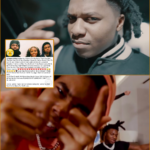
Photo: Getty Images
In the final days of his life, Lil Poppa appeared to be carrying a weight few truly understood.
The 25-year-old rapper — born Janarious Mykel Wheeler — shocked his inner circle and fans this week when he took his own life following a car crash in Georgia. What initially seemed like a routine accident quickly spiraled into an unimaginable tragedy that has left the hip-hop community searching for answers.
According to authorities, Poppa was involved in a single-car crash on Interstate 85 just south of Hapeville. The vehicle was still operable. There were no catastrophic injuries reported from the accident itself. But something deeper was unfolding beneath the surface.
After the crash, Poppa reportedly called his manager, asking what he should do next. The two agreed to meet in the parking lot of a nearby Hilton hotel. When they met, however, Poppa never stepped out of the car. He remained in the driver’s seat, window rolled down, speaking quietly. No one knows exactly what was said in those final moments.
Then, in an instant that no one could have prepared for, he pulled out a firearm and shot himself. An off-duty officer working security at the hotel called for help. Poppa was rushed to Grady Hospital, where he was pronounced dead at 11:23 a.m.
For many who knew him, the most haunting part is not just how it ended — but the signs that may have been there all along.
In the weeks leading up to his death, Poppa’s social media posts carried a noticeably heavier tone. His final Instagram Story featured Rod Wave’s emotional track Letting It Go — a song steeped in themes of pain, release and emotional exhaustion.
Even more unsettling was a video he posted just weeks earlier. Looking directly into the camera, he said: “I got one more album and it’s over. I’m going to find my peace.”
At the time, some fans interpreted it as artistic reflection — perhaps a comment about stepping away from music. Now, those words feel painfully literal.
Friends say he had been quieter. More withdrawn. There were subtle behavioral shifts — moments of detachment, cryptic messages, an air of finality in his tone. To the outside world, he was a rising artist with growing influence. But internally, it appears he may have felt he had nothing left — emotionally drained, spiritually exhausted, and unable to see a path forward.
His label, Collective Music Group (CMG), released a statement expressing devastation over the loss.
“Poppa was more than a talented artist — he was an ambitious young man with depth beyond his years and endless potential,” they wrote. “He thoughtfully poured his pain, growth and truth into his art.”
That truth now feels heartbreakingly clear. The vulnerability that made his music resonate so deeply may have also reflected battles he was fighting in silence.
Fans continue to revisit his lyrics, his interviews, his final posts — searching for clues, for understanding, for something they might have missed.
But sometimes, the heaviest struggles are the ones no one sees until it’s too late.
News
“Our Hearts Are Shattered” — Grieving Family Speaks Out After Melbourne Teen Di-es a Week After H0rr0r Crash
A 16-year-old boy has died in hospital a week after being hit by a car in Melbourne’s south-east. Emergency services were called…
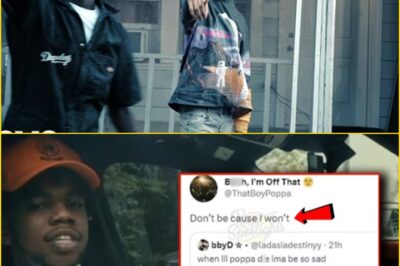
“One More Album… Then It’s Over” — Lil Poppa’s Final Instagram Posts Leave Fans Chilled After His Sudden D-e-a-th
Photo: Getty Images Lil Poppa’s stunned his inner circle and fans alike after he decided to take his own life this week….
“She Never Came Back Inside” – Heartbreak as Melbourne Mother D!es in Freak Crash, Three Kids Left Without Their Mum
Tributes are flowing for a “caring” mother allegedly mowed down by her neighbour outside a suburban home. A mother allegedly…
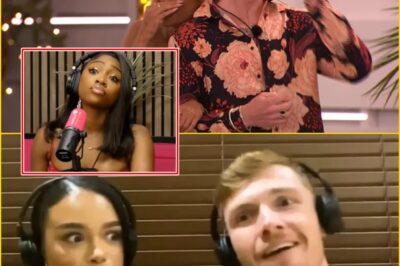
Love Island Bombshell: Jack Drops Explosive Unseen Villa Secret — Sher and Indiyah Left Stunned as Cameras “Missed” the Most Sh0cking Night Yet
LOVE ISLAND’S Jack Keating has revealed an awkward unaired villa moment that has left his co-stars in shock. He and…
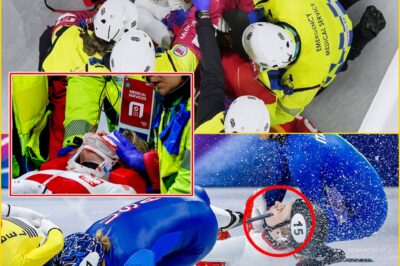
She Was Racing… Then Came the Bl00d: Kamila Sellier’s Nightma-re on the Ice Nobody Saw Coming
Short-track speedskater Kamila Sellier has been stretchered out of the Milano Ice Skating Arena after having her head sliced open…

“‘I Can’t Hide It Anymore’ — Married At First Sight’s Gia Breaks Silence, Apologizes Publicly for Explosive Dinner Party Drama After Blaming Producers for ‘Mean Girl’ Outburst”
Married At First Sight bride Gia Fleur has made a public apology to Alissa Fay and Stella Mickunaite after the…
End of content
No more pages to load