In the age of viral storytelling, few names ignite imagination like Elon Musk. Visionary. Disruptor. Billionaire. For years, his life has been wrapped in a near-mythical aura — and recently, that aura has given rise to a story so astonishing that it has captured millions of clicks in a matter of days.
The claim is breathtaking: an 8-year-old orphan, allegedly living on the streets, is reportedly adopted by Elon Musk. Years later, the child grows up to execute a single, perfectly timed trade — lasting just three seconds — that turns him into a multimillionaire. From poverty to Silicon Valley success, the story reads like destiny engineered by genius.
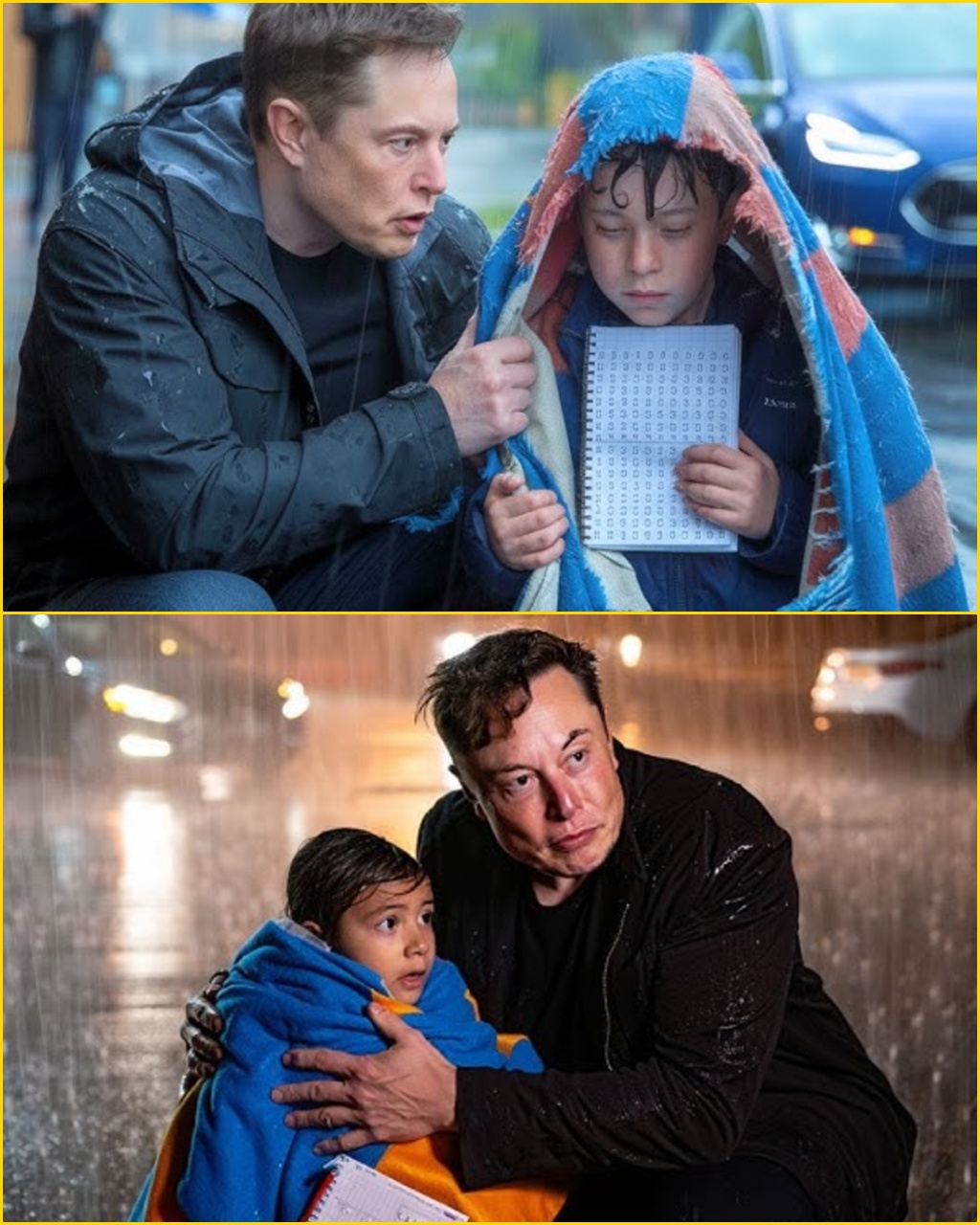
But here’s the problem: no credible evidence supports it.
The Story That Spread Like Wildfire
The narrative first appeared in short-form videos and click-heavy posts, often framed as “untold secrets” or “stories the media doesn’t want you to know.” The structure was irresistible: tragedy, rescue, mentorship, and a financial miracle. Each retelling added new details — a name here, a dramatic quote there — but none cited verifiable sources.
In many versions, Musk is portrayed as quietly adopting a child away from the spotlight, raising him with values of risk-taking and innovation. The climax always arrives the same way: a 3-second trade, often described as algorithmic or instinctual, that changes everything.
It’s emotional. It’s cinematic. And it’s exactly how modern myths are born.
What We Know — And What We Don’t
There is no public record of Elon Musk adopting an orphaned child outside his known family. Musk’s children and family structure have been extensively documented, often involuntarily, due to his public profile. Adoption, particularly across borders or involving a minor, would leave legal and journalistic footprints. None exist.
Similarly, the “3-second trade” trope is a familiar one in viral finance lore — a symbol of genius timing rather than a concrete event. High-frequency trades occur in milliseconds, yes, but turning one trade into multimillionaire status without significant capital or institutional backing is extraordinarily unlikely.
That doesn’t stop the story from spreading.
Why People Want to Believe It
At its core, this isn’t really a story about Elon Musk. It’s about hope.
In a world where economic mobility feels increasingly out of reach, people crave narratives that suggest proximity to greatness can change everything. The orphan represents pure potential; Musk represents access to power and knowledge. Together, they form a fantasy where merit and destiny still win.
Psychologists call this “aspirational myth-making” — stories we repeat not because they’re true, but because they feel true.
The Elon Musk Effect
Musk’s real life already borders on unbelievable: sleeping on factory floors, launching rockets after repeated failures, betting entire companies on ideas others mocked. When reality is this extreme, fiction doesn’t seem so far-fetched.
That’s why he has become a magnet for exaggerated tales — secret inventions, hidden motives, anonymous protégés. The adoption story fits neatly into this pattern.
But there’s a danger here.
When Inspiration Turns into Misinformation
The problem isn’t dreaming big. It’s blurring the line between inspiration and fabrication.
When viral stories present themselves as fact without evidence, they distort public understanding — not just of Musk, but of success itself. They imply that wealth is a single moment away, that mentorship alone overrides systems, timing, and privilege.
Real success stories — including those involving adoption, hardship, and breakthrough moments — deserve to be told truthfully, not wrapped in fantasy.
So Where Did the Story Come From?
Digital analysts tracking the trend believe the tale likely originated as fictional motivational content, later stripped of disclaimers as it spread. Each repost amplified certainty, replacing “imagine if” with “this happened.”
By the time it reached mainstream feeds, the question marks were gone.
The Truth Is Less Cinematic — But More Powerful
Elon Musk did not need to secretly adopt an orphan to inspire people. And no child needs a billionaire savior to achieve success.
The real lesson hiding beneath the myth is this: people are desperate for stories that say the future is still open.
That belief matters. But it shouldn’t come at the cost of truth.
Final Thought
The story of the “8-year-old orphan adopted by Elon Musk” says more about us than it does about him. It reveals a hunger for meaning, for shortcuts to hope, for proof that miracles still happen in a world ruled by algorithms and odds.
But sometimes, the most radical thing we can do is ask a simple question:
Is it true — or do we just want it to be?
News

NO ONE SAW THIS COMING…: Gia Fleur Goes Public With New Romance — The Easter Getaway That Changes EVERYTHING
Gia Fleur has a new man, and she’s happier than ever. The Married At First Sight bride went Instagram official with…

I THOUGHT IT WAS THE END: Surfer Mauled by Shark in South Australia — But the Hidden Twist Behind His Survival Is Sending Chills Everywhere
A young surfer has told of his terror as he realised a shark had grabbed his foot and knocked him…
LIVE TV MELTDOWN: He Shouldn’t Have Said That… — Aussie Billionaire’s Bru-tal Comment Stuns Channel Seven Presenter
Billionaire Gerry Harvey has left Channel Seven’s Emma Freedman gasping in shock after dropping the F-bomb on live TV on…

EXECUTION OVER A CHAIN: Chicago’s “Top G” Kevin ‘Tugg’ Watson Gu-nned Down LIVE on Facebook in South Austin
The killing of Kevin “Tugg” Watson on August 13, 2025, remains one of the most disturbing and widely discussed incidents…

EXECUTED ON CAMERA: The Sh0cking Truth Behind the Facebook Live K!lling of Tugg Watson Revealed
What Really Happened to Tugg Watson? The tragic death of Tugg Watson sent shockwaves across social media and beyond, not…

DOUBLE DISASTER: Sydney Royal Easter Show Rocked by Back-to-Back Incidents — Visitors Left H0RRIFIED
Two terrifying incidents have unfolded in front of shocked crowds at the Sydney Royal Easter Show within hours of one another. More than 80,000…
End of content
No more pages to load