
A name that has become synonymous with audacious ambition, relentless innovation, and fearless disruption — Elon Musk is not just a businessman; he is a living blueprint of what it means to challenge the impossible. In an era where most dream cautiously, Musk dreams dangerously, reshaping the way humanity thinks about technology, transportation, and even our place in the universe. From electric vehicles to reusable rockets, from artificial intelligence to colonizing Mars, Musk’s life unfolds like a real-time science fiction epic, fueled by an unrelenting drive to push humanity forward.
Born on June 28, 1971, in Pretoria, South Africa, Elon Reeve Musk exhibited extraordinary curiosity from a very young age. A quiet, bookish child, he immersed himself in the world of science, computers, and imagination. By the age of 12, he had already created and sold a video game — a small but telling indicator of the revolutionary mind that would later upend entire industries. That early encounter with creation and problem-solving laid the foundation for a life defined by bold risks and boundary-breaking ambition.
Musk’s journey from South Africa to Canada, and eventually to the United States, was driven by a desire to access opportunities where his visions could thrive. He studied physics and economics, two disciplines that would later define the approach he took to technology and business. But traditional classrooms could not contain his hunger to innovate. After only two days at Stanford University, he dropped out to pursue entrepreneurship, convinced that real-world application was far more valuable than theoretical study. That decision marked the beginning of a trajectory that would transform the modern technological landscape forever.
Early ventures like Zip2, a software company that provided business directories and maps for newspapers, and PayPal, the revolutionary online payment system, brought Musk his first taste of recognition and wealth. Yet, unlike many who would settle into comfort, Musk’s ambition propelled him toward far bigger dreams. He refused to rest on early successes, understanding that true impact required risk, resilience, and a willingness to face failure head-on.
Tesla, Musk’s electric vehicle company, is perhaps the clearest example of his vision turned into reality. At a time when electric cars were widely dismissed as impractical or boring, Musk saw an opportunity to redefine transportation. He did not merely want to build electric vehicles; he wanted to challenge the global automobile industry itself. Tesla’s sleek, high-performance cars proved that sustainable transportation could be powerful, desirable, and revolutionary. Beyond selling vehicles, Tesla changed perceptions and inspired an entire industry to rethink energy and mobility. Musk demonstrated that innovation is not just about technology; it is about reshaping mindsets.
SpaceX, Musk’s aerospace venture, represents another extraordinary leap of ambition. Governments and aerospace giants had long dominated space exploration, often constrained by bureaucracy and astronomical costs. Musk envisioned a world where space travel could be affordable, sustainable, and reusable. Multiple failures, near bankruptcies, and public skepticism marked the early years, but Musk’s unyielding determination eventually succeeded. SpaceX landed reusable rockets, slashed the cost of sending payloads into orbit, and made discussions of Mars colonization more than a distant dream. In Musk’s view, humanity must become a multi-planetary species, not merely for adventure but as a safeguard against existential threats — a vision that stretches the boundaries of what most consider possible.
Beyond cars and rockets, Musk’s influence spans artificial intelligence, global communication, and neural interfaces. Neuralink, his brain-computer interface company, seeks to merge human cognition with AI, opening possibilities that were once the domain of science fiction. Starlink aims to provide global broadband connectivity, bridging the digital divide for millions. His public discourse on artificial intelligence, cryptocurrency, and future technology is unapologetically provocative, forcing society to confront questions it might otherwise ignore. Musk does not shy away from controversy; he thrives on it, often walking the razor’s edge between genius and chaos.
Yet, Musk’s brilliance is inseparable from his controversies. He is outspoken, unpredictable, and frequently polarizing. Tweets, bold statements, and unconventional strategies spark debates, legal scrutiny, and media frenzy. Critics argue that his methods are reckless, sometimes self-serving, or insensitive. Admirers counter that his risks are necessary to drive progress, that comfort rarely yields innovation. The truth lies somewhere in between: Musk embodies the paradox of modern genius — audacious, flawed, relentless, and unafraid of failure.
One of the defining lessons from Musk’s life is that progress is never comfortable. It requires sleepless nights, financial gambles, personal sacrifices, and the courage to stand alone. Musk does not promise perfection. Instead, he promises progress — incremental and revolutionary, often painful but always forward-moving. He exemplifies the idea that innovation is not about avoiding failure but embracing it as an essential part of growth. Each setback, each challenge, is a stepping stone toward visions that most people dare not even imagine.
Elon Musk’s journey also reminds us that fearlessness is not absence of fear but the ability to act despite it. His decisions — from dropping out of Stanford to launching Tesla and SpaceX, to tackling artificial intelligence — reveal a mind that does not wait for permission or consensus. He pursues ideas that others label impossible, then works tirelessly to turn them into reality. Musk’s life shows that the future belongs to those who act boldly, who dream dangerously, and who refuse to let conventional limits dictate what is possible.
In an age where comfort often trumps ambition, Musk dares to confront the unknown. He forces society to ask uncomfortable questions about technology, ethics, and the survival of our species. He reminds us that progress is disruptive, unsettling, and often controversial — but that it is also the only way forward. Whether building electric cars that revolutionize the roads, rockets that redefine space exploration, or neural interfaces that challenge the boundaries of human cognition, Musk consistently proves that innovation requires courage, vision, and an unwillingness to accept the status quo.
Elon Musk is, above all, a modern-day architect of the future. His life challenges us to reconsider what we believe is possible, to embrace risk, and to dream bigger than ever before. He is a reminder that the extraordinary is achieved not by playing safe, but by daring to attempt what others fear. Through every failure, triumph, and audacious gamble, Musk continues to reshape the world — and in doing so, inspires generations to look beyond the present and reach for the stars.
In the end, Elon Musk’s story is not just about electric cars, rockets, or AI. It is a testament to the power of imagination, the necessity of courage, and the relentless pursuit of progress. For those willing to dream dangerously, his life offers a roadmap: the future is not something we inherit — it is something we build, one bold, fearless step at a time.
News

THIS WASN’T WHAT YOU SAW ON TV…: Gia Fleur exposes hidden truth behind sh0ck exit — pre-dinner party confession changes everything
Married At First Sight’s Gia Fleur has broken her silence in a raw and emotional interview with Daily Mail –…

NEW SUSPECTS EMERGE…: Sh0cking twist in Kevin “Tugg” Watson Facebook Live ki-lling — police chase fresh leads in brazen daytime sh0oting
The shocking death of Kevin “Tugg” Watson has haunted Chicago since that fateful day when he was fatally shot during…

IT WAS NEVER JUST THE DRAMA…: Married At First Sight Australia star Bec reveals sh0cking health battle — cast left speechless
Brook left a gaping hole of drama when she walked out of MAFS Australia 2026, and Bec has proved she…
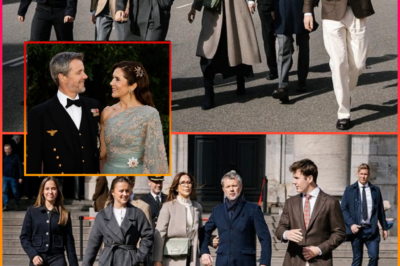
DID YOU NOTICE THIS?!: Tiny detail in photos of Queen Mary of Denmark’s children sends royal fans into a frenzy — and it’s raising unexpected questions
As the Danish royal family stepped out for their traditional Easter celebrations, royal watchers couldn’t stop talking about one thing: Prince Vincent’s height. Queen Mary…
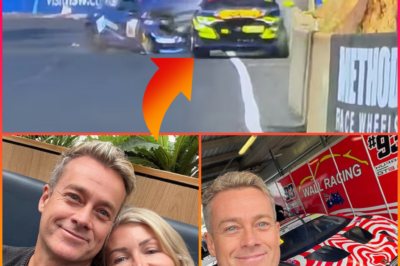
HE COULDN’T SEE WHAT WAS COMING…: Distu-rbing claim surfaces after Grant Denyer crash — family reveals alarming condition post-hospitalisation
Grant Denyer and another driver have been taken to hospital after they had a frightening crash at Bathurst’s famous Mount…
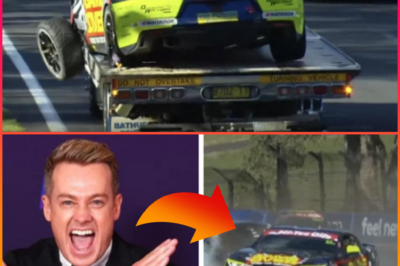
NO ONE SAW THIS COMING…: Chaos at Bathurst as TV star and driver injured in terrif-ying crash — chilling new clue may explain what went wrong
TV star Grant Denyer was taken to hospital along with Richard Barram on Sunday after the pair were involved in…
End of content
No more pages to load