
Ego and the Wheel of Samsara: A Farewell to a Lonely Soul
Human life has long been described as a vast ocean of suffering. From the moment a child enters the world, its first cry echoes like the opening note of a karmic symphony. In many spiritual traditions, that cry is not merely the sound of birth, but the beginning of a journey—a journey through which the soul must repay ancient debts, refine its character, and complete the unfinished fragments carried from countless lifetimes before.
Each person who arrives on this earth carries a story older than memory.
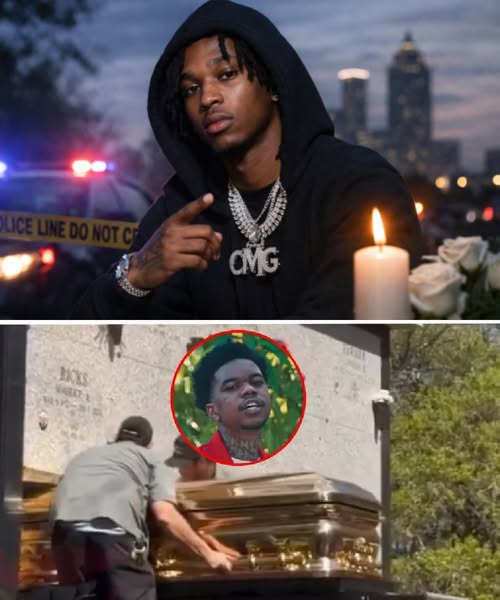
Some are born into quiet lives, destined to pass through the world gently and unnoticed. Others arrive like brilliant stars, burning brightly for a brief moment before disappearing into the night. He was one of those stars.
From an early age, his heart seemed to overflow with compassion. Through music, words, and quiet acts of kindness, he reached people who felt invisible, lonely, or broken. For many, his art became a refuge—a reminder that beauty could still exist in a wounded world.
But sometimes the light that guides others becomes too heavy for the one who carries it.
Fame arrived quickly, like a sudden storm of attention, applause, and expectations. The world celebrated his talent, yet the same spotlight that lifted him up slowly began to obscure the path back to his own center. The louder the crowd cheered, the quieter his inner voice became.
And in that silence, a question began to echo:
“Who am I in this fleeting realm?”
Within the ancient teachings of Samsara—the endless cycle of birth, death, and rebirth—every breath is considered a precious blessing. Life itself is a rare opportunity, a sacred examination offered by the universe. Each day we live is another chance to gather merit, practice compassion, and transform suffering into wisdom.
To cut short that journey by one’s own hand is seen by many spiritual traditions as a painful disruption of the karmic path. It is not simply an end, but a difficult turning point in the soul’s long voyage.
Those who remain behind often feel a storm of emotions.
There is grief for the life that was lost too soon.
There is anger at the silence that replaced a vibrant voice.
There is confusion over why someone so loved could feel so alone.
And yet, alongside those feelings, there is also compassion. Because anyone who reaches such a moment must have been carrying a weight far heavier than the world could see.
According to the laws of cause and effect that guide the wheel of Samsara, a soul does not simply disappear. Death is not an erasure but a transition—another passage in a journey that continues beyond what our eyes can perceive.
The soul moves onward, learning, reflecting, and preparing for another chance to grow.
For this reason, wise teachings remind us not to judge an entire life by its final moment. A person’s existence is made of countless acts of kindness, laughter, creativity, and connection. Those moments remain real, even when the ending feels tragic.
Instead of dwelling only on sorrow, we can offer prayers, compassion, and hope.
Hope that the wandering soul will recognize the value of life in its next existence.
Hope that the lessons of pain will transform into wisdom.
Hope that, in another lifetime, that same heart will return stronger—capable not only of loving others, but also of loving itself.
Perhaps that is the quiet message left behind.
Living is not merely about shining brightly in moments of glory.
It is about enduring the shadows that inevitably follow.
Now that his earthly chapter has closed, may resentment fade like dust in the wind. May the soul that once carried so much light be guided toward a place of deep serenity—where questions no longer torment the mind and the waves of the heart finally grow still.
And when the wheel of Samsara turns once more, may he return to the world with a spirit that remembers the most important truth of all:
that every breath is precious, and every life—no matter how fragile—is worthy of being cherished. 🌙
News

WHAT IS SHE HIDING?! — Gemma O’Neill Deletes EVERYTHING And Vanishes Online As Financial Pressure Mounts… But Insiders Say The Real Reason Is Far More Sh0cking
Gemma O’Neill has gone underground and wiped her Instagram page, just a few weeks ahead of the ‘Her Best Life’…

Bec Finally Speaks — And Her Explosive ‘He Never Loved Me’ Claim After Danny’s Bru:tal Words Reveals A Twist That Rewrites Their Entire Marriage
At one stage during the MAFS experiment, Bec Zacharia and Danny Hewitt looked like they might actually make it. They…

“This Is Your Last Warning” — Jaro City Lil Mikey’s Chilling Threat Moments Before the Friendship Turned De-adly
A shocking and deeply tragic incident has left many questioning how a relationship once built on trust could unravel so…

Rachel Left Absolutely FUMING After Steven’s Completely Unexpected Announcement Turns a Calm Moment Into Total Chaos
It’s crunch time for three Married At First Sight Australia couples as relationships begin to fall apart within the experiment…

Love Triangle Brewing? Gia Fleur & Chris Robinson Go Permanent with Matching Ink — Scott McCristal Left on the Outside!
Married At First Sight besties Gia Fleur and Chris Robinson solidified their friendship during filming as they took a trip to…

THE CAMERAS DIDN’T SHOW THIS — Bec Zacharia’s Savage Comment About Danny Hewitt Sparks New Scandal
The Married At First Sight (MAFS) 2026 cast have started to go rogue on TikTok while the show is still airing, so…
End of content
No more pages to load