When Human Strength Fails Against Nature: Three Hikers D!:e at Grand Canyon National Park
Hiking trails in Grand Canyon National Park are often the dream of outdoor enthusiasts, but during these scorching June days, the park has transformed into a lethal “deathtrap.” The National Park Service (NPS) recently confirmed a heartbreaking series of tragedies: three hikers have perished amidst the majestic canyons, victims of heat levels that far exceed human endurance.
The Fateful Days in the Inner Canyon
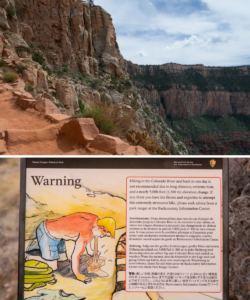
The first tragedy occurred on June 12, when a 72-year-old man collapsed on the South Trail. Just four days later, on June 16, rescue teams discovered the bodies of a 67-year-old man and a 68-year-old woman on the North Trail. Despite the rapid deployment of rescue teams and aerial support, the outcome remained tragically irreversible.
In an official statement, the National Park Service highlighted the brutal environment during that period: “In both cases, the deceased hikers were hiking trails in the Inner Canyon, where temperatures can exceed 109F in the shade during midday hours.” Regrettably, the statement also noted: “Despite rapid response and aerial support, all three individuals were found deceased when responders arrived.”
The Danger Hidden Behind Majestic Beauty
It is no mere coincidence that all three victims were older adults who succumbed to heat-related illnesses. The Inner Canyon of the Grand Canyon has long been labeled an “extreme” environment. When surface temperatures reach 109°F (approximately 43°C), the human body rapidly reaches its limit, leading to heat exhaustion and heatstroke—silent killers that many hikers fail to recognize until it is too late.
Currently, the Coconino County Medical Examiner’s Office is coordinating with authorities to conduct detailed investigations into each case. Regardless of the final findings, this tragedy serves as a chilling warning to anyone planning to challenge nature during the sweltering summer months.
Commentary: Complacency—The Greatest Enemy on the Trail
Reflecting on these events, one cannot help but question the safety awareness of modern hikers. The Grand Canyon is not a luxury resort with modern amenities; it is a harsh, wild environment where the line between a memorable adventure and a catastrophic accident is defined by the adherence to simple, life-saving rules.
Park management has issued strict guidelines: avoiding the Inner Canyon trails between 10 a.m. and 4 p.m. This is not a rigid bureaucratic rule, but a matter of survival. Yet, many continue to ignore these warnings, relying on personal physical fitness or previous hiking experience, unintentionally wandering into regions where temperatures “can quickly overwhelm hikers.”
The deaths of these three individuals are more than just statistics in a report; they are a profound loss for their families and a stark wake-up call for the adventure tourism industry. Nature rarely yields to human arrogance. Perhaps, rather than attempting to conquer every trail regardless of conditions, hikers must learn to approach nature with humility—ensuring that wonders like the Grand Canyon remain destinations of life rather than the final stop for unfinished journeys.