The dark past of murd3:rer Simon Peter Carman sends shockwaves through the public
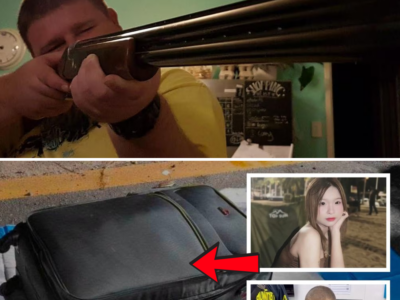
The murder of 17-year-old Tunchanok Donhomla in Pattaya, Thailand, has sent shockwaves across the international community—not merely due to the savage nature of the crime, but because of the chilling inconsistencies in the suspect’s narrative. Simon Peter Carman, a 45-year-old Australian national, currently faces the most severe charges in Thailand following the discovery of the victim’s body, which had been crammed into a discarded suitcase near railway tracks.
The Fracture of Trust and the Cost of Recklessness

Reflecting on the sequence of events, this tragedy serves as a grim warning regarding the hidden risks that travelers, particularly the young and vulnerable, face when entering regions dubbed “cities that never sleep.” The fact that Tunchanok—a girl described by her family as “helpful and independent”—fell victim to an assailant after a fleeting, spontaneous arrangement highlights a profound void in protective mechanisms for those at risk. When the naivety of youth encounters the greed and inhumanity of predatory individuals, a catastrophic outcome becomes nearly inevitable.
Descriptions of the suspect by acquaintances—as someone who “talked slow, walked slow” and often “stared blankly into space”—inadvertently paint the portrait of an individual living on the fringes of society: isolated, lonely, and unpredictable. However, this “abnormality” cannot be used to mitigate the crime; rather, it raises questions about how expatriate communities in Thailand manage themselves and interact with their local environment. The existence of such isolated individuals, devoid of social anchors, often creates “blind spots” in security where deviant behaviors can incubate unchecked.
Contradictory Testimony and the Cold Truth
Carman’s defense, claiming that strangling the victim was an act of “self-defense” triggered by a trivial monetary dispute, reflects not only cowardice but a common psychological tactic employed by offenders to evade accountability. Victim-blaming a 17-year-old girl—especially when the suspect was the one who initiated bringing her into a private space—is an affront to justice. The scratch marks on the suspect’s body, though absurdly dismissed as being caused by “spiders,” serve as undeniable witnesses to the violent struggle that preceded the termination of a young life.
From a legal standpoint, this case is more than a standard criminal investigation; it is a litmus test for the integrity of the Thai judicial system. The victim’s family demanding the death penalty is an understandable psychological reaction in a society where the agony of loss cannot be assuaged by lenient sentencing. The mother’s desperate plea—”As a mother, I don’t know what else to say. I just want him executed”—represents the collective grief of those left behind, watching the future of their loved ones buried by the cruelty of a perpetrator.
A Costly Lesson in Safety
This tragedy is not just an individual loss but a scar on Pattaya’s tourism landscape. It compels authorities to re-evaluate the oversight of areas densely populated by foreign nationals and the monitoring of individuals displaying psychological instability. Simultaneously, it reminds the public of the paramount importance of heightened vigilance in every social interaction. When the boundary between a holiday trip and a murder investigation is narrowed to a single, fateful decision, personal safety must remain the absolute priority, transcending any urge for exploration or new experiences.
The burden of justice now rests upon Thai investigators. Holding the suspect strictly accountable is not only a means of providing justice for Tunchanok, but also a powerful affirmation that in this nation, human life is not a commodity to be bargained with or extinguished under any pretext whatsoever.
SOURCE: 7 NEWS
https://7news.com.au/news/simon-peter-carman-neighbours-speak-up-about-australian-truckie-accused-of-killing-thai-teenage-girl-c-22501554