Latest update on the case involving the British botanist couple who were brutally murd3:red in South Africa and then fed to crocodiles
One of the most harrowing cases in South African judicial history has reached a chilling conclusion after an eight-year pursuit of justice. Three perpetrators linked to the ISIS terror network have been officially convicted by the Durban High Court for the brutal murders of renowned British botanists Rachel Saunders (63) and Rodney Saunders (74). While the verdict marks the end of a traumatic chapter for the victims’ family, the gruesome details of the crime continue to haunt the public consciousness.
A Fateful Encounter Amidst the Wilderness
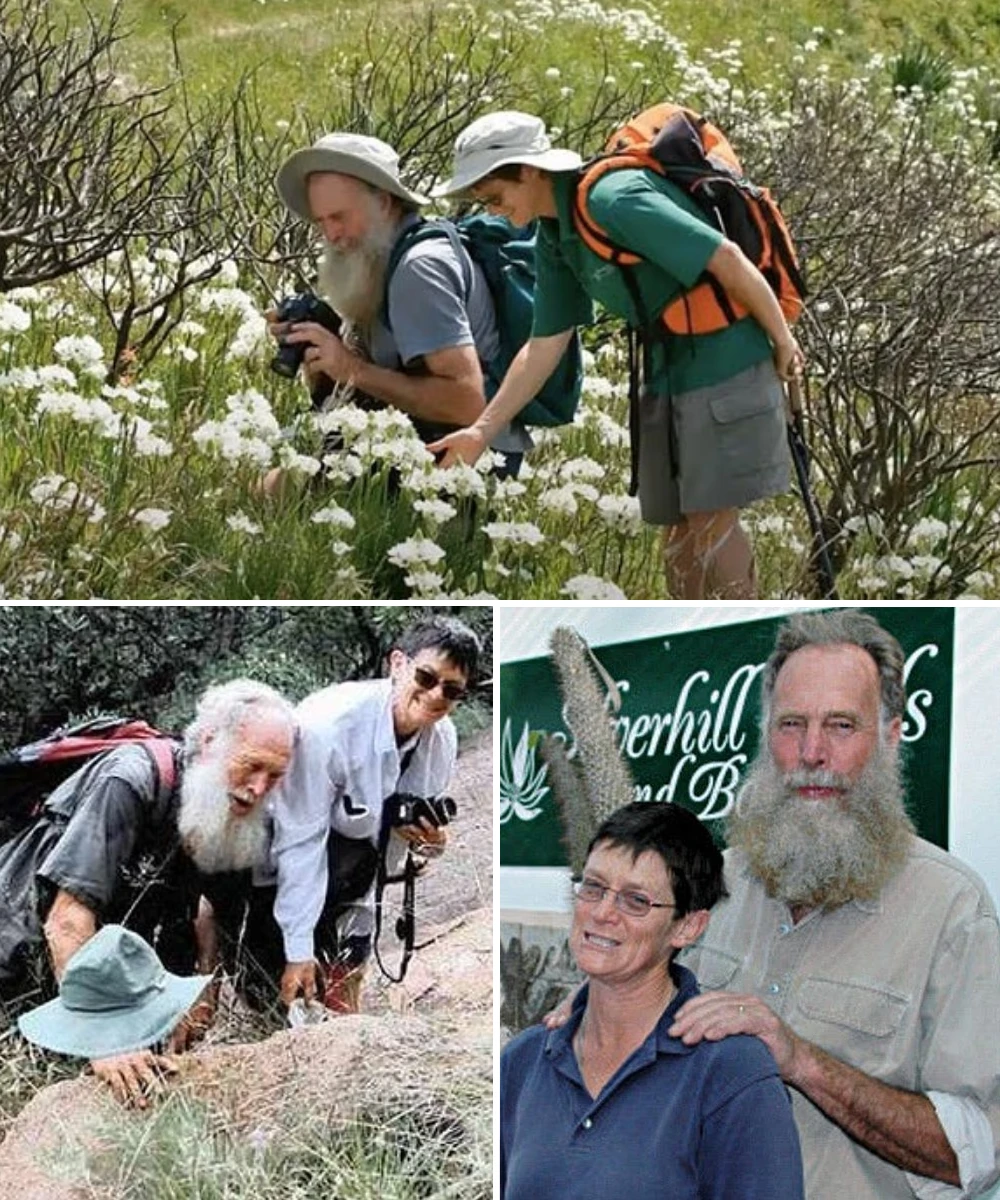
The story of Rod and Rachel Saunders was often described as a love story rooted in a deep passion for the natural world. For over three decades, they had been inseparable, traversing remote landscapes to study the flora of South Africa. Only days before tragedy struck, they appeared radiant on the BBC’s Gardeners’ World. A selfie of the couple alongside host Nick Bailey in the Drakensberg Mountains remains a poignant final legacy, testifying to their unwavering dedication and love for wild native plants.
Yet, shortly after parting ways with the film crew, their mission to collect rare gladioli seeds in the Ngoye Forest National Park turned into a journey of no return. They were oblivious to the fact that amidst the pristine beauty of the ancient forest, a dark malice lay in wait.
A “Hunt” in the Shadows
According to evidence presented at the Durban High Court, ringleader Sayefundeen Del Vecchio (44) identified the elderly couple as targets the moment he spotted them in the forest. He communicated with his wife, Bibi Patel (34), and their lodger, Mussa Jackson (40), via WhatsApp, identifying the victims as a “good hunt.” As the violence unfolded, Del Vecchio gave the chilling instruction: “Kill the kuffar (non believers). When the brothers go out and do this work it is very important that the bodies of the victims are never found”.
After kidnapping the couple, the perpetrators subjected them to brutal torture in an attempt to extort their credit card PINs and bank details. Once the victims were of no further use, they were callously hacked and battered to death. To dispose of the bodies, the gang cocooned them in sleeping bags, transported them to the Tugela River Bridge, and tossed them into the waters below, where Nile crocodiles were waiting. Subsequent autopsies revealed the horrific reality of the crime: Rachel had been struck multiple times in the back of the skull with a machete-like blade and stabbed repeatedly, while Rod suffered similar fatal injuries from blunt force trauma.
Greed and the Hand of Justice
The gang’s murderous spree was ultimately exposed by their own insatiable greed. Within 48 hours, they went on a spending frenzy, charging 734,000 Rand (approximately £37,000) to Rachel’s credit cards. A vigilant shop assistant’s suspicion when asking for identification triggered the collapse of their scheme, leading to a high-stakes manhunt and arrest.
Throughout the marathon 160-day trial, Judge Esther Steyn asserted: “The state has relied as well on circumstantial evidence but the court is satisfied that the pieces of the puzzle presented fitted together perfectly. Bit by bit the evidence formed into a mosaic and the court is satisfied all three acted together in killing the deceased”.
Despite compelling evidence linking the defendants to ISIS—including an ISIS flag found in Del Vecchio’s garden—the court focused its sentencing on the charges of murder, kidnapping, and robbery. Reflecting on the long-standing agony, a spokesperson for the Saunders family stated: “Still after so many years the incident itself and the aftermath causes distress to the family. It was an awful incident and we do not want to dwell on the event as it was dealt with in detail at the trial”.
As the case concludes, the perpetrators face mandatory life imprisonment. However, the loss of the Saunders couple leaves a profound scar on the international botanical community, serving as a painful reminder of the darkness that can lurk even in the most serene corners of the wilderness.