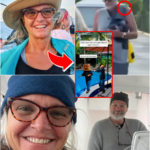
Amina Butterfly, an influential figure across social media platforms, recently stirred up a lively debate about relationships and the burden carried by modern women. In a candid video, she responded to criticisms about her “I don’t need a man” attitude, clarifying that what she opposes is not love, but acquiring an additional responsibility.
Exhausted by “Survival Mode”
Amina begins the video by asserting that the reason she often declares she doesn’t want a man is because she has never experienced a truly supportive relationship. At 42 and juggling family responsibilities, she expresses extreme fatigue with what she calls “survival mode.”
“I am so tired of survival mode,” she shared. “And every time I had a man, they did not help me out of survival mode.”
Amina emphasizes that life is already a constant struggle, and she is seeking relaxation and actual living, instead of “fighting every freaking day.” Her message resonates with many women who are currently balancing work, children, and personal responsibilities.
Rejecting the Fourth Burden
Amina’s argument becomes sharper when discussing the caregiving role within a relationship. She unequivocally states that she already cares for three living beings every day—her two kids and her dog—and she absolutely does not need a “fourth one” to take care of.
“If having a man includes having to take care of, then no, thank you,” Amina says, reflecting the common frustration women feel when entering relationships with partners who only expect attention and service.
She notes that she has witnessed men truly sharing the load in the lives of her friends and sister, and she admits she desires such a relationship. However, her personal experience leaves her skeptical about the existence of such supportive men.
The Final Challenge

Amina Butterfly summarizes her viewpoint with a clear and resolute statement that has become the video’s most talked-about quote:
“If a man can make my life easier, I want a man. If not, stay away from me.”
This message is not just a personal complaint but a challenge to outdated gender standards in modern relationships. It raises questions about the role of men in a contemporary family unit, where women are no longer financially dependent but still shoulder the majority of caregiving responsibilities.
With obvious exhaustion and emotional depletion, Amina expresses hope that, at 42, she will finally get to experience a man who genuinely makes her life easier. Her story is not only capturing the attention of her followers but is also initiating a much-needed dialogue about the balance of burdens in love and marriage.
News
She was bu.ll.ied in the army, but when they saw her brother, everyone fell silent, bowed their heads, and apologized
Chapter 1: A Rose Among Thorns Fort Liberty, North Carolina, was always thick with the smell of iron discipline and…
She was beautiful, wealthy, and talented, but she couldn’t overcome the trauma of being bu.lli.ed in the past until she read this quote
Chapter 1: Flawless Perfection Nellis Air Force Base in Nevada glowed under the sunset like a massive block of molten…
The sinful secrets of a $200 million widow: Demi Moore spirals in a bathroom meltdown after one wrong touch!
HOW MUCH ARE you willing to lose before you win? That seems to be the question facing the women of Landman in this…
THE COUNTDOWN TO D3:ATH BEGINS: THE CHOSEN SEASON 6 PREMIERE DATE REVEALED ALONG WITH HARROWING GLIMPSE OF THE CROSS!
The countdown is over—season six of The Chosen is almost here, and the first glimpse at Jesus’ crucifixion has fans…

No peace for Offset: Even while recovering, a string of sh0cking scandals continues to haunt the rapper
Getty While Offset‘s recovering from the shooting at Florida’s Hard Rock Hotel and Casino, he’s also catching heat over $100K he…

Erykah Badu bluntly refuses to do this regarding Kanye West
Erykah Badu might vibe with Kanye West‘s music … but, she doesn’t want to talk about him in the streets — turning…
End of content
No more pages to load