
THE horrifying murder of a teen girl named “Valentine Sally” just hours after her last meal in a nearby diner still haunts cops 40 years on, the detectives who worked the case have told The U.S. Sun.
At a nondescript truck stop near Ash Fork, Arizona, in February 1982, the body of the then-unidentified 17-year-old girl was found, with the aspirin a waitress had handed her for a toothache minutes before still in her mouth.

The Nationals Center for Missing and Exploited Children assisted police in the desperate search to help solve Valentine Sally’s real identityCredit: National Center for Missing & Exploited Children

Sally, who was finally identified as Carolyn Eaton in 2021, was found wearing these clothesCredit: National Center for Missing & Exploited Children

Veteran Arizona detective Jack Judd took The U.S. Sun behind the scenes of the investigation that haunted his colleagues for decadesCredit: Supplied
Lying face down under a tree, the victim was found clothed, yet had been lying in the woodlands for days.
Wildlife had already swarmed her body and feasted on her corpse, making it impossible to ever determine her cause of death, even with recent advancements in technology.
Jack Judd was a detective at the time and was on the scene.
“I will never forget this case,” he told The U.S. Sun.
New fears ‘Alphabet’ serial killer who strangled four ‘murdered up to 26’
Fliers were sent out after the body was found but the only lead was a woman named Patty Wilkins who was working in a cafe at the popular Monte Carlo truck stop.
Wilkons recalled Sally walking into the cafe on Valentine’s Day with a man she described as looking caring and “not the type” to have committed such a heinous crime.
She believed the man was “in his 50s” and was wore black felt cowboy hat, resplendent with a peacock feather.
Wilkins reportedly saw the girl struggling with toothache, leaving her unable to eat and gave her an aspirin to dull the pain.
The same aspirin that was found lodged in her teeth by investigators upon discovering her body.
In Wilkins’ account, Sally appeared normal and did not indicate she felt unsafe with the man.
“The camaraderie between the two of them was like she knew him, and she was comfortable with him,” Wilkins told local media in 2021.
“I asked her, ‘Are you okay? Do you want to stay here or leave with him?’ And she said ‘No, I’ll go with him.’”
Wilkins was the last person to see her alive.
Although the waitress statement helped establish a preliminary timeline, Coconino Sheriff Jim Driscoll, a 50-year veteran, remained stumped.
“We had no advanced DNA testing back then,” Driscoll lamented to The U.S. Sun. “It was very difficult for everyone involved.”
Case breakthrough
What followed was months and years of torture for local officials desperately searching for answers.
“It’s a long process,” sighed Judd. “It stayed with me.”
As cops continued to be frustratingly dragged down blind alleys, a glimmer of hope seemingly presented itself in 1984.
Judd and his team had brought in a forensic odontologist in Albuquerque who identified the victim as someone from Florida.
The odontologist Dr. Walter Birkby worked at the time at the University of Arizona in Tucson, and had become known as “Dr Death” for using his intimate knowledge of the human skeleton to solve crimes.
It lead the police to believe Sally was runaway Melody Eugenia Cutlip who had been reported missing by her mom in 1980.
Birkby was convinced that a copy from the bite mark of the body’s teeth was a match for Melody and facial reconstruction only strengthened their beliefs.
Judd travelled to the Sunshine state to meet with Melody’s family.
Melody’s mom, however, was adamant the body was not her daughter and her hunch was proven to be correct.
In 1986, her daughter returned. Joy for her family, utter despair for Judd, Driscoll, and the rest of the investigators.
“It cast a black cloud over the case,” said Driscoll.
“The family had believed she was dead. That’s why we focused so heavily on dental evidence—we had relied on a respected expert who was prepared to testify in court.”
After the disappointment, Judd said Birkby was “was a tremendous help” but admitted dental wasn’t his primary specialty, despite the teeth being used as the main apparent evidence tying the body to Melody.
Every Valentine’s Day, I toast her memory. It will live with me forever.
Veteran Arizona Cop Jack Judd
The crushing setback didn’t stop the police from trying to solve the case, however.
Amateur crime enthusiasts speculated that a composite sketch and description of the man with “Sally” at the diner may resemble serial killer Royal Russell Long, though authorities have not confirmed any connection.
Long is known to have traveled along Interstate 40 following the September 1981 murders of Cinda Pallet and Charlotte Kinsey.
He was sentenced for those killings in August 1985 and died of a heart attack in prison in 1993, having never confessed to Valentine Sally’s disappearance.
By the time Judd retired in 1993, Sally’s identity continued to confound the experts.
With the huge state of Arizona stretching across a whopping 18,000 square miles, the vast expanse just added to the difficulty of uncovering the brutal truth.
Haunting memories
The now 75-year-old recalls the case “hanging over” his law enforcement colleagues for years.
“All the hours, all the angles we pursued—it becomes part of you,” he admitted.
“We brought in others to review the case, hoping fresh eyes would see something we missed. It was a massive effort.”
But as DNA testing became more advanced and started to crack the coldest of cases, a startling breakthrough arrived almost 40 years later.
Fortunately, Driscoll had ensured tissue and organ samples from unidentified bodies over the years had been meticulously saved.
With help of a cold case unit, consisting of retired investigators and law enforcement officials, who incredibly worked for free amid severe financial constraints, a match was found.
A runaway from St Louis, Carolyn Eaton, who had been missing since December 1981, was positively identified just five years ago on February 22, 2021.
Detectives from Arizona traveled to speak with relatives, and before long, four decades of agony were finally put to bed.
Coconino County Sheriff’s Lt. Jason Lurkins told the St. Louis Post-Dispatch at the time of the startling discovery that the family were “awestruck.”
“The most important thing was giving the family the chance to move on and know what happened,” Driscoll said. “So many families don’t get that chance.”
Crucially, the invaluable work of the National Center for Missing and Exploited Children provided critical funding that enabled DNA testing through a private laboratory, leading to the positive identification.
The man in the cowboy hat has never been found, and with so much time passing since the tragic discovery of Sally/Carolyn, hopes of ever finding the killer remain slim.
Yet with DNA advancements continuing at an encouragingly rapid pace, hope won’t ever totally extinguished.
Judd said he will never forget his role in attempting to unmask Valentine Sally’s killer.
Over his 22-year career, he admitted the mental toll of working on such emotional cases was tough to bear.
News

THE BITTERSWEET MEDAL: Sutherland makes history as Australia crumbles against their Indian nemesis!
Australia’s new era under freshly appointed captain Sophie Molineux made a flat start against a supremely confident India, comfortably beaten…
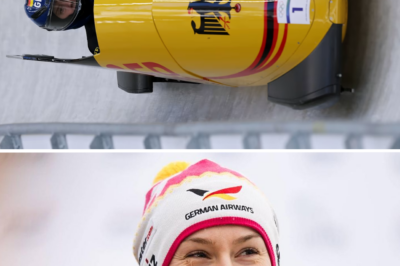
WIND-BREAKING SPEED AT CORTINA: Laura Nolte’s spectacular surge threatens to dethrone the reigning Olympic Queen!
Laura Nolte surged to the top of the Milano Cortina 2026 women’s monobob standings after the first two heats on Sunday (15 February)….

ORANGE CRUSH SWEEPS MILANO: Jens van’t Wout secures stunning Gold double, turning the 1500m final into a one-man show!
The Dutch skater stays out of trouble in a chaotic final to win his second gold medal at Milano Cortina…

LOST IN THE ‘OLYMPIC BOULEVARD’: A journey through the heart of Italy with must-see experiences at Milano Cortina 2026!
All initiatives, events with athletes, and venues open to the public in the Milano Cortina 2026 area. From Predazzo to…
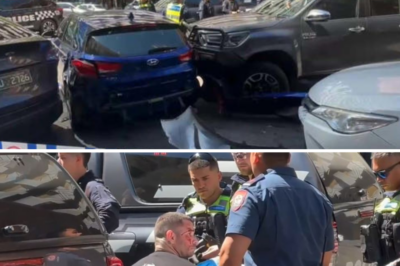
AGGRESSIVE DRIVER: The disturbance at Southern Cross station and the reckless confrontation with police
Undercover police have rammed a car in the middle of Melbourne after it was seen driving erratically. A 35-year-old man was allegedly seen driving…
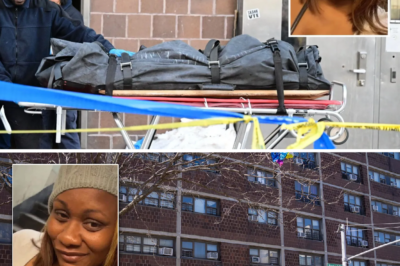
SCREAMS FROM THE TRASH CHUTE: Mom-of-four crushed to d3:ath by compactor after ‘fatal mistake’—while neighbors heard her cries and did nothing!
A MOM-OF-FOUR was crushed to death in a trash compactor, cops have revealed, after finding chopped-up body parts in bags….
End of content
No more pages to load