A significant legal setback for Prince Harry right on the day of his return to the U.K
After years of pursuing a relentless legal crusade aimed at redefining the relationship between the British Royal Family and the tabloid press, Prince Harry has reached a defining and sobering milestone. The ruling handed down on July 7 by the London court has officially brought the long-standing privacy lawsuit against Associated Newspapers Limited (ANL) to a close. The court’s decision to dismiss all allegations of unlawful information gathering is not merely a legal defeat; it serves as a stark testament to the immense difficulty of imposing new accountability standards upon an entrenched and powerful media industry.
The Clash Between Personal Conviction and Legal Evidence
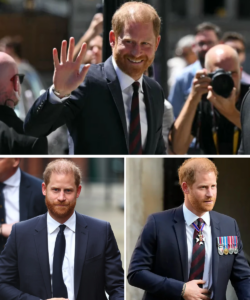
Throughout the litigation, the core of the dispute centered on suspicions of “phone hacking,” the use of private investigators, and deceptive practices employed to harvest data between the 1990s and 2011. However, the Duke of Sussex’s stance collided with the rigorous standards of the judiciary: personal experience and deep-seated suspicion are insufficient substitutes for hard evidence. Mr. Justice Nicklin’s definitive conclusion—that there was insufficient basis to prove the articles were the product of illegal methods—poses a critical question for observers: Does a vast, unbridgeable chasm remain between an individual’s “feeling of violation” and what can be objectively proven in a court of law?
The Price of an Unequal War
The figure of over £50 million (nearly $67 million) in legal costs, highlighted by ANL, stands as a painful reminder of the price of such confrontation. The media group’s characterization of the ruling as an “overwhelming victory for a free press” reflects the sharp ideological divide between the parties. To the tabloid establishment, this outcome acts as a shield protecting their right to operate against what they describe as “misguided” legal challenges. Conversely, for Prince Harry, the past years have been a “horrible experience,” endured in an attempt to shield his wife from what he termed “vicious” and at times “racist” attacks. Yet, with the final verdict falling short of his objectives, the accountability he sought seems to have slipped further into the shadows.
The Conclusion of a Volatile Era
This decision likely marks the final chapter in Harry’s series of lawsuits against the British press. After experiencing minor victories—such as the symbolic £1 damages in the private letter case or the confidential settlement with The Sun—this defeat underscores the limitations of using the courtroom to resolve media grievances. His appearance at Chatham House shortly after receiving the ruling, projecting a calm and engaged demeanor, suggests an acceptance of a new reality: the path toward achieving institutional acknowledgment through litigation has reached an impasse.
In a broader sense, this narrative transcends the binary of winning or losing a single case. It reflects the isolation of a royal figure attempting to decouple from the long-standing operational norms of modern media through legal force. As his personal security concerns remain unresolved and the prospect of bringing his family back to the U.K. remains a distant dream, the events of July 7 do more than just conclude a lawsuit; they underscore a bitter truth: in the battle against the press, justice does not always align with the loudest voice.
SOURCE: PEOPLE
https://people.com/prince-harry-loses-lawsuit-against-uk-newspaper-judgment-revealed-during-return-uk-12011528