The subtle changes at Forest Lodge have given the residence a distinct touch, reflecting William and Kate’s personal style
The relocation of Prince William and Princess Catherine from Adelaide Cottage to Forest Lodge in late 2025 is far more than a mere change of address. It serves as a testament to an emerging trend in the management of contemporary royal life, where the priority placed on personal privacy and family psychological well-being is gradually superseding rigid court protocols.
Decoding the Choice of a “Forever Home”
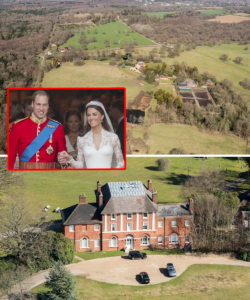
The decision to move to Forest Lodge—an 18th-century Georgian-style mansion with an estimated market value of $21 million—reflects the pragmatic mindset of the Prince and Princess. Adelaide Cottage, while initially suitable, no longer served as an appropriate environment to maintain stability for their three children. In a royal environment frequently besieged by public scrutiny and a series of recent family health crises, seeking a space sufficiently spacious and tranquil to “create new memories” is not merely a material desire; it is a calculated strategy for safeguarding mental health.
Their proactive decision to pay market rent, totaling $411,435 annually, sends a sophisticated political message. Amidst an era where public spending is under intense microscopes, funding their own housing allows the couple to deflect potential criticisms regarding extravagance. It is a clear assertion of independence, further delineating the boundary between official royal budgets and the personal finances of the Prince and Princess of Wales’ household.
Abandoning the Palace: A Silent “Revolution” in Royal Thinking
One of the most noteworthy details is the plan to continue residing at Forest Lodge even after William accedes to the throne. Historically, Buckingham Palace has been viewed as the ultimate symbol of power and the mandatory residence for the monarch. However, William’s intention to break with this tradition to remain in Windsor demonstrates that he is actively redefining the concept of a monarch in the modern era.
King Charles’s decision to reside at Clarence House following his accession established a vital precedent. William is inheriting and reinforcing this philosophy: a monarch does not necessarily have to be a “prisoner” of magnificent yet suffocating palace walls. By choosing a property that features a ballroom, a pond, and a tennis court as a place to raise his children into adulthood, William and Catherine are prioritizing familial values over symbolic imagery. They are constructing the model of a modern, relatable royal family that still maintains necessary discretion.
A Reflection of a New Monarchical Generation
This transition is not just about choosing a house; it is a reflection of the monarchy’s status in modern society. The choice to forego live-in staff signals a desire to control daily life without the interference of antiquated court standards.
From an objective viewpoint, this is a strategic move that narrows the gap between the royal family and the public. By choosing to reside within the vast Windsor Great Park rather than central city locations, they create a necessary “buffer zone.” While history has always placed the monarchy within specific molds, William and Catherine appear to be actively rewriting their own script. They are not merely searching for a dwelling; they are building a foundation to ensure that when the moment of succession arrives, the transition of power will occur without disrupting the upbringing of the next generation.
Forest Lodge becoming their “forever home” stands as a poignant reminder that in a rapidly changing world, even the most deeply rooted traditions must be refreshed to remain sustainable.
SOURCE: PEOPLE
https://people.com/all-about-forest-lodge-11961664