From the bustling business hubs of Sandton to the deadliest corners of Gauteng, Katiso “KT” Molefe has captivated public attention for decades. Once a respected businessman with ties to public-sector projects, Molefe’s life took a dark turn that has left investigators, journalists, and citizens alike grappling with the staggering scale of his alleged criminal empire. Accused of orchestrating some of South Africa’s most daring contract killings, Molefe has become synonymous with cold-blooded precision, corruption, and the underworld’s deadliest networks.
Molefe’s journey from the 1990s to 2025 reads like a thriller. Beginning with legitimate business ventures and public-sector roles in Johannesburg, he leveraged influence, connections, and ambition to expand into the murky world of organized crime. South African authorities now link him to the Big Five cartel, a network allegedly involved in drug trafficking, tender corruption, and the systematic elimination of rivals and threats. Court documents, CCTV footage, and witness statements suggest a meticulously planned web of operations, with Molefe at the helm.
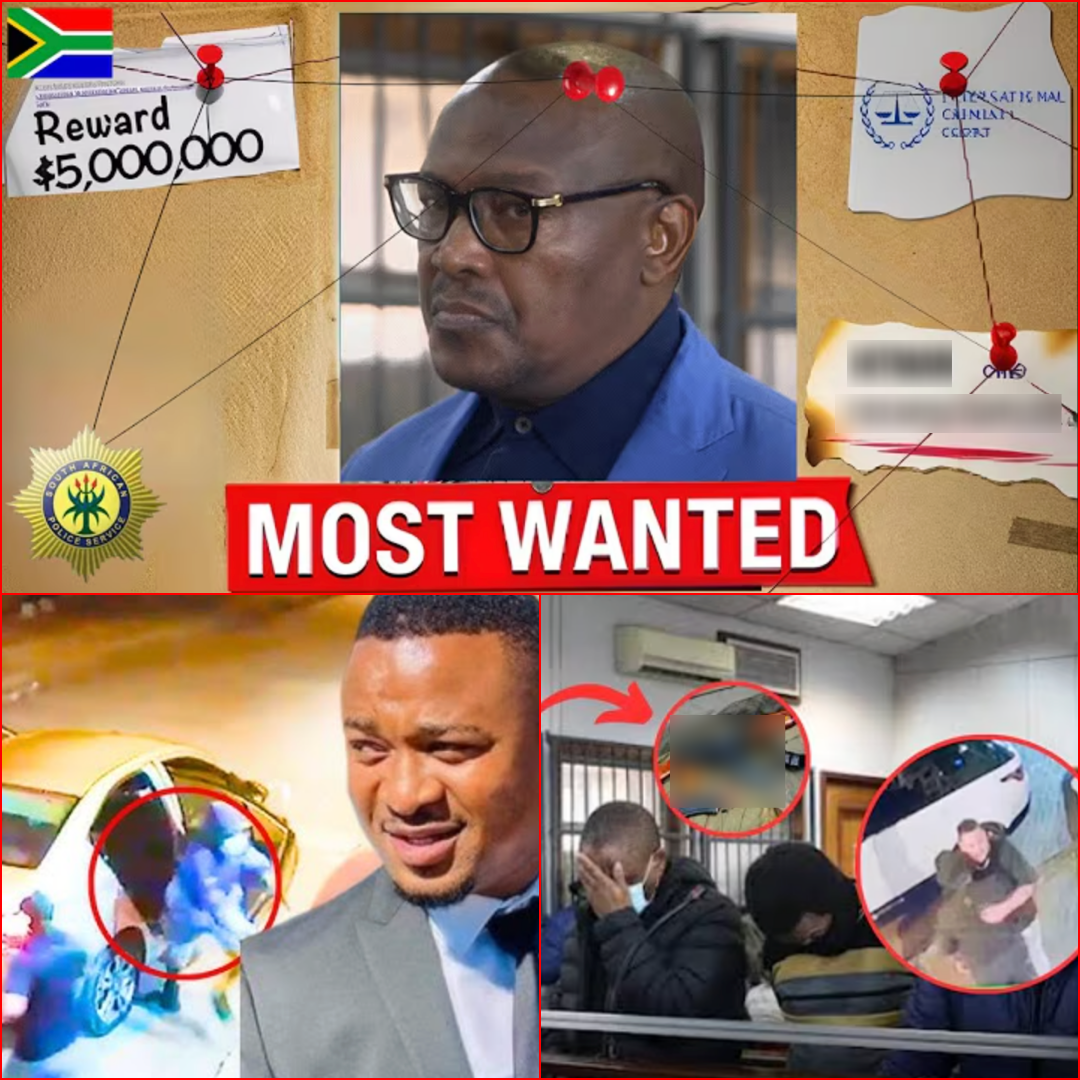
The most chilling accusations revolve around the murders of DJ Sumbody (Oupa John Sefoka), DJ Vintos (Hector Buthelezi), and engineer Armand Swart, along with other victims identified in ballistic reports. CCTV footage and investigative evidence indicate that these killings were not random acts of violence; they were carefully orchestrated, each detail executed with deadly precision. Investigators allege that Molefe personally coordinated the attacks, leveraging alleged hitmen like Michael Pule Tau, Tiego Floyd Mabusela, and Musa Kekana.
Public reaction to the allegations has been intense. South Africans watched in disbelief as details emerged: gang connections, political protection, and links to major financial tenders painted a picture of a man who moved effortlessly between legitimate business and lethal organized crime. While Molefe’s lawyers insist the case against him is speculative and weak, the evidence compiled by the National Prosecuting Authority (NPA) and highlighted in media reports portrays a starkly different story — one of a cold, calculating figure who allegedly pulled the strings behind multiple deaths.
The legal battles have been as dramatic as the crimes themselves. Molefe appeared in the Alexandra Magistrates’ Court and later the Gauteng High Court, where he was granted bail of R400,000, a decision that drew public outrage and concern from political groups like the EFF (Economic Freedom Fighters). Authorities highlighted the necessity of protecting witnesses, given Molefe’s alleged reach and influence. Despite these measures, multiple delays, procedural complications, and high-profile bail hearings have kept the nation on edge, with each court appearance shining a brighter spotlight on Molefe’s alleged empire.
Beyond the courtroom, Molefe’s alleged activities reveal the inner workings of South Africa’s underworld. Investigators have traced connections between the murders and drug trafficking routes, tender money, and the alleged Big Five cartel network, suggesting that the killings were part of a broader strategy to maintain control and enforce dominance. Documents and whistleblower testimonies hint at deep infiltration into both private and public institutions, revealing a complex network of crime that extends beyond individual acts of violence.
The human cost of these allegations is undeniable. Families of victims like DJ Sumbody and DJ Vintos are left grappling with loss, trauma, and unanswered questions, while the public watches in horror at the audacity of these crimes. Molefe’s story serves as a cautionary tale of how ambition, power, and corruption can intersect to devastating effect, illustrating the fragility of law and order when confronted by organized criminal networks.
For the nation, the KT Molefe case is more than a criminal trial — it is a window into the heart of South Africa’s criminal underworld, exposing the chilling intersection of business, politics, and murder. Each new revelation, from court testimonies to forensic evidence, adds layers to the narrative, keeping the public riveted and media coverage relentless.
Whether Molefe is ultimately convicted or not, the shadow of his alleged empire will linger. Investigators continue to examine ballistic reports, track alleged associates, and uncover the financial and logistical networks that may have enabled these murders. The story also raises broader questions about state oversight, law enforcement efficacy, and the extent to which organized crime can infiltrate legitimate institutions — questions that South Africa, and the world, cannot afford to ignore.
WATCH NOW:
In a country already grappling with rising crime, corruption, and social inequity, the KT Molefe saga is a stark reminder of the deadly consequences of unchecked power. His story, from Sandton businessman to alleged kingpin behind some of the most shocking contract killings in recent history, is a chilling illustration of ambition gone rogue, and the enduring human cost of violence.
As South Africans watch the legal proceedings unfold, the world witnesses a gripping saga of crime, corruption, and intrigue — a story that will define both KT Molefe’s legacy and the ongoing battle against organized crime in Gauteng.
News

OMG! The unexpected tension between Prince Harry and Prince William that has the internet in an uproar!
A royal wedding is on the horizon, and while the event will be a happy occasion for the Royal Family,…
CAUGHT CAMERA — Prince William’s Four-Word Whisper to Princess Charlotte and Prince Louis Caught on Camera
The Royal Family attended their annual Easter Sunday church service in Windsor this morning – and Prince William was spotted…

💥 THREE WORDS THAT MELTED HEARTS — Princess Charlotte Turns to the Camera at Easter and Quietly Says It…
Prince William got in on the coordinated look as well From left: Princess Charlotte, Kate Middleton, Prince George, Prince Louis…
THE FATEFUL DIAMOND CHAIN — Kevin “Tugg” Watson Sh0t D3ad on Facebook Live in South Austin, Ch!lling Argument Footage Leaves Viewers Shaken
What began as a routine livestream quickly spiraled into a moment that would leave viewers stunned and searching for answers….

WATCH VIDEO: Tugg Watson’s Family Drops Bombshell on K!llers – Chicago PD Ignored Key Evidence!
The case surrounding the death of Tugg Watson has taken a dramatic and unsettling turn, as his family steps forward…
CHAOS ERUPTS — Chief Keef Reacts After Cousin Is Taken in Sh0cking Chicago Incident
Tensions in Chicago have once again erupted into chaos, and this time the situation has hit close to home for…
End of content
No more pages to load