From the Mississippi Strip to Bloody Footsteps: Kevin Costner’s The West Reveals a Harsh Truth
The Opening: A Confession in the Field
The opening image is stark: Kevin Costner stands tall in a vast field, looking directly at the viewer and posing a chilling question: “What do we think of when we think of the West?” That question immediately pulls the audience into the heart of a complex historical dialogue.
The Core Issue: The Uncompromising Conquest
The first episode wastes no time confronting the truth: the westward expansion of the United States began with the Treaty of Paris in 1783, when Britain ceded land all the way to the Mississippi River to the young nation. Although leaders like George Washington encouraged the legal purchase of land from the Native tribes who occupied those territories, hoping they would assimilate their agricultural systems, the reality was much harsher: the settlers simply took the land.
The series quickly transports the audience to the Northwest Territory (now including Ohio, Indiana, Illinois, etc.). This is where Chief Little Turtle of the Miami nation recognized that unity was the only way to survive. He formed a powerful confederacy among the tribes to fight the relentless encroachment of settlers, militia, and the US military.
A Fresh Perspective: The Unexpected Strength of the Indigenous Peoples
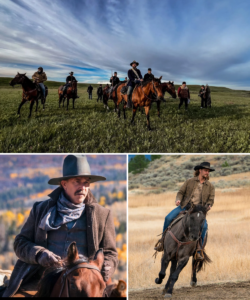
What comes as a surprise (in a positive way) is that The West dedicates a significant amount of time to deeply analyze the tactics and strength of the Northwest Confederacy. The balance in this approach, while anticipated given Costner’s and Goodwin’s records, truly exceeds expectations.
Many of the experts interviewed are members of the Indigenous tribes from the region. They bring the direct perspective of their ancestors: their land was being stolen, and they fought fiercely to defend it. US forces suffered heavy defeats, mainly because they tried to fight using Revolutionary War tactics, while the Natives excelled in hand-to-hand combat.
However, the series debunks the notion that the Natives were disorganized opponents. Thanks to visionary leaders like Chief Little Turtle, their confederacy made significant headway against the US military. This is one of the rare times that the Natives’ defense of their land is seen as a coordinated effort, rather than merely the failure of individual nations overwhelmed by US forces.
Technical Elements and Minor Drawbacks
Reenactments: Often the bane of existence in documentaries, here they are a bright spot. They are subtly staged, effectively supporting the experts’ interviews without overwhelming the content.
The Narration Issue: While Costner is a compelling actor, his narration style is quite measured, lacking significant emotional inflection. The consistent rhythm of his monologue sometimes causes the viewer’s attention to waver.
Memorable Final Shot: Costner concludes the episode by discussing the Louisiana Purchase, an acquisition that propelled explorers, settlers, and soldiers to be “seeking their fortunes in a foreign land, and marching west with bloody footsteps.”
Initial Assessment: Kevin Costner’s The West is a necessary and unflinching look at America’s expansion history, especially in its willingness to dissect the bloody battles from the perspective of those who lost everything.