King Charles’ Striking Channel Remark in Front of Macron Has a Surprising Historical Meaning
King Charles made a striking reference to warriors crossing the English Channel as he praised Anglo-French relations in front of French President Emmanuel Macron.
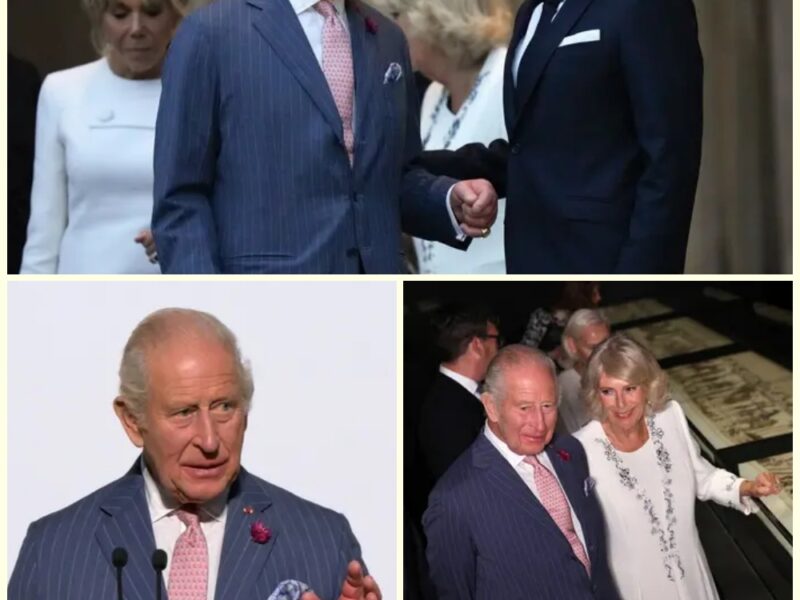
The King made the remark during a speech at the British Museum on Wednesday evening, where he and Queen Camilla joined Macron and his wife, Brigitte, to view the historic Bayeux Tapestry.
King Charles highlighted the remarkable transformation represented by the ancient embroidery, which depicts the events surrounding the Norman Conquest of England in 1066.
“It once depicted warriors crossing the Channel; yet today it forms part of a cultural exchange that will see some of the British Museum’s own precious artefacts travel to France in return, in a spirit of friendship,” the King said.
It was not a reference to modern-day small boat migrants making the perilous journey across the Channel.
However, the choice of words carried an unmistakable modern irony as King Charles delivered the speech with Mr Macron sitting opposite him.
The Channel remains a major political issue for Britain and France, with both countries continuing to work together on migration and efforts to tackle dangerous crossings.

King Charles made a striking reference to warriors crossing the English Channel as he praised Anglo-French relations in front of French President Emmanuel Macron
| GETTY
But King Charles used the historic journey depicted in the tapestry to point out that a route once associated with invasion and warfare has become a means of cultural exchange between the two countries.
The King was keen to emphasise the close ties between Britain and France throughout his address, describing the tapestry as a symbol of their “shared history”.
The nearly 70-metre-long embroidery depicts William’s invasion of England and the Battle of Hastings, but King Charles argued that its significance extends far beyond the conflict it records.
He said the tapestry had become “a precious symbol of trust” at a time when trust was “sadly” in short supply between nations.

King Charles appeared to sidestep a potential gender debate with carefully chosen language when discussing the people who embroidered the Bayeux Tapestry | GETTY
The King also pointed to the reciprocal nature of the current arrangement, under which the Bayeux Tapestry has been loaned to the British Museum while treasures from the museum’s collection will travel to France.
Among those due to be displayed in France are the Sutton Hoo treasures, the Lewis Chessmen and a series of Renaissance drawings.
The French Ministry of Culture has described the arrangement as an exceptional cultural exchange between the two countries.
Charles said the objects demonstrated how Britain and France had been “bound together for almost a millennium”.

King Charles III and Queen Camilla, alongside France’s President Emmanuel Macron, viewing a section of the Bayeux Tapestry | GETTY
The monarch also used his speech to reflect on his own Norman ancestry, joking that while he was “undoubtedly the direct descendant of King William I”, the 13th-century Treaty of Paris might affect his claim to be the current Duke of Normandy.
The King later returned to the theme of the tapestry’s shared heritage, saying that neither Britain nor France could “fully tell our own story without the other”.
He concluded by looking towards the future, describing the cultural exchange as part of a relationship that should continue to be “woven” by Britain and France together.
The Bayeux Tapestry is being displayed in Britain for the first time since its creation, with the exhibition opening to the public at the British Museum on September 10.