Some stories terrify you with monsters, shadows, and sudden jolts of fear. But others—far more unsettling—terrify you with stillness. With a man who smiles a little too calmly. With a silence that feels rehearsed. With the sense that danger sits right across the room, studying you quietly.
The Beast in Me, Netflix’s newest psychological thriller, embraces this second kind of terror from the very first frame. It’s not loud, flashy fear. It’s intimate, patient, and uncomfortably personal. And it works.

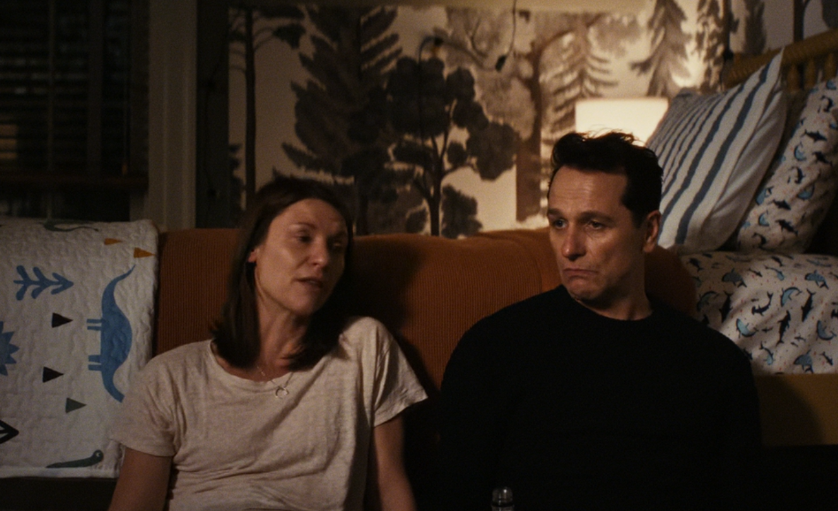
At the center of this eerie mystery is Aggie Wiggs, played with remarkable emotional depth by Claire Danes. Aggie is an author suffocating under the unresolved grief of losing her son. Her world is already fragile, broken at the edges, when she begins her latest project: a nonfiction exploration of a notorious case involving Nile Jarvis, a wealthy real estate mogul accused—though legally cleared—of murdering his wife, Madison.
Though the courts may have absolved Nile, the public has not. Whispers cling to his name. Every photo, interview, or rumor feels coated with suspicion. And Aggie, hoping to resurrect her writing career, convinces herself she can keep emotional distance. She’s wrong.
A Woman Drawn Toward the Darkness
As Aggie delves deeper into Nile’s life, she enters a world held together by silence, money, and immaculate self-control. Scenes with Nile are slow, deliberate, lingering just a second too long on his expressions—inviting viewers to question everything he says and everything he chooses not to say.
Danes plays Aggie as a woman torn between professional fascination and instinctual dread. She wants answers. She wants clarity. But she also wants—desperately—to outrun her own guilt about her son, guilt that begins surfacing the closer Nile draws her into his orbit.
Working opposite her is Matthew Rhys, who delivers one of the most chilling performances of his career. His portrayal of Nile is a masterclass in subtle villainy—or perhaps innocent composure. Rhys never oversells the menace. Instead, he allows it to simmer. His charm feels like a carefully laid trap, and his anger—when it surfaces—is quick, razor-sharp, and instantly suppressed, as if he’s afraid of revealing too much. The ambiguity is the point. Viewers can’t decide whether he is a misunderstood victim or a man who learned long ago how to hide the beast within him.
A Gothic Thriller Wrapped in Modern Shadows
Visually, The Beast in Me leans heavily into atmospheric storytelling. Directors use long shadows, dim hallways, and storm-soaked evenings not as clichés but as narrative echoes of the characters’ emotional states. The cinematography traps Aggie—and the audience—in a world that feels perpetually on edge. Even moments of daylight carry a sense of foreboding, as though the truth itself is watching from a dark corner.
The writing never rushes toward answers. Every time Aggie gets close to uncovering something meaningful, a new layer of deception rises to the surface. The show skillfully pieces together two unfolding mysteries: what really happened to Madison Jarvis, and what Aggie herself has been suppressing about the night her son died.
The dynamic shifts dramatically when Nile’s father enters the story—a ruthless patriarch whose power stretches far beyond real estate. His presence sharpens the show’s themes: control, inheritance, and the violence families bury under their legacies. With him, the Jarvis family portrait becomes one of domination, fear, and secrets cultivated like heirlooms.
The Truth Hits Harder Than the Horror
By the time the series reaches its devastating climax, the two central mysteries collide in a way that feels both shocking and inevitable. What Aggie uncovers about Madison’s death is painful, haunting, and painfully human. But what she uncovers about herself is worse.
The Beast in Me is less a traditional mystery and more a study of how trauma shapes perception. How power reshapes truth. And how grief can make us blind to danger—even when it’s staring directly into our eyes.
The show leaves viewers with a single, lingering question:
If your instincts whispered that someone was dangerous, would you listen… or convince yourself you were safe until it was too late?
In a genre crowded with flashy twists and predictable villains, The Beast in Me stands out as something rarer: a quiet, elegant, deeply unsettling psychological thriller that understands the real monsters are the ones who know how to hide.
News
Netflix’s New Horror Series Unleashes Unrelenting Terror, Creeping Supernatural Secrets, and a Wedding Day Nightmare That Will Haunt You Long After the Credits Roll
Netflix’s New Horror Series Unleashes Unrelenting Terror, Creeping Supernatural Secrets, and a Wedding Day Nightmare That Will Haunt You Long…

Episode 500 didn’t just celebrate a milestone — it quietly turned into a full-blown treasure hunt hiding clues, callbacks, and emotional bombs that trace all the way back across decades.
Only Real NCIS Fans Will Catch These… Episode 500 Turned Into a Full Treasure Hunt With Hidden Clues From Decades…

The show just delivered one of its boldest moves yet, saying goodbye to a longtime fan-favorite in a way no one saw coming. Some fans are calling it a powerful, necessary shake-up, while others think it crossed the line after years of emotional investment.
NCIS Fans Left Shattered After Shocking 500th Episode Death as Leon Vance’s Exit Sparks Debate Over the Most Heartbreaking Departures…
A troubled detective hunts a ritualistic serial killer while confronting a corrupt colleague, in a Nordic noir story that feels overly familiar. Streaming on Netflix.
Detective Hole’ Review: Jo Nesbø’s Dark Cop Arrives Too Late to the Nordic Noir Boom (Netflix) A troubled detective hunts…

A SHOCKING PSYCHOLOGICAL THRILLER THAT WILL MESS WITH YOUR HEAD — and it’s already shaping up to be your next obsession.
An “unconventional thriller” full of twists and turns? We’re in! Exploring “guilt and retribution, love and betrayal,” Apple’s Imperfect Women…

BOOKISH MEETS SMALL-TOWN M-U:RDER — and somehow it’s even more addictive than you’d expect!
If you love a good detective drama and are on the hunt for a new TV obsession, look no further…
End of content
No more pages to load