
Fifteen years after its release, The Last House on the Left (2009) continues to provoke, disturb, and polarize viewers like few other horror remakes. Directed by Dennis Iliadis in his English-language debut and produced by horror maestro Wes Craven (who helmed the 1972 original), this brutal reimagining of the rape-revenge subgenre takes the raw, low-budget anger of the exploitation era and polishes it into a slick, stomach-churning mainstream thriller. Starring Tony Goldwyn, Monica Potter, Sara Paxton, and Garret Dillahunt, the film follows a family whose idyllic lakeside vacation turns into a nightmare when their daughter is savagely attacked by a trio of escaped convicts – only for the predators to seek refuge in the very home of their victims. What follows is a harrowing descent into violence, retribution, and the dark question at the heart of the genre: how far would you go to protect the ones you love?

The story is deceptively simple. Mari Collingwood (Sara Paxton), a bright, rebellious 17-year-old, sneaks out to meet friends and ends up abducted by escaped prisoner Krug (Garret Dillahunt), his girlfriend Sadie (Riki Lindhome), and Krug’s son Justin (Spencer Treat Clark). After a night of unimaginable cruelty, Mari is left for dead in the woods. She stumbles home to her parents, John (Tony Goldwyn), a surgeon, and Emma (Monica Potter). When the three criminals – unaware of the connection – show up at the Collingwood lake house claiming car trouble, the stage is set for one of the most intense revenge sequences in modern horror.

Iliadis, working from a screenplay by Adam Alleca, keeps the film’s brutality unflinching but never exploitative. The infamous assault scene is graphic yet shot with restraint – focusing on terror and helplessness rather than titillation. The revenge, however, is unrelenting: John and Emma transform from grieving parents into methodical executioners, using household tools and surgical precision to exact payback. Goldwyn’s quiet descent into rage and Potter’s heartbreaking shift from victim to avenger are the film’s emotional core. Paxton’s Mari is more than a scream queen – her survival instinct and silent suffering anchor the horror.
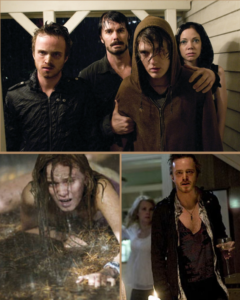
The film’s power lies in its refusal to sanitize. Unlike many contemporary horrors that lean on jump scares or supernatural elements, The Last House on the Left is grounded in raw human cruelty and its aftermath. The violence is visceral – broken bottles, fireplace pokers, chainsaws – but it’s the psychological toll that lingers. “We wanted to show what real vengeance looks like,” Iliadis said in a 2009 interview. “It’s not clean. It’s messy, ugly, and it changes you.”
Critics were sharply divided upon release. Roger Ebert gave it 3 stars, calling it “a well-made exploitation picture that knows exactly what it’s doing.” The New York Times praised the performances but warned of its “brutal nihilism.” On Rotten Tomatoes, it holds a 62% critics score and 58% audience score – respectable for the genre, but reflective of its polarizing nature.
Over time, The Last House on the Left has earned cult status. Horror fans praise its unflinching honesty and the way it forces viewers to confront the cost of revenge. Modern reappraisals highlight its feminist undertones: Mari’s survival and the mothers’ rage subvert the “final girl” trope. The film’s influence is clear in later revenge thrillers like The Nightingale and Promising Young Woman.
At its core, The Last House on the Left is a nightmare about parental love pushed to its breaking point. It asks: when evil invades your home, what becomes of you? The answer is neither clean nor comforting – and that’s exactly why it still haunts.
News
Netflix’s New Horror Series Unleashes Unrelenting Terror, Creeping Supernatural Secrets, and a Wedding Day Nightmare That Will Haunt You Long After the Credits Roll
Netflix’s New Horror Series Unleashes Unrelenting Terror, Creeping Supernatural Secrets, and a Wedding Day Nightmare That Will Haunt You Long…

Episode 500 didn’t just celebrate a milestone — it quietly turned into a full-blown treasure hunt hiding clues, callbacks, and emotional bombs that trace all the way back across decades.
Only Real NCIS Fans Will Catch These… Episode 500 Turned Into a Full Treasure Hunt With Hidden Clues From Decades…

The show just delivered one of its boldest moves yet, saying goodbye to a longtime fan-favorite in a way no one saw coming. Some fans are calling it a powerful, necessary shake-up, while others think it crossed the line after years of emotional investment.
NCIS Fans Left Shattered After Shocking 500th Episode Death as Leon Vance’s Exit Sparks Debate Over the Most Heartbreaking Departures…
A troubled detective hunts a ritualistic serial killer while confronting a corrupt colleague, in a Nordic noir story that feels overly familiar. Streaming on Netflix.
Detective Hole’ Review: Jo Nesbø’s Dark Cop Arrives Too Late to the Nordic Noir Boom (Netflix) A troubled detective hunts…

A SHOCKING PSYCHOLOGICAL THRILLER THAT WILL MESS WITH YOUR HEAD — and it’s already shaping up to be your next obsession.
An “unconventional thriller” full of twists and turns? We’re in! Exploring “guilt and retribution, love and betrayal,” Apple’s Imperfect Women…

BOOKISH MEETS SMALL-TOWN M-U:RDER — and somehow it’s even more addictive than you’d expect!
If you love a good detective drama and are on the hunt for a new TV obsession, look no further…
End of content
No more pages to load