Queensland plane crash explosion: Pilot with spinal injuries and full-b0.dy burns achieves the extraordinary, leaving many in absolute awe
A pilot suffering spinal injuries and burns all over his body crawled 2km to call for help after his light plane crashed in central Queensland.
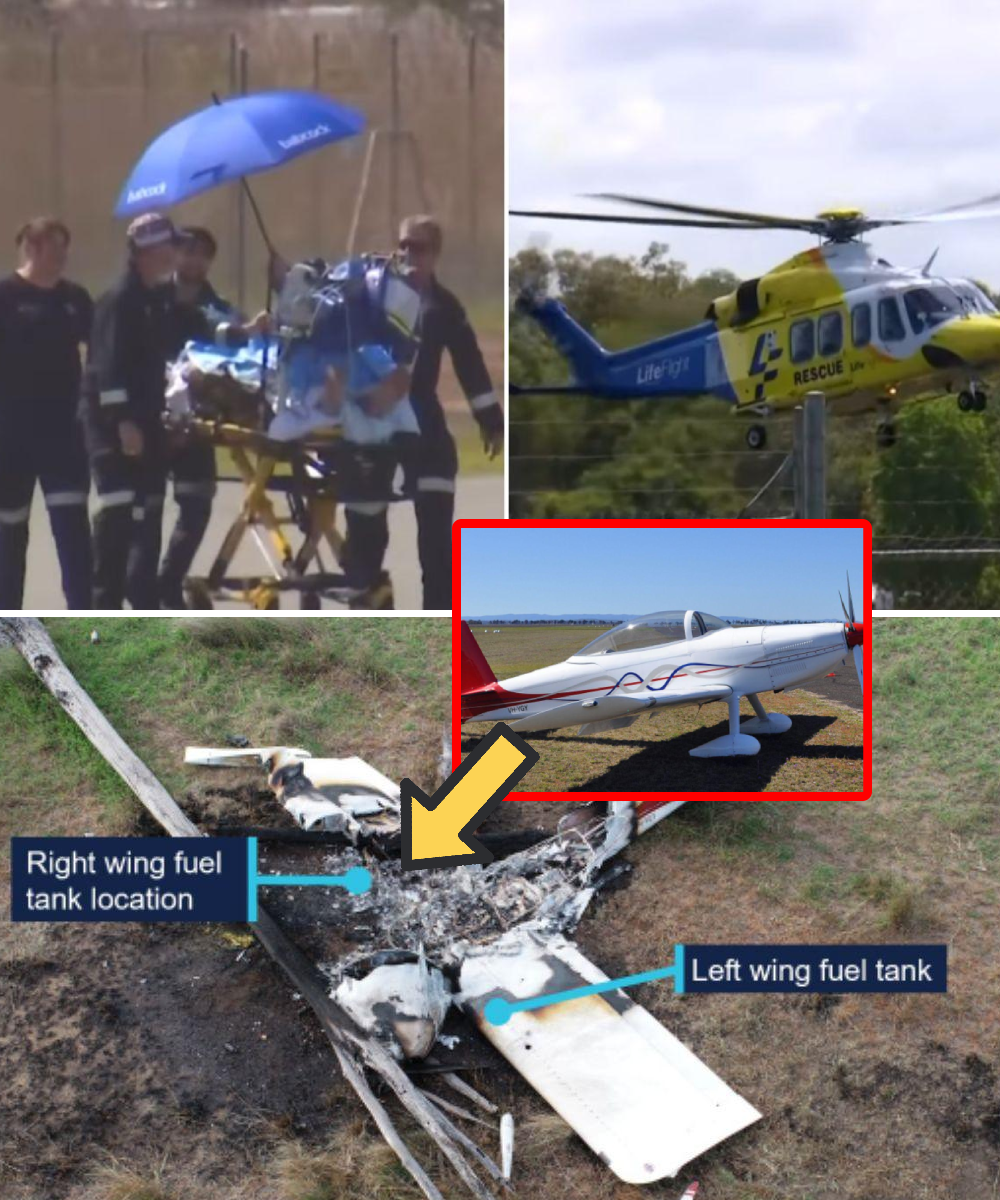
Trevor Mills, 65, was at the controls of his kit Van’s RV-8 aircraft when it suffered a catastrophic engine failure soon after takeoff in November last year.
The plane crashed into a nearby paddock, about 41km west of Gladstone.
It skidded along the grass until it slammed into a fallen tree and exploded.
The aircraft was destroyed in the impact and the intense fuel-fed inferno that erupted.
Miraculously, Mills survived the crash but suffered severe, life-threatening spinal injuries and burns.
Pulling himself free of the wreckage, Mills crawled on his hands and knees to a home on the property where he called for help.


In a triple-0 call made at the time, emergency services can be heard describing the urgency of the situation.
“Pilot seriously injured, conscious and breathing but badly burnt … 100 percent of his body,” they can be heard relaying.
“Damage to his ears. The patient has walked over 2km away from the plane to the homestead, and he looks like he’s in a pretty bad way.”
Mills was airlifted to Bundaberg Airport, where his medical team was met with a second helicopter that flew him to the Royal Brisbane and Women’s Hospital, where he remained for a time in a life-threatening condition.
Despite the odds, Mills survived his ordeal and made a full recovery.

After a six-month investigation into the crash, the Australian Transport and Safety Bureau (ATSB) published a report that found an “undetermined issue” resulted in the engine failing in flight.
“During the forced landing, impact forces as a result of the aircraft’s rate of descent collapsed the landing gear, buckled the wing/fuselage structure and caused one or both wing fuel tanks to be breached, which intensified the post-impact fire,” the report read.
“The fire destroyed most of the aircraft’s engine, cabin, wings, and fuselage which limited the extent to which pre-impact defects could be identified.
“Because of this, the reason for the aircraft’s engine failing in flight could not be established.”

The ATSB made safety recommendations regarding the crash, and said while there is “no regulatory requirements” for clothing, more flame- resistant clothing being worn by pilots could protect them from serious burns in a crash.
“The shorts and T-shirt worn by the pilot on the day of the accident would have offered less protection than a long-sleeve shirt and trousers, however, it was not determined whether this contributed to the severity of their injuries,” it said.
“While personal preference and comfort are obvious factors in the selection of clothing when flying, consideration should be given to the clothing’s fire resistance and coverage.”