“Try Not to Cry, Queen,” They Sneered — Years Later, the Navy SEAL Who Humbled Nine Marines Walked Back In
CHAPTER 1 — “Try Not to Cry, Queen”
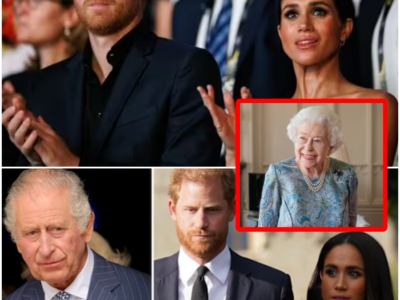
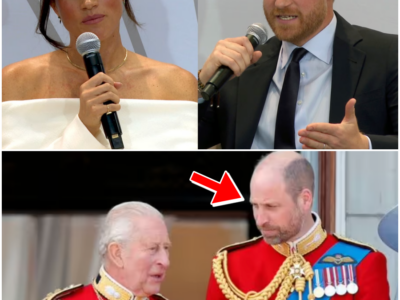
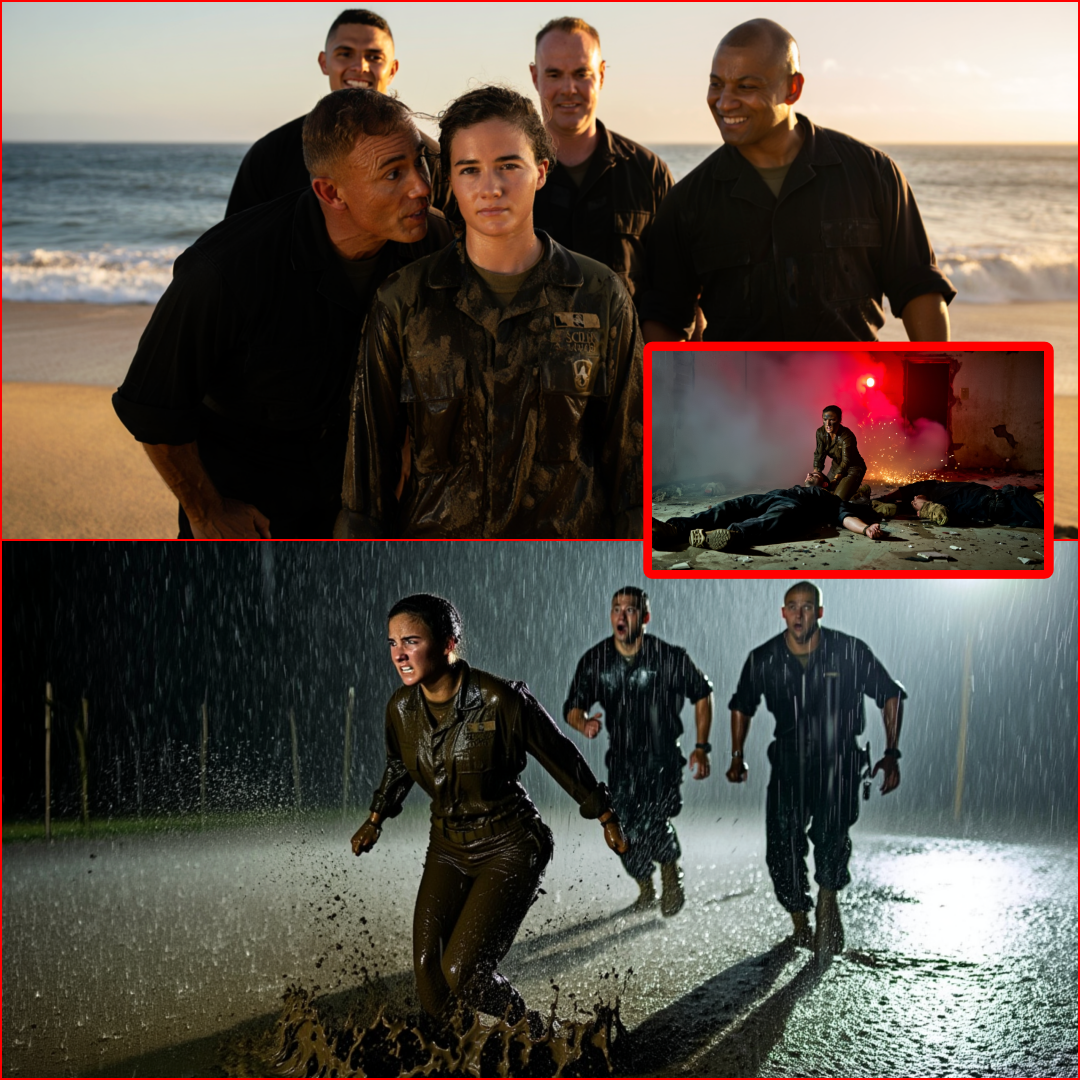
The Pacific wind knifed across the Naval Special Warfare Center courtyard, carrying the sting of salt, sand, and humiliation. Petty Officer Second Class Emory Dalton stood at rigid attention, boots squelching with seawater, blood streaking down both shins from hours of surf torture. Her breaths came sharp and steady, but her pulse throbbed at her temple like a war drum.
Nine SEAL instructors circled her as if she were some rare and laughable creature washed up on their beach.
“Try not to cry, queen,” Senior Chief Crane drawled, his Louisville accent dripping with mock sympathy. “Maybe Daddy can pull some strings and get you a desk job where you belong.”
Snickers broke out behind him. The other instructors pretended to look anywhere but at her, but their smirks betrayed them. Emory kept her stare pinned forward, jaw locked so tightly she felt something in her ear pop.
She said nothing.
Silence was the only dignity they couldn’t take.
Crane stepped closer, close enough that she could smell the stale coffee on his breath. He nudged her boot with his.
“You’re tough, I’ll give you that. Stupid, but tough. There’s a difference, you know.”
Again, she said nothing.
Crane’s smirk grew uglier. “Look at that. The princess has manners. Bet Daddy taught you that before he signed your permission slip to come play soldier.”
One of the younger instructors—Petty Officer Garrison—shifted uncomfortably.
“Senior, maybe—”
“Shut it,” Crane snapped. “If she wants equal treatment, she’s getting it.”
Equal treatment.
Right.
There was nothing equal about the way they stalked her, waiting for the moment she would break—because breaking was the only outcome they found believable. To them, she was a political project, a PR pawn, a quota checkmark.
And Crane… Crane hated her most because he hated what she represented: the idea that someone like her could possibly belong here.
“Dalton,” Crane barked.
“Yes, Senior Chief!”
His eyes narrowed. “Are you bleeding on my grinder?”
“Sir, yes, sir!”
“Then clean yourself up. You look like a busted piñata.”
A few instructors laughed. A few didn’t. One—Chief Redmond—looked at her longer than the others, expression unreadable, as if he saw something he wasn’t sure he believed.
But none of them knew. None of them could know.
None of them knew that “Daddy”—the man Crane mocked every single morning—had been Master Chief Raymond Dalton, DEVGRU operator, the man whose legends were whispered in dim bars by men who never met him but wished they had. The man who died in Ramadi standing over sixteen enemy fighters, a knife in his hand, buying time for his team to escape.
Her father didn’t pull strings.
He cut them.
He carved his name into history one impossible mission at a time, and he died refusing to retreat even when retreat meant survival.
Emory took a slow breath, steadying the tremor in her hands.
She wasn’t here because of him.
She was here because of what he taught her: that courage is a choice you make every single time you’re given the chance to run.
Crane turned away, satisfied he had made his point. “Form up! Final evolution starts in five.”
Garrison lingered beside her, voice low. “Dalton… you good?”
She didn’t answer. Not because she couldn’t—but because kindness was dangerous here. It marked you. It made you a target in a place where every crack invited the tide to wash you away.
She scraped the blood off her shins with a handful of sand, gritting her teeth as the grit tore deeper into the raw skin. She hissed through the pain.
Just a body. Just pain. Pain ends.
The bell tower gleamed gold in the fading sun. The brass bell—cold, merciless, final—hung there like a promise.
Students passed her with quick, frightened glances. Every one of them feared ringing out.
Every one of them assumed she eventually would.
The final evolution of the day was a labyrinthine nightmare known unofficially as “The House of Knives”—a multi-room kill house designed to disorient and punish. Loud explosions, blinding strobes, smoke thick enough to choke on.
“You think she makes it through?” one instructor asked.
Crane snorted. “She’ll last three minutes.”
Redmond crossed his arms. “You sure about that?”
“Oh, yeah,” Crane said. His grin was pure venom. “Watch this.”
Emory entered with her training rifle, breathing steady, eyes sharp. The door slammed behind her.
Instant darkness swallowed her.
A blast of white light ignited the room. Smoke poured from vents. Gunfire simulations cracked from unseen angles. A metal panel slammed down behind her, sealing her inside.
She moved low, sweeping corners with practiced precision. Left-right-clear. Her father’s voice echoed in her head. Slow is smooth. Smooth is fast.
She advanced.
A shadow lunged.
She pivoted, fired clean, scored the hit sensor.
The instructors watching from the control cameras exchanged glances.
“She got that one,” Garrison whispered.
“Fluke,” Crane growled.
Another explosion. Another shadow. Then two. Then five.
She dropped them systematically, transitioning from rifle to training knife, movements fluid and fast.
The control room grew quieter.
Even Crane leaned forward.
Then—
Everything went wrong.
A door that should have opened jammed. A panel that should have locked stayed loose. A wiring system that was supposed to be inert suddenly sparked.
“Uh… Senior?” Garrison said slowly. “That’s… not normal.”
A heavy thud echoed inside the kill house.
Then another.
Then human screaming—muffled, panicked, real.
“What the hell?” Crane barked. “Shut it down! Shut the whole system down!”
“It’s not responding!”
A pipe overhead cracked. Smoke doubled. The lights failed. The sound system overloaded with a screeching howl that pierced the walls.
Inside the kill house… nine instructors—who were testing different stations—were knocked unconscious one by one as the electrical malfunction cascaded through the building.
The only person still on her feet was Emory Dalton.
She dragged the first instructor over her shoulder. Then the second. Then the third, coughing through smoke so thick she could barely see.
Outside, Crane pounded on the emergency hatch. “Dalton! Answer me!”
Her voice came faint but steady through the intercom.
“Busy, Senior Chief.”
Redmond stared at the screens, stunned. “She’s carrying them. All of them.”
Crane’s face whitened.
“She won’t get them all,” he muttered. “It’s impossible.”
But she kept going.
One man over each shoulder. One man dragged by the collar. Another by an arm. Another by a vest strap. Muscles shaking, lungs burning, vision tunneling—but she did not stop.
Not once.
Not until she reached the final door and kicked it outward with the last strength in her body.
The instructors spilled into the courtyard like bodies pulled from a wreck.
Emory staggered out behind them, falling to her knees, coughing violently.
Crane ran to her, shock overriding pride, malice, and arrogance all at once.
“Dalton—why didn’t you leave them? You could’ve died!”
She spit blood on the ground, lifted her head, and met his eyes with a fire he had never seen before.
“Because, Senior Chief,” she rasped,
“my father didn’t raise a quitter.”
And for the first time since she arrived, Crane had nothing to say.
CHAPTER 2 — The Weight of Nine Men
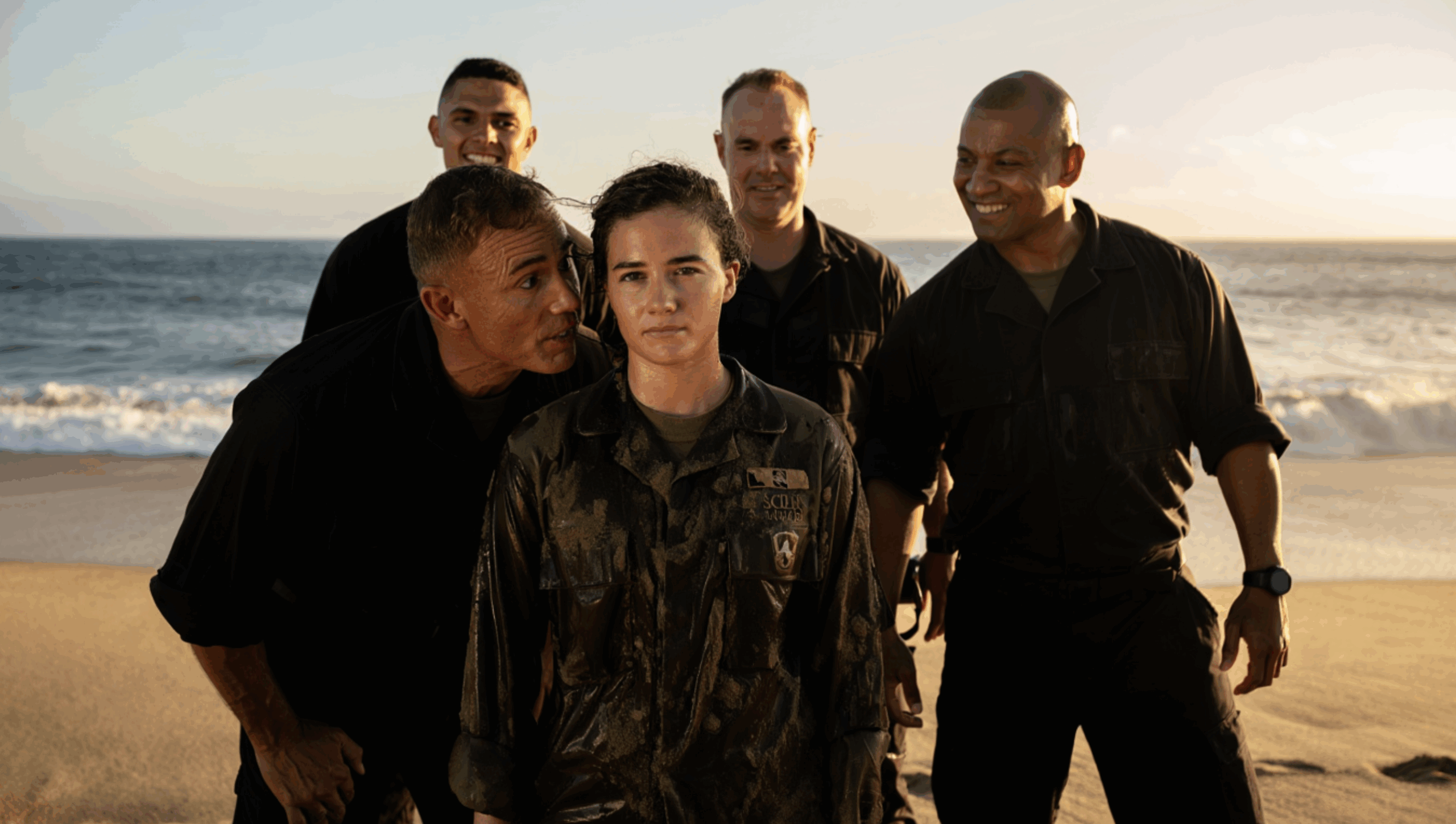
The medical bay lights were too bright, too sterile, too quiet compared to the chaos of the kill house. Emory lay on a narrow cot, an oxygen mask pressed to her face as a corpsman checked her pulse for the fourth time.
“You’re lucky,” he muttered. “Smoke inhalation like that can cook your lungs.”
Emory blinked hard against the blur tightening around her vision. “Lucky isn’t the word I’d use.”
The corpsman huffed. “Yeah, well. I don’t have another one.”
Through the half-open curtain, she glimpsed the nine instructors she’d carried—some seated, some being monitored, others still unconscious. Electrodes on their chests. Saline bags hanging overhead. Ash streaks on their faces like war paint.
Crane wasn’t among them.
He was pacing the hallway outside, barking orders into a phone, his voice sharp and clipped. “…no, I said total failure. Electrical, mechanical, safety—all of it. Someone’s damn negligence nearly killed my entire cadre.”
His voice dropped, muffled, but Emory still heard the strain—anger, fear, and something else he’d never allow himself to show:
Gratitude.
Redmond entered a moment later, pushing the curtain fully open and looking down at her with a conflicted expression.
“You need water?” he asked.
“No, sir,” she said automatically.
His brow lifted. “That wasn’t an order.”
She hesitated. “I’m fine.”
“You’re not. But that’s not what I’m here to talk about.”
He pulled up a chair and sat, forearms on his knees, studying her like a puzzle he wasn’t sure he had all the pieces for.
“You saved nine lives in there.”
She looked away. “I did what anyone would’ve done.”
“No,” Redmond said quietly. “Anyone else follows protocol: exit the structure, call for extraction, wait for supervision. You didn’t. You went deeper into a failing kill house.”
Her jaw tightened. “There wasn’t time.”
“I know.” He paused. “Still took guts.”
Emory swallowed hard. “Permission to speak freely, Chief?”
“Granted.”
“I didn’t do it to prove anything. And I didn’t do it because of my father.”
Redmond’s eyes softened. “I didn’t mention your father.”
“You were going to,” she said, too tired to sugarcoat the truth. “They always do.”
He let out a slow breath. “All right. Then tell me something else, Dalton. Why didn’t you call for help when the systems started going? Because the second we heard those screams, every one of us out there lost ten years off our lives.”
Emory stared at her bandaged hands. Burned. Torn. Still trembling.
“I went after them,” she said finally, “because nobody went after my father.”
Silence.
Even the hum of the machines seemed to fade.
Redmond leaned back, eyes narrowing. “You were told what happened to him?”
“Enough,” she said. “Enough to know he died alone because there wasn’t anyone left alive to pull him out.”
The words cut sharper than she intended. Her throat tightened, and she blinked fast, refusing to let the tears win.
Redmond seemed to understand. He didn’t press. He didn’t pity. He just nodded once—a small, respectful gesture.
“Rest up. Command’s going to want a statement. So will the investigators.”
Investigators.
Right. Because nine instructors nearly died on a Navy training platform. Someone was going to get crushed for it. Someone high up.
Redmond stood to leave, but paused in the doorway.
“For what it’s worth…” he said without looking back, “your father would’ve been proud.”
She closed her eyes.
“I hope so,” she whispered.
Three hours later, she was released from the medical bay with strict orders not to train for 48 hours.
She ignored them.
The sun had dipped low over Coronado, turning the ocean gold as she made her way back to the obstacle course. It was empty at this hour, except for the gulls and the faint echo of distant boot camp yelling from across the base.
Her legs screamed with each step. Her arms felt like they’d been poured full of concrete. Her lungs burned when she breathed too fast.
Perfect.
She approached the first wooden wall and planted her hands against it, forcing her body up inch by inch. Her muscles protested violently, threatening to fold.
Good, she thought. Hurt. Break. Get stronger.
She reached the top and swung herself over, landing in a crouch on the other side. A spike of pain shot up her spine.
But she stood anyway.
When she turned to face the next obstacle, someone was already there.
Crane.
He stood with his hands in his pockets, looking at her with a face she’d never seen before—stone-hard but stripped of contempt.
“You’re supposed to be recovering,” he said.
“So are you.”
He smirked, but faintly. “Fair.”
He stepped closer, boots crunching in the sand. “Dalton… what you did in that house—”
She cut him off. “If you’re here to congratulate me—”
“I’m not.” His voice sharpened. “Don’t get cocky.”
“I’m not,” she said with equal edge.
“Good.” He exhaled through his nose, gaze tightening. “Because you didn’t do your job.”
Her jaw clenched. “Excuse me?”
“You did more,” he snapped. “More than what training protocol demanded, more than what common sense dictated, more than what any sane candidate would attempt.”
He folded his arms. “You risked your life to save nine men who haven’t shown you a single ounce of respect.”
She stared at him, stunned by the honesty in his tone.
“So,” Crane said, “I need to know one thing.”
His voice dropped to something almost like sincerity.
“Why didn’t you leave me?”
Her heartbeat jolted.
“I didn’t see you,” she said.
“I was in the northeast corner,” he replied. “You carried out everyone but me. They said you went back for a tenth body before they dragged you out. Who was it?”
She swallowed.
“A trainee. He must’ve slipped in before the malfunction. He was pinned.”
Crane blinked. “A trainee?”
“Yes, Senior Chief.”
Crane stared at her for a long, unreadable moment. Then—
A laugh—raw, unguarded, disbelieving—broke from his throat.
“You’re insane,” he said. “Absolutely insane.”
Emory didn’t smile.
Crane stepped closer, voice low.
“Dalton… you earned something today.”
“What’s that, sir?”
He held her gaze with a respect she had never seen from him.
“Every damn one of us.”
Before she could respond, he added:
“But don’t think for a second I’m going to go easy on you.”
“I wouldn’t want you to.”
He pointed at the rope climb. “Then show me you’ve got one more run in you.”
Pain carved through every inch of her body.
But she walked toward the rope anyway.
Slow is smooth. Smooth is fast.
She grabbed hold.
And climbed.
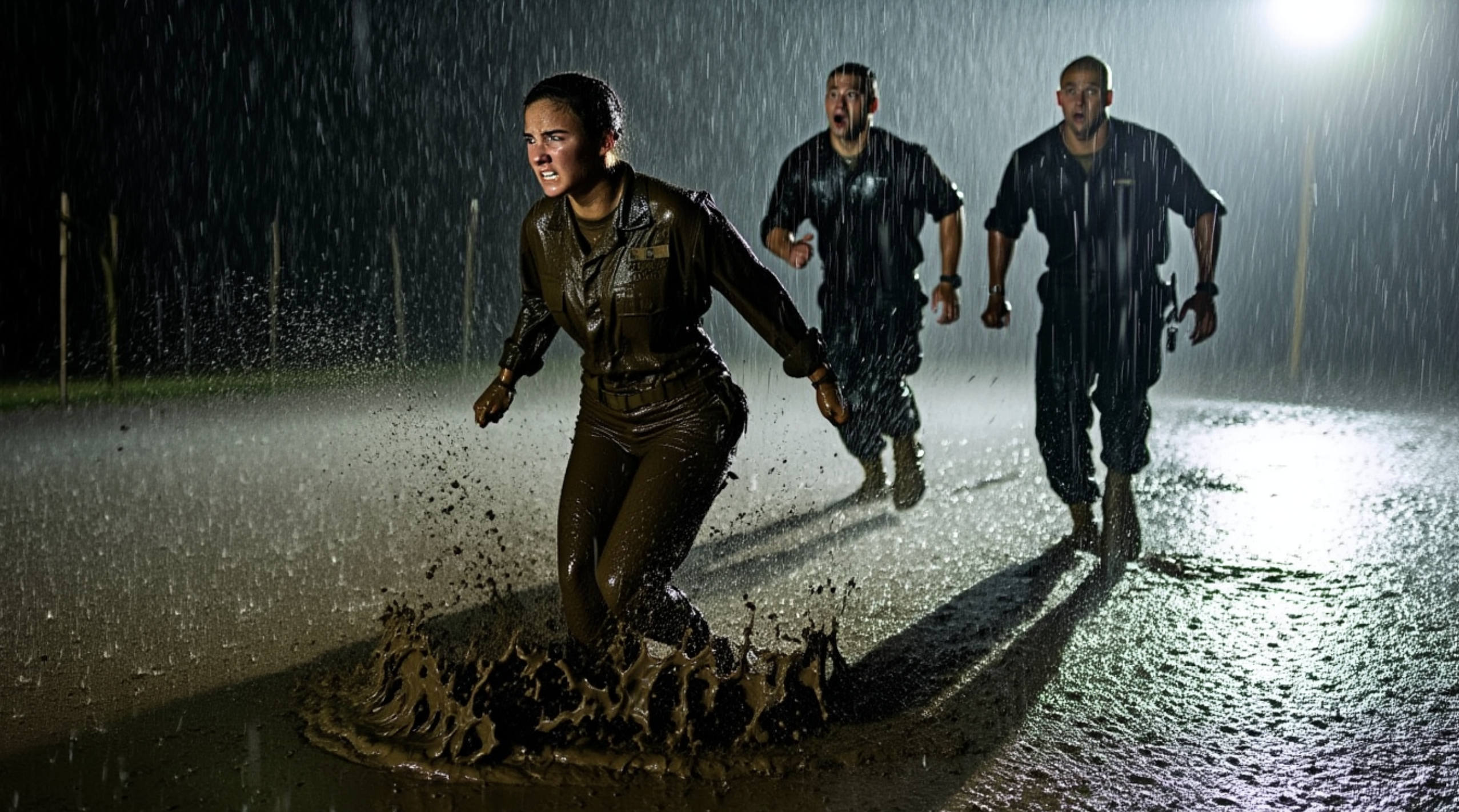
CHAPTER 3 — The Man in the Shadows
The next morning, a fog bank rolled in from the Pacific, swallowing the Naval Special Warfare Center in gray silence. The base felt muted, as if holding its breath. Emory moved through the mist toward the briefing building, sweat still drying on her face from the run she forced herself to complete before dawn.
Her lungs were raw. Her limbs felt strung together with wire pulled too tight. But she stayed upright.
Inside, the conference room hummed with tension. Officers in khaki. Engineers in blue coveralls. Safety investigators carrying clipboards. Nine instructors—cleaned up but pale—lined the wall like men waiting for a firing squad.
Crane looked worse than the rest.
He didn’t look at Emory when she entered, but a muscle worked in his jaw.
Redmond approached her quietly. “Give them the truth. Only the truth. Leave out your opinions.”
“I don’t have opinions,” she muttered.
His brow rose. “Everyone has opinions. The trick is knowing when they matter.”
Before she could reply, the door swung open and conversation died instantly.
A tall man entered—thin, steel-backed, wearing a command’s crest on his chest. His eyes were cold, assessing, built for interrogation.
Captain Harland Stokes.
Commander of the entire facility.
He didn’t sit. He planted himself at the head of the room.
“Let’s begin,” he said. “Petty Officer Dalton. Step forward.”
Her legs moved before her mind caught up. She stood in the center of the room, the weight of a dozen stares heavy across her shoulders.
Stokes opened a folder. “You were the last conscious person inside the kill house. Confirm.”
“Yes, sir.”
“You carried out nine instructors—several of them weighing over two hundred pounds—without assistance. Confirm.”
“Yes, sir.”
“You re-entered the structure multiple times, against protocol.”
“Yes, sir.”
A murmur rippled through the investigators.
Stokes paused. His expression didn’t soften—not even a millimeter. “Why?”
She swallowed. “Because they were alive, sir.”
“And you believed you could save them.”
“I believed I had to try.”
Stokes closed the folder. “Petty Officer… did you know your father?”
Her lungs locked.
Every instructor stiffened.
Crane’s head snapped up.
Redmond muttered, “Oh, for—sir, with respect—”
Stokes raised a hand and silence fell like a dropped anchor.
“I ask because Master Chief Raymond Dalton was my teammate,” Stokes said. “We bled on the same sand. I watched him run into a burning compound to drag out three men already declared unrecoverable.”
The room went still.
Emory’s throat burned. “Sir… I didn’t know that.”
“No,” Stokes said quietly. “You wouldn’t. Because your father didn’t brag. He acted.”
He closed the folder with a soft clack.
“And that’s why I asked. Because I wanted to know if what you did last night was courage or recklessness, instinct or ego.”
He stepped closer.
“And I’ve decided.”
Emory straightened unconsciously.
Stokes held her gaze.
“It was courage.”
A wave of stunned whispers swept the room.
But Stokes wasn’t finished.
“However,” he said, “your decision put you in extreme danger. You disobeyed safety procedure. You risked triggering additional malfunctions. You risked structural collapse.”
A cold fist tightened in Emory’s chest.
“But,” Stokes said louder, overriding every other sound, “you also prevented nine funerals. And you exposed a catastrophic failure in our systems. Because of that, the kill house is shut down until further notice.”
Several instructors sucked in sharp breaths.
Crane looked as if he’d been punched.
Stokes turned toward his team. “Chief Crane.”
“Sir.”
“Step forward.”
Crane obeyed, rigid but defiant.
Stokes continued. “Your cadre allowed unscheduled personnel inside the kill house during a malfunctioning run. You neglected mechanical checks. You failed to ensure safe occupancy.”
Crane’s nostrils flared. “Sir, the systems have never—”
“Chief Crane,” Stokes snapped. “This institution does not operate on never. It operates on always.”
Crane went silent.
Stokes looked between them—the arrogant instructor and the bloodied student.
“Here is my ruling,” the captain said. “Chief Crane, your cadre is suspended until further investigation.”
Crane’s jaw locked, but he nodded. “Aye, sir.”
“And Petty Officer Dalton…” Stokes turned back to her, his voice dropping into something almost like respect. “You will continue training.”
Her breath shook. “Yes, sir.”
Stokes gathered his papers. “Dismissed.”
But before anyone could move, the lights flickered once.
A blackout swept the entire facility.
For a breathless three seconds, the room was drowned in darkness.
Then emergency lights snapped on.
Alarms wailed in the distance.
“What the hell—?” Redmond muttered.
A young engineer bolted into the room, panting. “Sir! The kill house wasn’t the only system compromised. Multiple circuits across the training sectors are fried. Someone’s been inside the electrical grid.”
Stokes stiffened. “Sabotage?”
“We… we think so, sir.”
Another alarm blared.
Then another.
Stokes’s voice sliced through the chaos. “Lock down the compound. No one enters or exits.”
The room erupted into motion.
Crane shoved past an investigator. “Who the hell would sabotage Naval Special Warfare?”
The engineer swallowed. “Sir… we found something on the panel. A mark. Carved in.”
“Carved?” Stokes demanded. “What mark?”
The engineer hesitated. “A trident, sir.”
Every SEAL in the room froze.
A trident carved into a panel meant one thing:
An insider.
A SEAL.
A ghost in their ranks.
Crane turned slowly toward Emory. His expression was unreadable, carved from stone.
Redmond touched Stokes’s shoulder. “Sir… you realize what that means.”
Stokes nodded grimly. “It means the malfunction that almost killed nine instructors wasn’t an accident.”
He turned toward Emory again—this time with something new in his eyes.
Not suspicion.
Not blame.
Something colder.
Something like fear.
“Dalton,” he said, “how many times did the power fail inside the kill house before the explosion?”
“Once,” she said. “Then the lights came back. But… sir, there was something else.”
Stokes stepped closer. “What?”
She closed her eyes, searching her memory.
“There was someone in the far corner. Before the system blew. A silhouette.”
Crane swore under his breath. “A trainee?”
She shook her head. “No. Too tall. Too steady. He didn’t move like he was panicking.”
Stokes stared at her. “Did he say anything?”
Emory hesitated.
Then spoke the truth.
“He saluted.”
The room fell deathly silent.
Stokes’s voice came out like a whisper. “A salute?”
“Yes, sir.”
“What kind of salute?”
Emory inhaled slowly. “A SEAL’s silent salute.”
Crane swore again, louder this time.
Redmond’s face drained of color. “That’s not possible.”
Stokes’s expression hardened to steel.
“Dalton,” he said. “You may have just witnessed the man responsible for sabotaging Naval Special Warfare.”
Her spine chilled.
Because she knew what he was about to say next.
“Whoever he is,” Stokes continued, “he let you live.”
Her heart pounded.
“And I guarantee you,” Stokes said, “he has plans for you.”
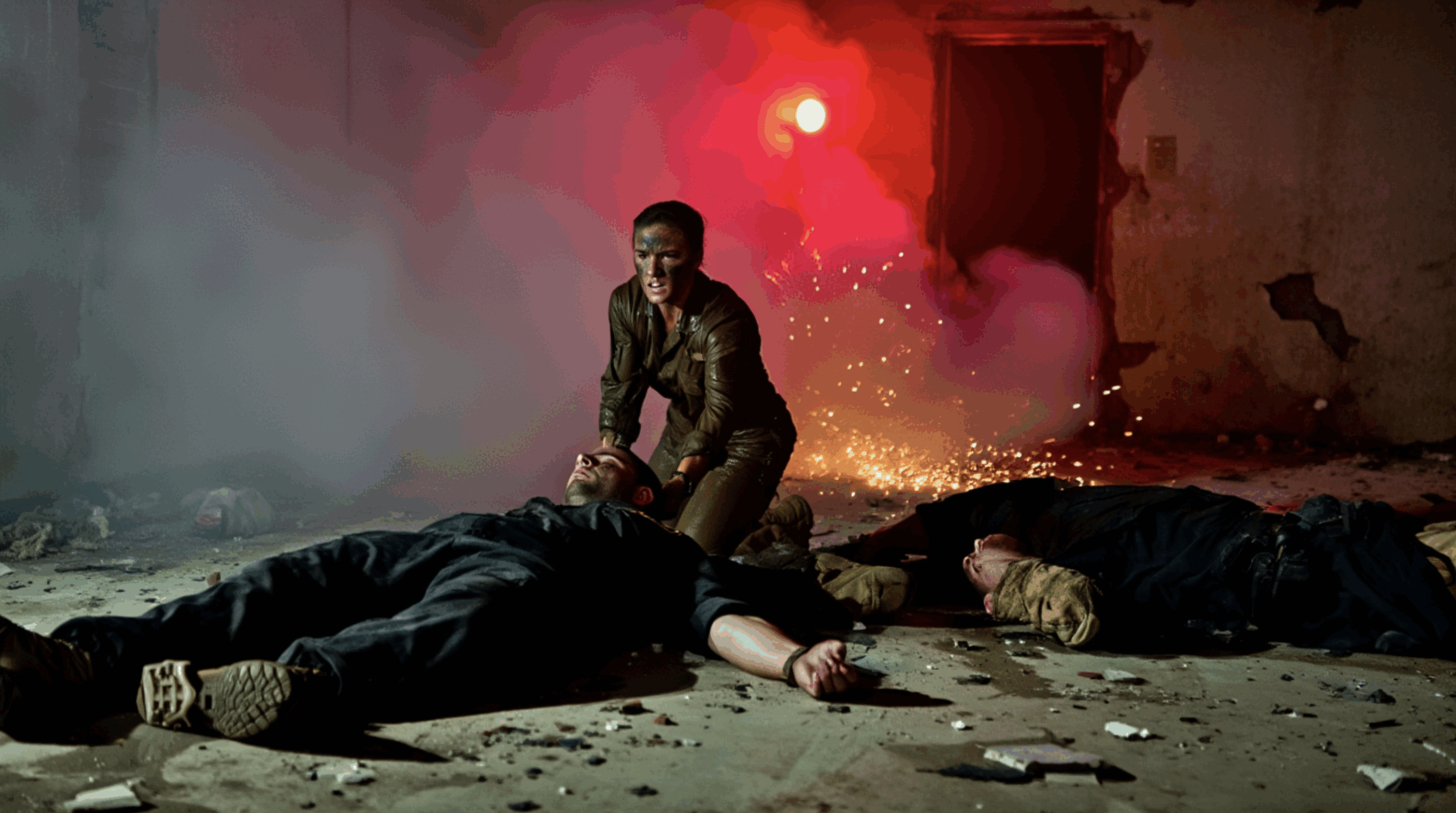
CHAPTER 4 — The Shadow That Salutes
The lockdown sirens cut through the compound like blades of sound. Red lights pulsed against the gray fog, turning the base into a battlefield of shadows. Emory stood in the center of the corridor, the cold realization tightening around her ribs:
Someone inside their own ranks had tried to kill them.
And worse—
He’d watched her.
Saluted her.
Spared her.
Crane brushed past her, barking orders down the hall. “Sweep the armories! Check every panel! Nobody disappears!”
Redmond caught Emory’s arm. “Dalton. With me. Now.”
They moved at a near-run down the corridor, boots pounding against concrete. The emergency lights flickered again overhead—briefly enough to turn every shadow into a threat.
Redmond shoved open the door to a small operations room. Stokes was already there, hunched over a map of the facility with three intelligence officers.
When Emory entered, Stokes’s eyes snapped up. “Dalton. Recite everything you remember about the silhouette. Everything.”
She closed her eyes, letting the memory sharpen.
“Tall. Broad shoulders. Moved quietly. He stood in the northeast corner of the kill house—just outside the light. He didn’t panic when the systems blew. He didn’t try to escape.”
“Facial features?” Stokes asked.
“None visible. But…” Her breath slowed. “Sir, he stood like someone trained for decades.”
Crane, stepping into the room behind her, scoffed. “Every SEAL stands like that.”
“Not like this,” she said. “This felt… deliberate. Calculated.”
Stokes exchanged a look with Redmond.
Then: “Dalton, you’re coming with us.”
“Sir?” she asked.
Stokes stepped forward. “You’re the only living witness. And if this man targeted the kill house, he may target more. We’re not letting you out of our sight.”
Crane muttered, “Or someone wants her alive. She said he saluted.”
Redmond frowned. “Why salute her?”
Silence fell—a heavy, suffocating silence.
Until Stokes answered the question no one wanted to voice.
“It might not have been a salute of respect.” His jaw tightened. “It might have been a warning.”
They moved across the compound in a four-person formation: Stokes, Crane, Redmond, and Emory. Fog swallowed their outlines. The air smelled like ozone and burnt wiring.
Inside the electrical building—Sector 3—the damage was worse than expected.
Panels hung open like broken ribs. Wires were torn out in loops. The carved trident stood on the main conduit panel—deep, malicious, unmistakably intentional.
Crane crouched beside it.
“This carving… it’s fresh. Whoever did this was here less than an hour ago.”
Stokes scanned the room. “Where’s the rear guard?”
Redmond turned. “There should be two MPs at the exit—”
He froze.
Both MPs lay slumped against the wall, unconscious but breathing.
A chill stabbed Emory’s spine.
Crane swore under his breath. “This is bad. This guy isn’t trying to hide. He wants us to see his work.”
No one disagreed.
A soft clatter echoed deeper inside the room.
Metal hitting concrete.
A wrench?
A knife?
Or—
A boot.
Redmond drew his pistol. Crane followed. Stokes raised a hand, signaling for silence.
The air grew sharp. Still. Electric.
They moved toward the back of the room.
One step.
Another.
Another.
Then Emory saw it.
A figure stood at the far end of the corridor, half concealed by a column—tall, broad, unmoving. The same silhouette burned into her memory.
He didn’t flee.
He didn’t hide.
He stood at ease.
Facing her.
Redmond whispered, “Holy hell…”
Crane tightened his grip on his weapon. “On your knees! Hands where I can see them!”
The figure didn’t move.
“Down!” Crane barked again, louder.
Still nothing.
Stokes stepped forward, voice low and lethal. “Identify yourself. Now.”
Silence.
Then—
The figure raised a hand.
Slowly.
Calmly.
And executed the same silent SEAL’s salute he’d given her in the kill house.
Emory’s breath caught.
Crane snapped. “That’s it!” He strode forward, weapon raised—
And the figure exploded into motion.
Not with violence.
With precision.
He stepped back, turned, and sprinted into the darkness beyond the panel room, moving with a speed that didn’t seem entirely human.
“MOVE!” Stokes roared.
The team gave chase.
Boots hammered against metal flooring. Fog cut through the doorway like smoke. Alarms wailed above them.
The figure reached a service ladder and descended in a blur.
Crane swore. “He’s going into the under-access tunnels!”
They followed—down the ladder, into the cold, narrow passage beneath the facility. Pipes hissed overhead. Water dripped from the ceiling. The air tasted metallic.
Stokes led. Redmond covered. Crane flanked.
Emory ran last.
She wasn’t the fastest. She wasn’t the strongest.
But she was the reason the shadow ran.
At the end of the passage, the figure slid into a maintenance chamber and stopped, standing in the center of the room as though waiting.
Stokes raised his weapon. “This ends now.”
The figure didn’t raise his hands.
Instead, he reached slowly for his mask.
Pulled it off.
And Emory froze.
His face was cut with old scars—sun-etched, storm-worn. His eyes were dark, steady, hauntingly familiar.
He looked like a man who had died and come back wrong.
Redmond whispered, voice trembling, “That’s… that’s impossible.”
Crane’s face drained of color. “He’s dead. He’s been dead for seven years.”
Stokes’s voice cracked with disbelief. “Raymond Dalton…?”
Emory’s blood turned to ice.
She stepped forward, the world narrowing to a single impossible point.
“No,” she whispered. “My father died in Ramadi.”
The man’s expression didn’t change.
He looked at her.
Just looked.
And for the first time, Emory didn’t see a shadow or a saboteur.
She saw grief.
And guilt.
And a decade of silence.
“Emory,” the man said quietly.
A voice like gravel.
A voice she had heard only in stories.
“I didn’t die.”
Her knees nearly gave out.
Crane was shaking. “Master Chief, what the hell—why sabotage the kill house? Why attack us?”
Raymond Dalton—very much alive—did not look away from his daughter.
“That kill house,” he said, “was built to train SEALs for missions they were never supposed to survive. Missions the command wanted buried. Missions I was sent on.”
Stokes swallowed hard. “Raymond… what were you trying to do?”
“Expose them,” Dalton said. “Expose all of it.”
He nodded toward Emory.
“And I needed her alive.”
Emory stared at him, voice breaking. “Why me?”
His answer was simple.
“Because you’re the only one I trust.”
The alarms continued to wail. The fog light blinked overhead. The world held its breath.
And Emory stepped toward the man who should have been a memory.
“Then tell me everything,” she whispered.
Raymond Dalton lowered his head.
“I will.”
And in that moment—
Under the base, in the darkness—
A story thought buried with a hero began to rise again.
The end