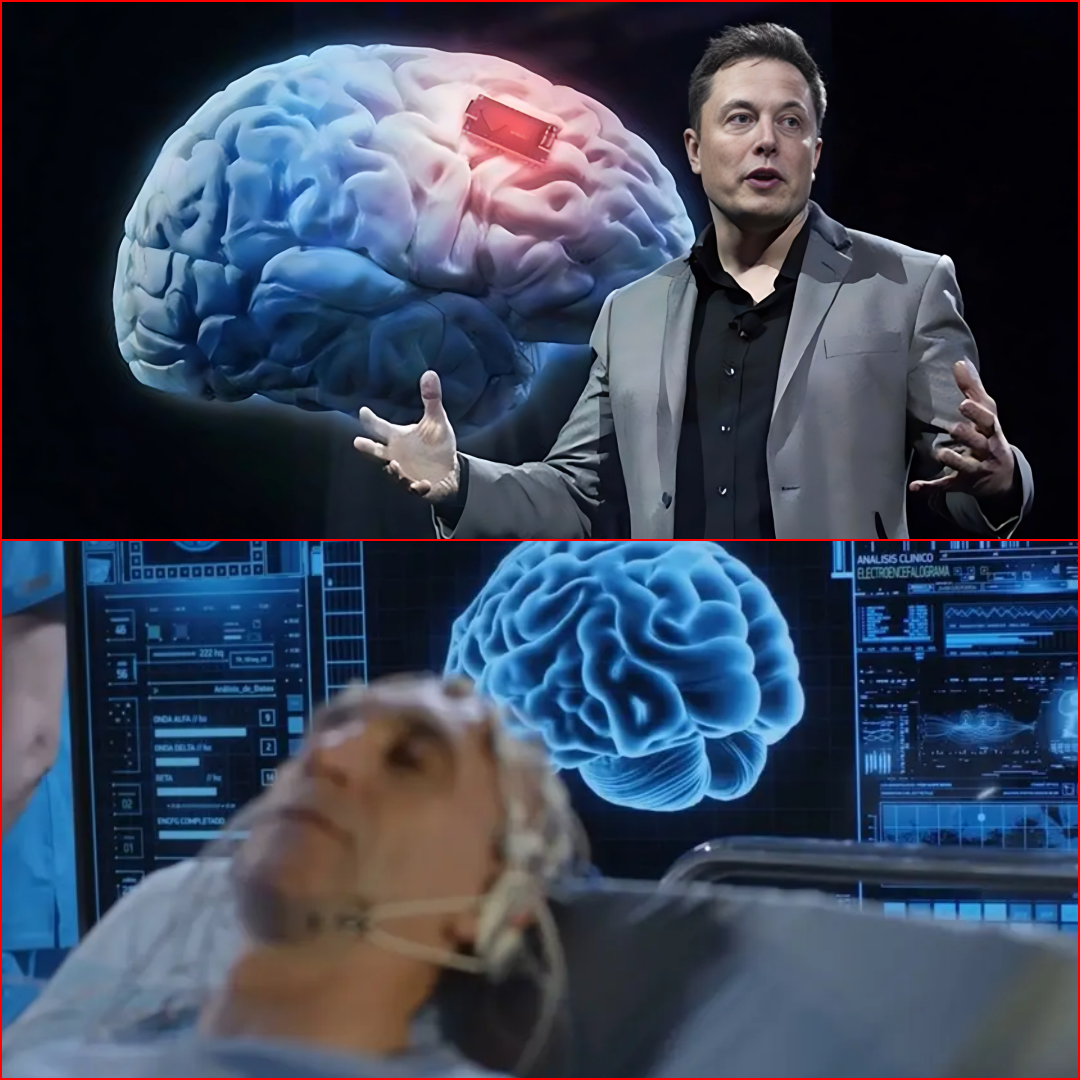
CHAPTER 1: THE 1.5-SECOND NEEDLE
There was no applause.
No stage lights.
Only a white room so sterile it erased the sense of time.
The surgical robot stood motionless, chest-high to an adult human. Six microscopes adjusted their focus in perfect sync—unblinking eyes locked onto a brain gently pulsing with each breath.
“Begin.”
In 1.5 seconds, a needle thinner than a red blood cell pierced the brain tissue, placing a flexible electrode thread exactly where millions of calculations had predicted.
No blood vessel touched.
No deviation—down to the micrometer.
What once took 17 seconds now happened faster than a blink.
In that moment, the engineers at Neuralink understood:
humanity had crossed a point of no return.
Behind the glass, Elon Musk said nothing. His eyes remained fixed on the screen tracing the needle’s path—each curve representing life, memory, and a human future.
“Disposable needle cartridge costs down 95%,” a voice whispered.
“We’re ready for mass production.”
Musk nodded slightly.
Outside those walls, more than 10,000 names sat on a waiting list.
10,000 people placing their hope in a chip smaller than a coin.
CHAPTER 2: WHEN THOUGHTS BECOME MOVEMENT
Rocky Stottenberg hadn’t moved from the neck down for years.
Today, he sat at a simple dining table. No caregiver beside him. No mouth-stick he once relied on.
Only a robotic arm made of matte metal.
“Are you ready?” someone asked.
Rocky didn’t answer. He thought.
And the robotic arm moved.
Slowly. Precisely. It grasped a piece of food, lifted it, and brought it toward a trembling mouth. When the food touched his lips, Rocky broke down in tears.
For the first time in years, his thoughts had weight.
Elsewhere, Nick Ray—living with ALS—was undergoing his own trial. The robotic hand held a cup of water, tilting it just enough not to spill.
One sip.
Then another.
No one in the room spoke.
Because they knew—this moment no longer belonged to science.
It belonged to human dignity.
In a later interview, Musk spoke quietly:
“There will come a time when we don’t just control machines…
but stream music, memories—even store another version of ourselves.”
He paused, hovering between madness and inevitability.
“A form of immortality.”
CHAPTER 3: THE LIGHT OF A RIVAL
In another laboratory, light pierced eyes that had lived in darkness for years.
The man blinked.
Then froze.
“I… I can see letters.”
The Prima implant—no larger than a grain of rice—rested inside his retina. Through specially designed camera glasses, the world returned. Not sharp. Not complete.
But recognizable.
Behind the breakthrough stood Science Corp, founded by Max Hordak—once Elon Musk’s partner in Neuralink’s earliest days.
Hordak left in 2021, carrying a different ambition:
not to upload memories—but to restore sight.
Among 38 trial participants, 80% regained the ability to read, even if only two letters at a time. For them, this wasn’t a limitation—it was a miracle.
“They call us competitors,” Hordak said.
“But in truth, we simply chose a different way to save humanity.”
Science Corp has raised $260 million, preparing to launch its commercial product next summer.
The race has begun.
Not between two companies—
But between two visions of humanity’s future.
EPILOGUE: THE THIN LINE
One path seeks to merge the human brain with artificial intelligence.
The other seeks to return what humanity has lost.
Both touch what is most sacred:
the brain, memory, identity.
And somewhere between a 1.5-second needle and newly restored light, humanity faces a question no robot can answer:
👉 When we can repair, upgrade, and copy ourselves…
👉 what, then, makes us human?
News
EXPL0SIVE HOME VIDEO SURFACES: Archie & Lilibet Caught Running Around Searching for Something in Rare Clip That’s Sending Royal Fans Into a Frenzy
Both of the Duke and Duchess of Sussex’s children inherited Prince Harry’s red hair Meghan Markle during a visit to…
A fleeting moment from Princess Charlotte at the Easter service hides a detail that has the entire royal community talking!
The young royal subtly switched up her signature hairstyle Princess Charlotte attends the 2026 Easter Matins Service at St George’s…
🚨SHOCKING “REVENGE” MOVE? — Meghan Markle and Prince Harry are suspected of pushing the Royal Family into a new wave of tension!
The Sussexes’ calendar is ramping up with their upcoming Australia visit and a raft of new TV deals, but they…
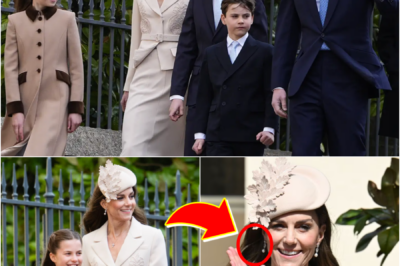
🔥 Royal Fans Are Stunned by Catherine’s Easter Appearance — The Subtle Detail Everyone’s Whispering About!
Her return to the Easter service after two years, Queen Elizabeth II’s historic jewels, and a new hat signal continuity,…
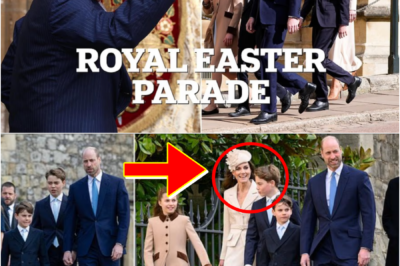
All eyes on Prince George at the Easter service — and the reason has fans “gasping”…
Royal fans are in awe at how tall Prince George, 12, has gotten – as William and Kate’s eldest son…
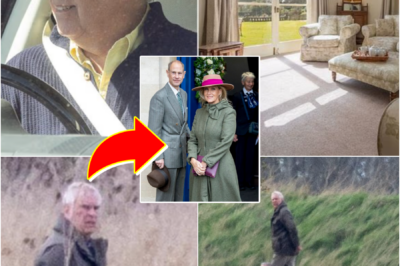
SH0CKING ROYAL EASTER INCIDENT! Prince Edward and Sophie found themselves in an awkward situation following a puzzling move by Andrew Mountbatten-Windsor, leaving royal watchers constantly speculating
Prince Edward and Sophie were forced to use a ‘holiday let’ in Sandringham because Andrew Mountbatten-Windsor refuses to leave their vacation…
End of content
No more pages to load