The fateful words that turned a bus stop into a bl00dbath: The fragile line between a simple argument and a brutal crime!
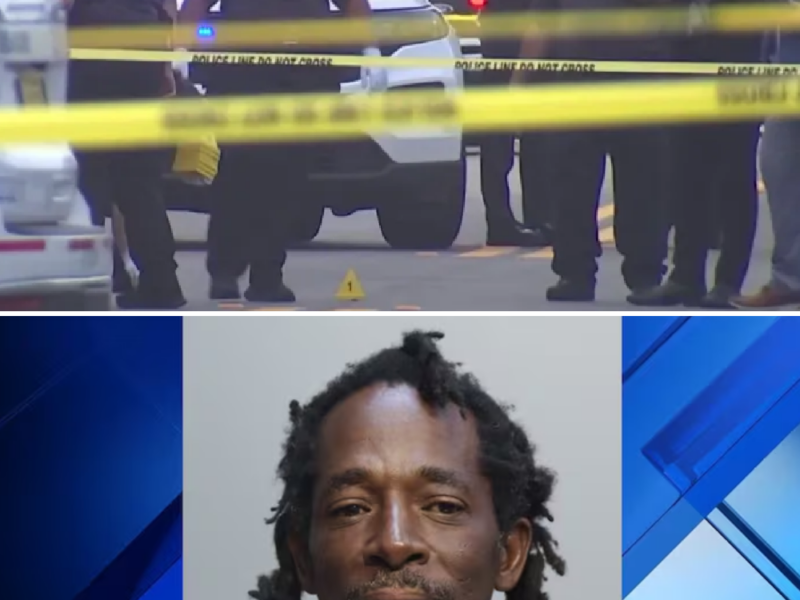
In the rhythm of modern urban life, bus stops and similar temporary public spaces are viewed as simple transit “buffer zones.” However, the incident last Wednesday in Miami—where a heated dispute escalated into a violent stabbing—demonstrates that these spaces are increasingly becoming potential hotspots for social conflict. When a 61-year-old man was arrested and charged with attempted murder after inflicting severe wounds to the victim’s face, abdomen, and shoulder, the public was left not only horrified by the brutality but also confronted with a stinging question: What causes trivial disputes to erupt into bloody tragedies?
From Words to Blades: The Fragility of the Ego in Public Spaces
The initial details regarding the altercation, specifically the provocative “say it again” exchange before the blade was drawn, outline a script all too familiar in urban violence: an attack on pride. That a verbal disagreement can spiral into an act of violence intended to end a life in a split second reveals a severe failure in individual self-control. In public environments where personal boundaries are constantly tested, the accumulation of invisible pressures can push a person’s threshold of tolerance to a breaking point. The pocketknife here was not merely a weapon; it stood as a symbol of a readiness to resort to violence the moment the ego felt threatened.
Violence and Adversity: Viewing the Pieces Objectively
While the suspect, Maurice Yoelcis Sapp, was noted in reports as homeless, labeling this strictly as a “homeless crime” would be an analytical error. Violence does not discriminate based on social class or economic background; however, it is evident that marginalized individuals endure greater psychological pressures, leading to a higher potential for extreme reactions in conflict situations. When society leaves individuals to face instability without support, or leaves public spaces lacking necessary oversight, such conflicts become inevitable. The victim, currently in critical condition at a trauma center, serves as a painful testament to the cost paid when one party decides to resolve a dispute through violence.
Justice and Deterrence: Is It Enough?
The legal system reacted swiftly by arresting the suspect and filing charges of attempted second-degree murder. Yet, detaining a suspect after a tragedy has already occurred—while essential—is merely treating the symptoms. Similar incidents in Miami and cities around the world serve as reminders of the urgent need for a more proactive public safety strategy. Can law enforcement be present enough to extinguish “conflict fuses” before they ignite? Can communities build mechanisms for peaceful conflict resolution rather than relying on “zero-sum” confrontations?
The tragedy at the bus stop should not simply close with a criminal indictment. It must be viewed as a wake-up call regarding the deterioration of public conduct. When people no longer possess the patience to step back during a dispute, and when violence becomes the preferred choice to assert one’s ego, the safety of the entire community is jeopardized. Ensuring urban safety requires not only the severity of the law but a fundamental shift in how we respect and treat one another, even in the most tense moments at a mundane bus stop.
SOURCE: LOCAL10.COM
https://www.local10.com/news/local/2026/07/09/man-faces-attempted-murder-charge-after-stabbing-victim-at-miami-bus-stop-cops-say/