
The murder case of DJ Warras took a dramatic turn this week as accused Victor Majola appeared in the Johannesburg Magistrate’s Court to apply for bail, igniting intense public interest and revealing disturbing new details about the night the popular DJ was gunned down.
Majola, who faces charges of murder and conspiracy to commit murder, maintains his innocence. Standing before the court, he argued through his legal team that he poses no flight risk, has a fixed address, and has been unfairly implicated in a crime he did not personally commit. “My client did not pull the trigger,” the defense emphasized, pushing for his release pending trial.
But prosecutors wasted no time dismantling that narrative.
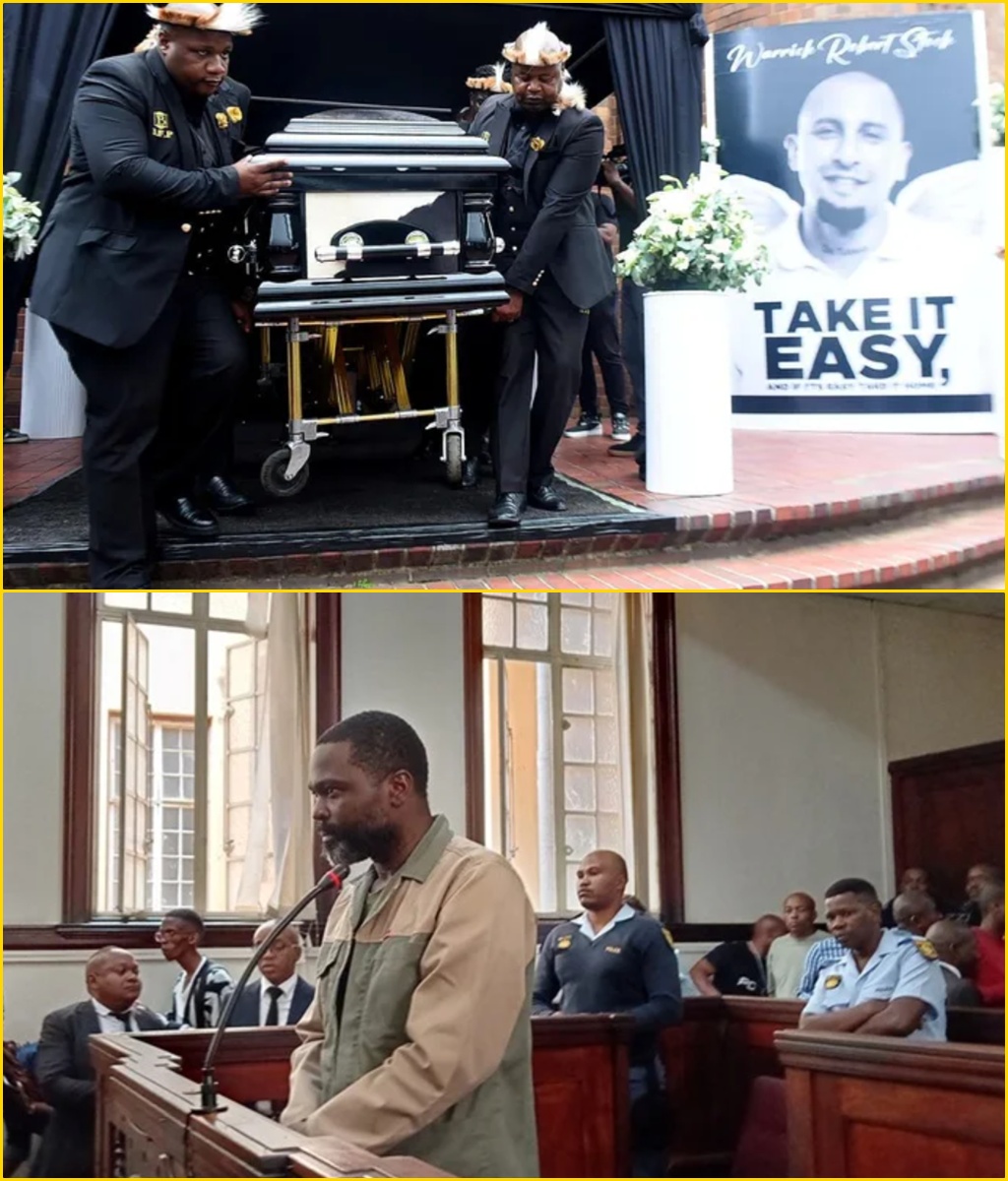
Investigating officer Captain Montwedi delivered chilling testimony that painted Majola not as a bystander, but as an alleged coordinator in a premeditated killing. According to the state, DJ Warras was targeted and executed outside Zambezi Flats on December 16, 2025 — and Majola was allegedly central to making that happen.
One of the most explosive revelations came when the court heard that DJ Warras’ vehicle registration documents were allegedly found on Majola’s cellphone. Prosecutors argued that this discovery suggests prior knowledge of the victim and possible surveillance or planning before the attack. “This was not random,” Captain Montwedi told the court. “The evidence points to preparation.”
CCTV footage further intensified the case against Majola. The footage, shown during the bail hearing, allegedly captures Majola in the company of the suspected shooter shortly before the fatal shots were fired. While the defense argued the video does not show Majola committing the murder himself, prosecutors insisted it proves association, coordination, and intent.
Then came the testimony that shifted the mood in the courtroom.
An eyewitness told the court that moments before DJ Warras was shot, he heard Majola allegedly say the words “Nangu lo muntu” — translated as “Here is the person.” Prosecutors described the phrase as a clear act of identification, suggesting Majola pointed the victim out to the gunman seconds before the killing.
The defense challenged the credibility of the witness, arguing memory distortion and mistaken identity in a chaotic, high-stress environment. They stressed that no firearm was found on Majola and that being present near a crime scene does not automatically equate to guilt.
However, the state argued that murder does not require pulling the trigger. “Conspiracy and facilitation are equally criminal,” the prosecutor told the court. “Without identification and coordination, this murder may not have occurred.”
Another controversial aspect of the case involves Majola’s girlfriend, who the court heard had previously threatened DJ Warras. Despite her name being raised during proceedings, she has not yet been arrested. Prosecutors confirmed that investigations into her potential involvement are ongoing, fueling public speculation about whether more arrests could follow.
Outside the courtroom, emotions ran high. Fans of DJ Warras gathered, some holding photos, others demanding justice. The DJ’s murder sent shockwaves through the music and nightlife community, with many saying the bail application feels like a critical moment in the case.
“If he walks free now, what message does that send?” one supporter asked.
The magistrate, acknowledging the seriousness of the charges and the weight of the evidence presented, postponed the bail decision. The ruling is expected in the coming days, a moment that could significantly influence the direction of the case.
As Victor Majola awaits that decision, one thing is clear: this is no longer just a bail hearing. It has become a public reckoning — a case layered with allegations of planning, betrayal, and cold calculation.
And at the center of it all is a question that refuses to fade:
Was Victor Majola an innocent man caught in the wrong place — or the voice that sealed DJ Warras’ fate?
News

Drama EXPLODES: Married At First Sight Australia Star Bec Zachariah Blames Secret Health Struggle for Brut-al Treatment of Alissa Barmonde
MAFS Australia has already delivered no shortage of drama this series. And now bride Bec has opened up about a…
Our Kids Are Still Waiting for Him… — Wife Breaks Silence After Beloved Father-of-Four Ki-l-led in Sh0cking Melbourne Crash
A devastated wife has spoken out after her husband spent the week fighting for life after being mowed down outside his home…
WORDS TURNED D-E-A-DLY? — Jaro City’s Lil Mikey Gu-nned Down After Explosive Argument Tied to Viral Diss
The hip-hop community is once again grappling with tragedy following the fatal shooting of Jaro City rapper Lil Mikey, an…
IT WAS ALL GONE IN MINUTES — Community Heartbreak as Heroic Grandparents Lose Home in Sh0cking Blaze
An Adelaide community is rallying around two much‑loved grandparents and volunteers who have lost everything in a ferocious house fire….
HE SAID TOO MUCH? — NC Rapper Gu-nned Down Moments After Sh0cking Facebook Live Confession
A shocking and deeply disturbing incident has rocked the hip-hop community after a North Carolina rapper was fatally shot just…
HIS STORY ISN’T ADDING UP — Tiger Woods’ DUI Arrest Takes Dark Turn as New Details Raise Serious Questions
Tiger Woods called President Donald Trump in the moments after his shocking car crash in Florida, new bombshell footage appears to show. The golf…
End of content
No more pages to load