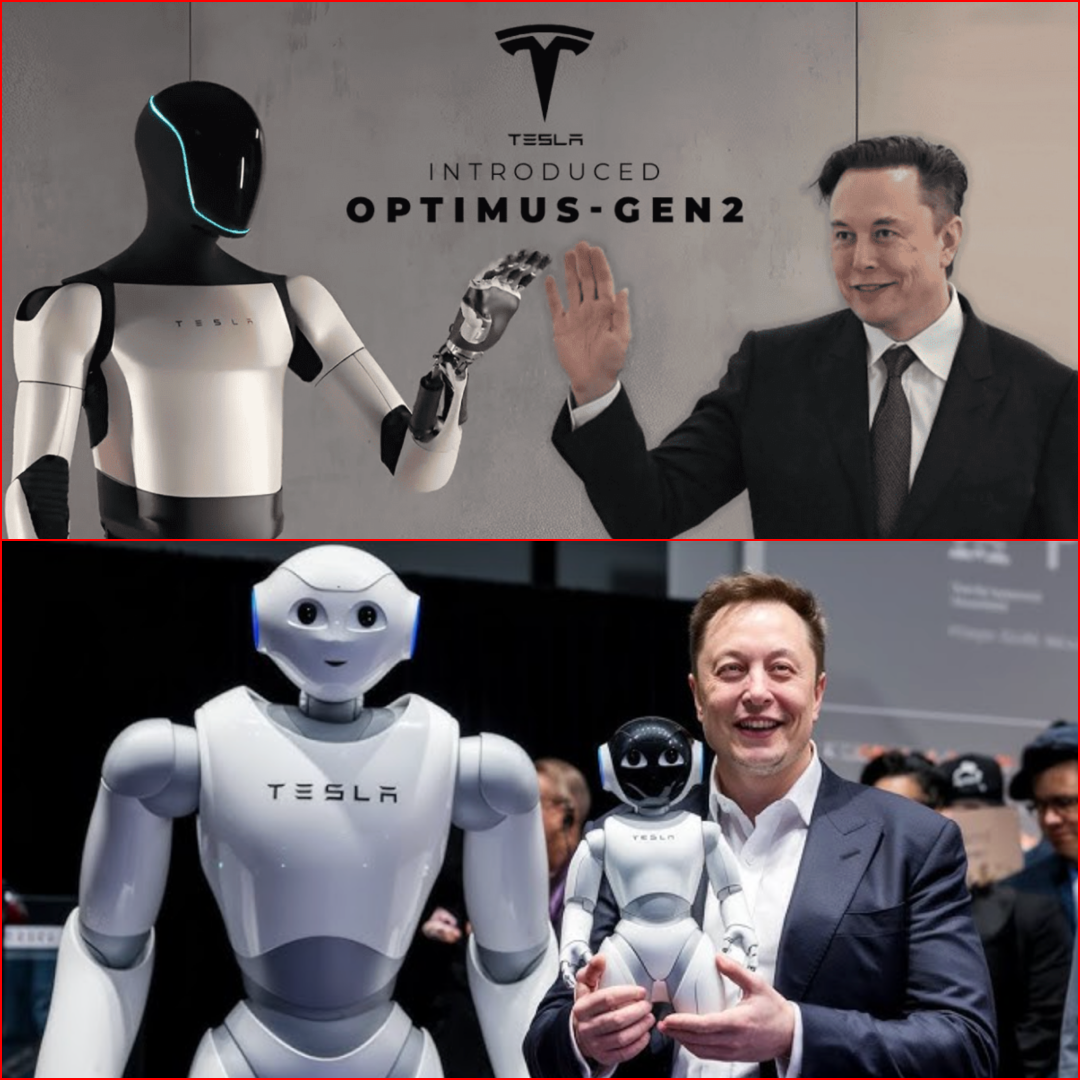
Elon Musk: AI Could Make Work Optional Within 10 to 20 Years
Tesla CEO Elon Musk has once again sparked global debate by predicting that rapid advances in artificial intelligence could fundamentally reshape the concept of work itself. According to Musk, within the next 10 to 20 years, having a job may become a choice rather than a necessity—though he cautions that significant challenges remain before such a future can be realized.
Musk has repeatedly argued that AI and robotics have the potential to eliminate poverty, free humanity from compulsory labor, and usher in an era of shared prosperity. In his view, the continued development and deployment of intelligent machines could transform economic systems in ways that were previously unimaginable.
A World Where Work Is No Longer Required
In what Musk describes as an ideal scenario, humans would no longer need to work in order to survive. Instead of relying solely on a universal basic income, people could receive what he calls a “high universal income,” supported by AI-driven productivity. In such a system, scarcity would disappear, and goods and services would be available in abundance.
Musk believes that as AI systems and humanoid robots become capable of producing nearly everything society needs—from manufacturing and logistics to services and infrastructure—the traditional relationship between labor and income will break down. When machines can efficiently generate value at scale, human labor will no longer be a prerequisite for economic security.
Money May Lose Its Importance
Taking his vision even further, Musk has suggested that money itself could become far less important in the future. If AI and robots are able to provide an unlimited supply of goods and services at minimal cost, the role of currency as a means of exchange may diminish.
He has estimated that there is an 80% probability that AI will create a world in which humans no longer need jobs and have access to everything they require. In such a future, work would become optional—something people might pursue out of interest, creativity, or personal fulfillment rather than economic necessity.
“If people want to work, they can do so as a hobby,” Musk has said. “And if they don’t, AI and robots will provide whatever goods and services they want.”
AI, Robotics, and Economic Stability
Musk has also linked the rise of AI and robotics to broader macroeconomic challenges. In November 2025, he suggested that widespread deployment of these technologies may be the only viable solution to the United States’ growing debt crisis. According to Musk, dramatic increases in productivity driven by intelligent machines could help stabilize economies and reduce the long-term burden of debt.
In this context, AI is not merely a technological advancement but a structural shift—one that could redefine productivity, wealth distribution, and financial systems at a national and global level.
Caution Amid Optimism
Despite his optimism, Musk has acknowledged that this future is not guaranteed and will not arrive without obstacles. Ensuring that AI systems are safe, aligned with human values, and equitably deployed remains a major challenge. There are also unresolved questions about governance, regulation, and how societies will adapt psychologically and culturally to a world where work is no longer central to human identity.
Critics argue that Musk’s vision underestimates the social complexity of such a transition, warning that without careful planning, AI could deepen inequality rather than eliminate it. Musk himself has previously warned about the dangers of uncontrolled AI development, emphasizing the need for oversight even as innovation accelerates.
A Radical Reimagining of the Future
Whether or not Musk’s predictions prove accurate, his ideas force policymakers, economists, and the public to confront a profound question: what does human life look like when work is no longer required?
If AI and robotics fulfill Musk’s expectations, the future may be defined not by jobs and wages, but by creativity, exploration, and self-directed purpose. While the timeline remains uncertain, one thing is clear—artificial intelligence is poised to challenge some of the most fundamental assumptions of modern society.
News

EXPL0SIVE HOME VIDEO SURFACES: Archie & Lilibet Caught Running Around Searching for Something in Rare Clip That’s Sending Royal Fans Into a Frenzy
Both of the Duke and Duchess of Sussex’s children inherited Prince Harry’s red hair Meghan Markle during a visit to…
A fleeting moment from Princess Charlotte at the Easter service hides a detail that has the entire royal community talking!
The young royal subtly switched up her signature hairstyle Princess Charlotte attends the 2026 Easter Matins Service at St George’s…

🚨SHOCKING “REVENGE” MOVE? — Meghan Markle and Prince Harry are suspected of pushing the Royal Family into a new wave of tension!
The Sussexes’ calendar is ramping up with their upcoming Australia visit and a raft of new TV deals, but they…
🔥 Royal Fans Are Stunned by Catherine’s Easter Appearance — The Subtle Detail Everyone’s Whispering About!
Her return to the Easter service after two years, Queen Elizabeth II’s historic jewels, and a new hat signal continuity,…
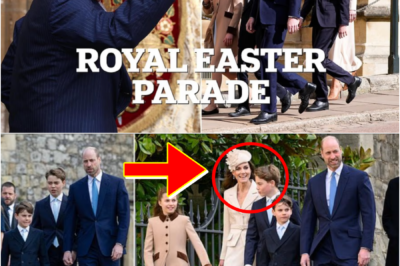
All eyes on Prince George at the Easter service — and the reason has fans “gasping”…
Royal fans are in awe at how tall Prince George, 12, has gotten – as William and Kate’s eldest son…

SH0CKING ROYAL EASTER INCIDENT! Prince Edward and Sophie found themselves in an awkward situation following a puzzling move by Andrew Mountbatten-Windsor, leaving royal watchers constantly speculating
Prince Edward and Sophie were forced to use a ‘holiday let’ in Sandringham because Andrew Mountbatten-Windsor refuses to leave their vacation…
End of content
No more pages to load