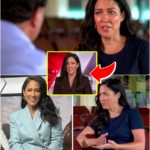
The sports broadcaster went public with her cancer battle just last month.
Beloved Channel 7 sports presenter Mel McLaughlin has returned to our screens for the first time since going public with her cancer diagnosis.
McLaughlin returned to her customary role on the sports desk on Sunday night for 7NEWS Sydney’s 6pm bulletin.
It’s the first time she has been on screen since early January and came a month after she revealed she had been diagnosed with lung cancer.
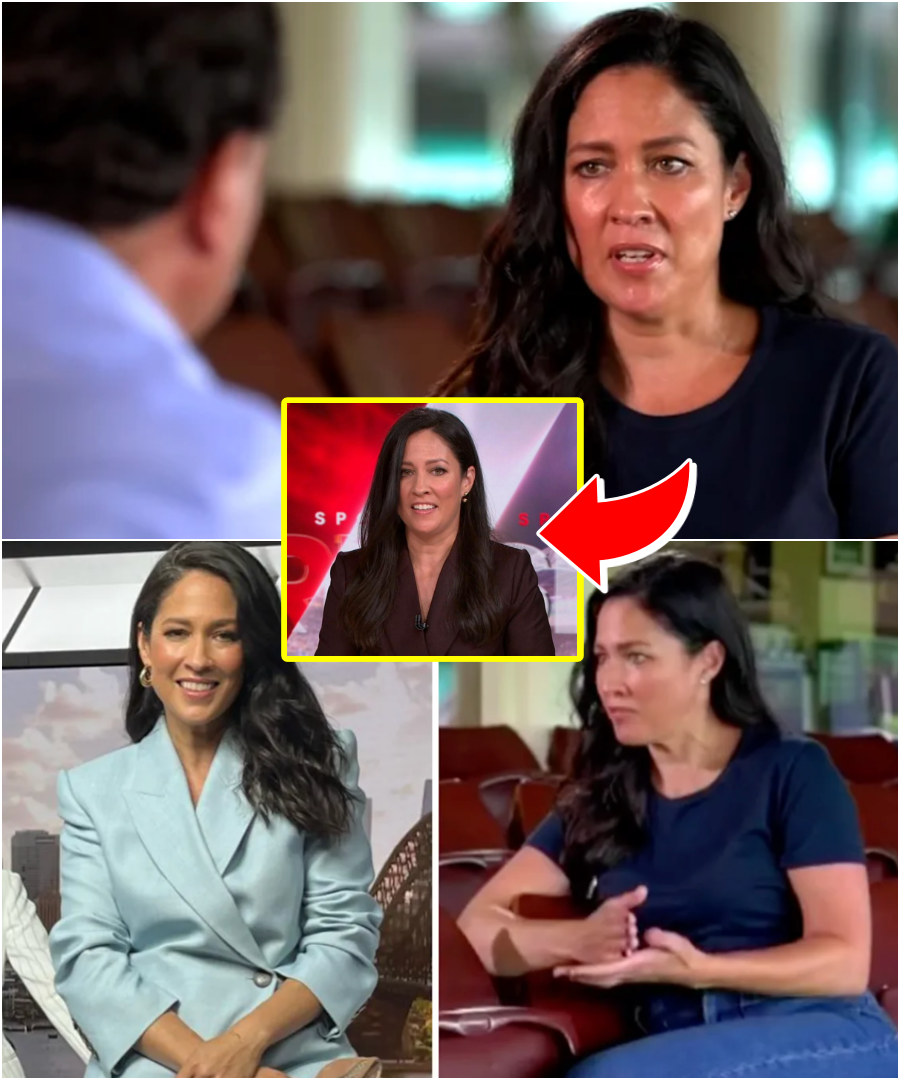
“Great to be back, I missed both of your pretty faces,” she said to co-anchors Mark Ferguson and Angela Cox.
“I really want to thank everyone for all their well wishes over the past couple of months. It’s been truly overwhelming and it’s appreciated, so thanks everyone.”
Cox added: “We couldn’t be happier to have you back.”
And Ferguson said it was “so good” before adding that McLaughlin has “still got it”.
“Mel’s easing back at her own pace,” Director of News and Current Affairs Ray Kuka said.
“She’ll do a few days here and there whenever she feels up to it.
“She has our full support and no doubt the full support of Sydney.”
Last month, McLaughlin made the shock reveal that she is battling lung cancer.
She underwent surgery to remove half her lung.
“It’s just very traumatic, it’s very triggering, it’s just a lot of emotions,” she said.
“In our family lung cancer meant death. We had one example, and we lost her.”
Her family has heard the “C word” before and it ended in tragedy: Mel’s sister Tara died from lung cancer in 2015 at 39 years old.
The thought of entering North Shore Private again — with the memory of her sister’s passing — was nothing short of heavy.
“I cried and then I laughed, thinking, ‘is this a joke?’” McLaughlin said.
McLaughlin opened up on her lung cancer journey because she’s benefited from an early diagnosis and wants others too as well.
Her tumour was detected at an early stage.
McLaughlin’s surgeon Dr Levi Bassin said he rarely sees anyone that early — which made the conversation a very different one to his usual.
Dr Bassin was interviewed by Mel as she tries to increase awareness of lung cancer.
“I can’t imagine what that would have been like to be in the same ICU your sister was in, and the same disease. It is crazy,” Dr Bassin said.
The doctor used a Da Vinci surgery robot nicknamed Tay Tay for the medical staff’s penchant for a Taylor Swift hit to inspire hours-long pressure.
The robot is designed to be placed into war zones to operate on soldiers and is now saving lives in Australia.
Its delicate procedure has had incredible success.
Doctors suspect a genetic mutation triggered Mel’s cancer but a different mutation to her sister’s.
“We looked at the genetics and we don’t think they’re related, but they must be I would think, it’s too weird otherwise,” Dr Bassin said.
What was different — McLaughlin’s tumour was detected early. Tara’s was sadly too late and at a stage where surgery couldn’t be relied on to save her life.
“I definitely think she was looking out for me. That’s what they do, big sisters,” she said.
The recovery will be slow but it is going well.
“Recovery is slow but good. The reason why I’m talking is not to make it about me, but awareness,” she said.
“It’s the biggest cancer killer in the country. It’s got a terrible stigma. I feel like I owe it to my sister and I owe it to people who could get something out of this.”
Raising awareness for lung cancer
The Cancer Council says lung cancer is responsible for almost one in five cancer deaths in Australia and is the leading cause of cancer death in the nation.
The organisation estimates 15,122 people were diagnosed with lung cancer in 2024 with the average age at diagnosis 72 years old.
Symptoms for lung cancer include shortness of breath, changes to the voice such as hoarseness, chest pain, coughing or spitting up blood, a new cough that does not go away, chest infection that lasts more than three weeks or keeps coming back, enlarged fingertips, loss of appetite, unexplained weight loss and tiredness.
The Cancer Council promotes the National Lung Cancer Screening Program — a free initiative from the Australian government designed to detect lung cancer early in people most at risk.
The program uses a CT scan to look for lung nodules before symptoms appear and is eligible to millions of Australians on Medicare.
And for people dealing with a diagnosis, the Cancer Council reminds people that if found early, over 65 per cent of lung cancers can be successfully treated with less invasive procedures.
“The earlier the cancer is found the better the treatment outcomes will be,” the organisation says.
News

SHE WENT TOO FAR… — Bec ERUPTS as Steph & Danny’s Secret Messages EXPOSED, Sending MAFS Into Chaos…
EXCLUSIVE: In a MAFS Reunion twist nobody saw coming, Steph was embroiled in a photo scandal of sorts with Bec’s ex Danny. The revelation that her ex…

⚡ IT WAS NEVER WHAT YOU THINK… — Steph DROPS A BOMBSHELL About Danny After That Bik-ini PHOTO Scandal EXPL0DED at the MAFS 2026 Reunion
EXCLUSIVE: In a MAFS Reunion twist nobody saw coming, Steph was embroiled in a photo scandal of sorts with Bec’s ex Danny. The revelation that her ex…
NO HOLDING BACK — AllStar JR SPEAKS OUT AFTER SH00TING LINKED TO NBA Ben 10, CALLS OUT J Prince Jr & OG 3Three — SOCIAL MEDIA ERUPTS
A violent night in Houston has now spiraled into one of the most talked-about controversies in the hip-hop world —…

Chicago Rapper Sh0t D3ad On FB Live While His Crew Watched… AND NO ONE STEPPED IN
A disturbing narrative has been circulating online, fueled by viral videos and dramatic headlines claiming that a Chicago rapper was…

💔 HE STEPPED IN TO PROTECT FAMILY… — Saiveon Hopkins SH0T DE@D IN Lincoln AFTER TRYING TO STOP A FIGHT — THE REAL STORY IS HEARTBREAKING…
The tragic death of Saiveon Hopkins has sent shockwaves through both the hip-hop and adult entertainment communities, as new attention…
ALL EYES ON HER — Meghan Markle Stuns in Olive Glam Beside Prince Harry as Night Out Sparks Buzz
The April 10 event was also attended by Justin Trudeau, Katy Perry, Orlando Bloom and Carey Mulligan Prince Harry, Meghan…
End of content
No more pages to load