A family is left shattered as they witness the bright future of 15-year-old Darweish Mohamed abruptly cut short in the parking lot of a Melbourne hospital
The tragic death of 15-year-old student Darweish Mohamed in the parking lot of Craigieburn Community Hospital this past Wednesday has sent shockwaves of horror through Melbourne. This incident transcends a singular act of individual violence; it forces an uncomfortable confrontation with the alarming escalation of criminal behavior among the youth. With authorities now having charged two teenagers with murder, alongside additional counts of arson and vehicle theft involving other suspects, the case reveals a degree of calculated, ruthless coordination that is deeply jarring for individuals of school age.
The Fracture of Moral Values and Social Controls
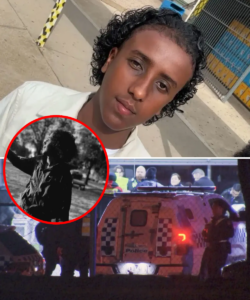
The fact that adolescent offenders were prepared to use lethal force to end the life of a peer in a public space highlights a profound distortion in their understanding of consequences. While society frequently blames external factors such as environment or the lack of formal life-skills education, the Melbourne case serves as a grim reminder that bullying and youth gang activity are shifting into increasingly dangerous territory.
The combination of homicide, the destruction of evidence via arson, and motor vehicle theft indicates that these were not impulsive, spontaneous conflicts. Instead, they bear the hallmarks of premeditation and lawless coordination. When children choose the path of a perpetrator over the structure of education or community engagement, it confirms that the “braking systems”—the safeguards provided by family units and academic institutions—have suffered a catastrophic failure.
The Consequences of Communal Silence and Security Gaps
A particularly haunting detail is the location of the incident: a hospital, an environment that should serve as a sanctuary for life and healing. The fact that it was a medical staff member who discovered the victim in critical condition speaks to the devastating isolation the student faced in his final moments.
The assertion that Victoria’s “very soul” is broken, as described by political leadership, is not an exaggeration but a weary acknowledgment of a security reality spiraling out of control. When youth violence emerges with such alarming frequency, society cannot settle for merely reacting through arrests or courtroom proceedings. The central question remains: how do we prevent the “normalization” of violence within the youth psyche? If public outrage begins and ends with social media tributes, without a fundamental shift in educational management and security oversight in vulnerable areas, then victims like Darweish Mohamed are unlikely to be the last.
The Need for a More Robust Intervention Strategy
This case is not merely a crime report; it is a stress test for the security governance of Victoria. A radical change is required in how authorities engage with high-risk youth. Moving beyond performative educational measures, the administration must adopt a proactive, aggressive intervention strategy—one where welfare agencies, schools, and law enforcement construct a genuine shield rather than relying on paper-thin warnings.
The loss of a vibrant teenager is a painful wake-up call. The events at Craigieburn are proof that violence is no longer an abstract crime statistic but a tangible threat to the very fabric of society. Only when society confronts these moral fissures and commits to change, starting from the most granular level, can a safe environment for the younger generation shift from an ideal to a reality.
SOURCE: 9NEWS
https://www.nine.com.au/australia-news/vic/teen-boy-dies-after-being-found-outside-melbourne-medical-centre-20260702-p60bv0.html