New Footage Of YNW Melly & YNW Bortlen’s Case LEAKS.. This Changes EVERYTHING
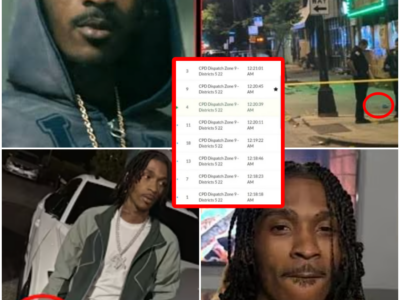
The case involving rapper YNW Melly, born Jamell Demons, has become one of the most high-profile trials in American hip-hop history. It all began on October 26, 2018, when two of Melly’s friends, Anthony Williams and Christopher Thomas Jr., were killed. Since then, a series of complex, chaotic, and controversial legal events has unfolded over several years.
For years, both Melly and co-defendant Yan Dubortland (Bortland) maintained their innocence, sticking to the story of a “drive-by” shooting. However, everything changed when Bortland entered a plea deal on September 9, 2025. He pleaded guilty to being an accessory after the fact to murder and witness tampering, which effectively removed the original first-degree murder charges against him—charges that carried a potential life sentence. The plea deal also included a proffer agreement, meaning Bortland would provide truthful information to prosecutors but was not required to testify directly against Melly in court.
This shift immediately disrupted Melly’s entire legal strategy. Previously, his defense relied on the “drive-by” narrative to question whether Melly was truly involved in the murders. With Bortland now admitting that the victims died inside the car and that he helped cover it up, the defense that had been built over seven years nearly collapsed. This forced Melly’s new legal team to rebuild their strategy from scratch, while the retrial was postponed to January 2027 due to ongoing appeals regarding the admissibility of digital evidence, phone records, and messages.

Another major factor was Melly’s lawyer change in the middle of the investigation, adding further complexity. The new attorneys had to quickly familiarize themselves with years of records, complex evidence, and prior trial testimony, while the replacement prosecutors were also racing to catch up. The situation became even more difficult with Bortland no longer listed as a co-defendant, removing a key legal advantage for Melly.
Regarding physical evidence, nothing substantially changed. Surveillance footage still shows Melly sitting in the seat from which shots were fired, according to investigators. Ballistics evidence also does not support the drive-by theory. The major changes occurred in legal strategy and courtroom dynamics. Bortland’s guilty plea confirmed the victims’ deaths inside the vehicle and his role in covering it up, undermining Melly’s long-standing defense narrative.
The community and social media reacted strongly. After Bortland’s plea deal was announced, some labeled it a betrayal, while others viewed it as prudent legal survival. Commentator Charleston White highlighted double standards in street culture, noting that fame or wealth does not protect anyone from legal consequences. Meanwhile, Melly’s supporters emphasized his right to be presumed innocent and insisted that the justice system must prove guilt beyond a reasonable doubt before taking a young man’s freedom or life.
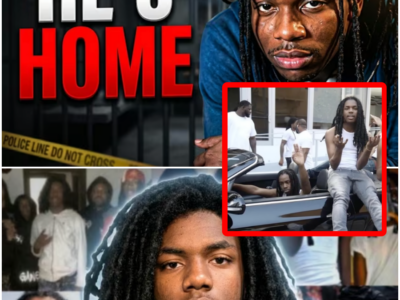
The timing of Bortland’s plea was dramatic, occurring just before around 250 potential jurors were scheduled to appear. Questions arose as to whether the plea deal was prompted by prosecutorial pressure or simply a rational legal decision. Immediately after pleading guilty, Bortland was processed into prison, had his signature dreadlocks cut, and began serving 10 years plus 6 years of probation, a stark transition from rising rap star to inmate.
Meanwhile, Melly still faces two counts of first-degree murder and the potential death penalty. Under Florida’s updated law, only 8 of 12 jurors are needed to impose a death sentence, increasing the stakes for Melly and his legal team. Legal experts have emphasized that this trial will set a precedent for future cases involving high-profile artists, shaping how the justice system treats individuals in the public eye.
For the victims’ families, the near seven-year wait for justice continues. Attorney John M. Phillips, representing Christopher Thomas Jr.’s family, stressed that justice is not just about legal procedures but also about accountability and transparency for the families. Every development—from Bortland’s plea to appeals over digital evidence—directly affects the ability to uncover the truth and hold the responsible parties accountable.
Overall, the YNW Melly case is a complex intersection of hip-hop culture, fame, loyalty, and the law. It is not only a story of two tragic deaths but also a cautionary tale about how fame, loyalty, and legal strategy intersect in the modern justice system. When the retrial begins in January 2027, the world will be watching closely to see whether justice is finally served and who will be held responsible for the 2018 tragedy.