Cold courtroom message from Australian suspect shocks victim’s family as investigators examine crucial evidence in Pattaya case
Simon Peter Carman expressed his hope that Tunchanok Donhomla’s family would find some form of peace following the tragic d3:ath of their daughter
The murder of 17-year-old Tunchanok Donhomla is more than a shocking criminal case in the seaside city of Pattaya; it exposes the grim realities lurking within the distorted side of the tourism industry. With Simon Peter Carman, an Australian national, now facing charges of murder and body concealment, public outrage is directed not only at the brutality of the act but also at the chilling indifference displayed by the suspect.
The Hollow Defense of Apathy
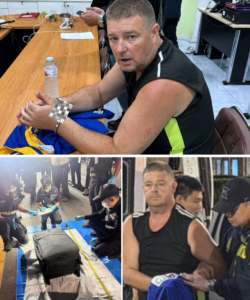
The statement “it was out of my control,” uttered by the suspect to the victim’s family, defies logic and decency. Taking a human life can never be excused or diminished by a personal denial of responsibility. Blaming fate or offering absurd justifications—such as attributing physical struggle marks to “spider bites”—only highlights a callous disregard for the justice system and the profound grief of those left behind.
In cases involving foreign nationals at hotspots like Pattaya, the collision of disparate cultures and lifestyles often escalates to extreme outcomes. What began as a transactional meeting between the suspect and the victim ended in a senseless tragedy, where human value was tragically cheapened. The dispute over a mere difference of a few hundred baht resulting in such a cruel end is a harrowing testament to a deeply alarming moral decay.
Gaps in Oversight and the Risks of “Fleeting Encounters”
The timeline of the case, marked by the suspect’s blatant movements from his apartment to the railway tracks, reveals an overconfidence in the ability to dispose of evidence. CCTV footage inadvertently became the sole witness to the final moments of a young girl before she became a victim inside an abandoned suitcase.
This raises significant questions regarding tourism safety: How can vulnerable groups, particularly minors, be protected from the risks posed by strangers? Entertainment districts, where anonymity is often celebrated, inevitably become fertile ground for individuals with deviant tendencies. Safety cannot rely solely on personal vigilance; it requires a more stringent regulatory system for accommodations and related services.
The Truth Behind Regretful Tears
In a video recorded while he was in custody, Mr Carman told Ms Tunchanok’s family he felt bad for “what happened to your daughter”.
“It was out of my control,” he said. “Um, I hope you — I know you’ll be very sad, upset; same-same me.”
“Um, it shouldn’t happen and I hope you’re OK. I know you’re not, but I hope. Um, and please tell other girls to be not — just to be careful, and not — I don’t wanna talk [unintelligible].”
Any apology—whether framed as repentance or sorrow—is rendered meaningless by the solid evidence gathered by investigators. The fingernail scratches on the suspect’s body, which serve as concrete proof of a struggle for survival, completely refute any claims of self-defense or lack of involvement.
The incident in Pattaya is not merely a report of a homicide; it is a warning about the degradation of human morality when far from home. When a foreign citizen chooses to resolve conflict through violence in a host country, it is not just a breach of law but an affront to human dignity. Justice will surely be served within the coming 84-day investigation period, but the pain inflicted upon the victim’s family and the scar left on the social consciousness regarding Pattaya’s inherent risks will linger. Every encounter, whether casual or intentional, must be grounded in respect, for the loss of a human life is a reality that can never be “out of the control” of one’s conscience.
SOURCE: ABC NEWS
https://www.abc.net.au/news/2026-06-28/australian-man-charged-with-thai-teens-murder-addresses-family/106852274