The BBC’s Christmas Gh0st Tradition RETURNS — and Mark Gatiss Promises His Darkest, Most Disturbing Tale Yet: The Room in the Tower
Every December, when most of Britain is wrapped in lights and laughter, the BBC quietly unwraps something colder — a ghost story. And this year, that eerie tradition returns with Mark Gatiss’s chilling adaptation of The Room in the Tower — a tale said to be his darkest, most psychologically disturbing yet.
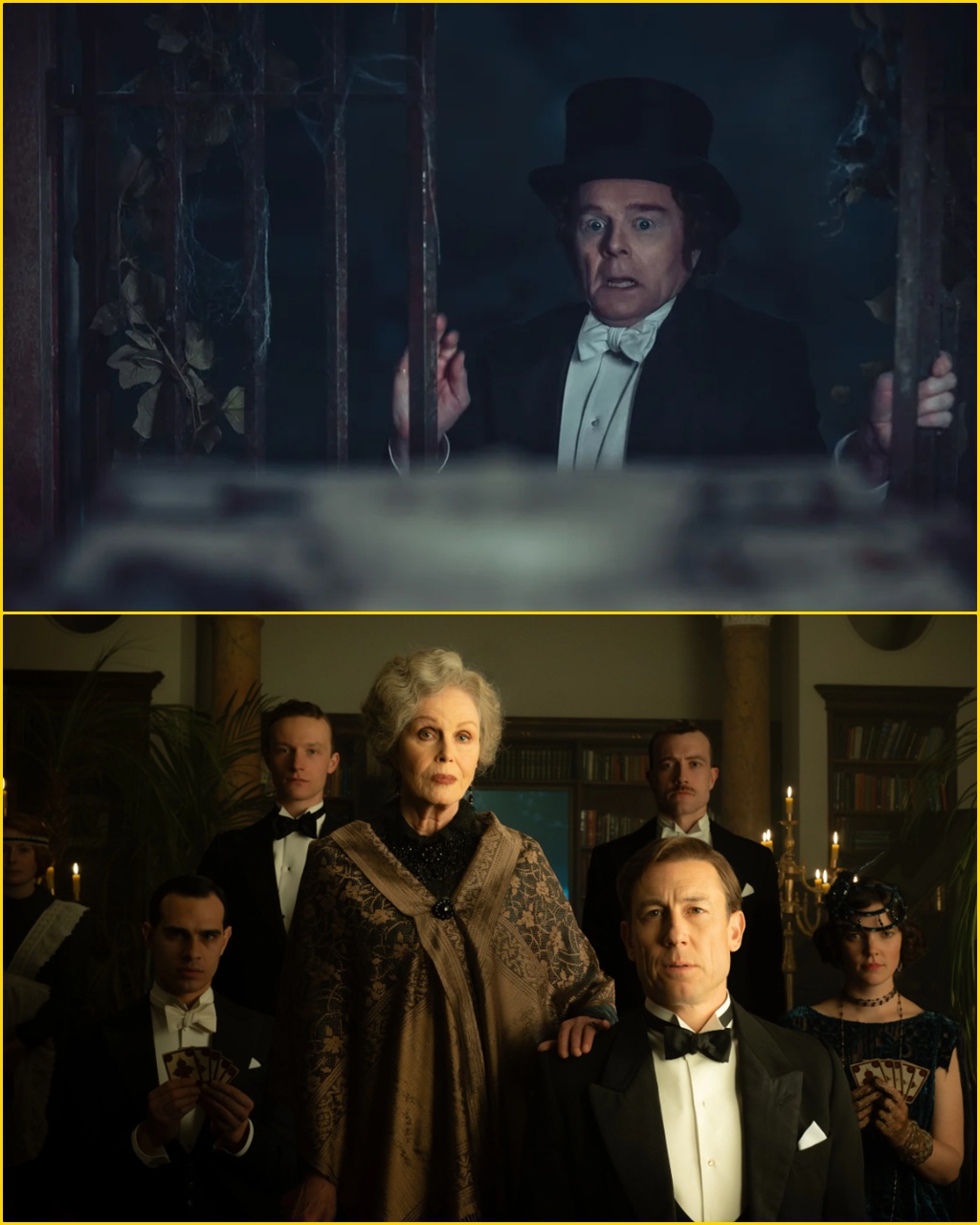
Based on E. F. Benson’s 1912 story, the new adaptation stars Tobias Menzies (The Crown, Outlander) as Roger Winstanley — a man trapped inside a dream that refuses to die. For fifteen years, he’s seen it unfold the same way: a grand country estate, genteel smiles hiding something rotten, and an invitation that always leads to the same cursed room.
But this year, in Gatiss’s retelling, the dream bleeds into reality.
The production, filmed at the hauntingly beautiful Cobham Hall in Kent, is drenched in the unsettling elegance of English horror. Every frame — from candlelit corridors to weathered portraits — evokes a sense of time slipping, of a nightmare politely knocking before stepping in uninvited.
Joining Menzies is Joanna Lumley, whose effortless sophistication takes on a chilling edge here. Described by insiders as “poise laced with menace,” Lumley’s presence reportedly transforms every scene she enters — a smile that might hide centuries of secrets.
For Gatiss — the creative mind behind Sherlock, Inside No. 9, and his acclaimed ghost story revivals Count Magnus and Lot No. 249 — this is more than another seasonal scare. It’s a love letter to the classic British ghost tale, the kind that doesn’t scream, but whispers. The kind that lingers after the credits roll, when you’re suddenly aware of how quiet your house has become.
“The Room in the Tower,” Gatiss said in a recent interview, “isn’t about monsters in the dark. It’s about the darkness within us — and what happens when it finally answers back.”
Unlike last year’s Count Magnus, which leaned on the Gothic grandeur of M. R. James, this story goes deeper into the psychological rot — dreams that fester, guilt that grows teeth, and memory that refuses to fade. It’s less about the ghost you see, and more about the one you slowly realize you’ve carried all along.
Early viewers at private screenings have called it “Gatiss’s masterpiece of dread” — a slow, exquisite nightmare wrapped in period detail and human fragility.
“This isn’t just a ghost story,” one critic teased, “it’s a confession told by candlelight.”
So when Christmas night arrives, and the world outside is still — pour a drink, turn the lights low, and let the BBC remind you what true fear feels like. Not the kind that jumps out, but the kind that quietly takes your hand and whispers, “You’ve been here before…”