Chapter 1: The Ghost of the Korengal Valley
In 2011, amid the jagged cliffs of Afghanistan’s Kunar Province, the name “Lone Wolf” was a shadow of terror for the insurgents. But for the 3rd Platoon of the 75th Ranger Regiment, it was merely a whispered legend heard from intelligence units. They had no idea that “Lone Wolf” was actually the person sitting silently in the corner of the Chinook helicopter, gripping an MK14 rifle: First Sergeant Avery Vance.
In the U.S. military at that time, the role of women in direct combat units remained a controversial subject. Avery wasn’t a conventional commander. She was an intelligence analyst attached to the platoon to assist with language and cultural engagement. In reality, however, Avery was one of the most elite snipers to ever emerge from the classified training programs at Fort Benning.
“Hey, Vance, double-check your comms. Don’t make us come save you when the lead starts flying,” Lieutenant Miller mocked. Miller was an arrogant officer who firmly believed women belonged in the offices of the Pentagon, not the dirt.
Avery simply nodded, offering no reply. She was used to being invisible.
Chapter 2: Horror at Outpost 404
The 3rd Platoon’s mission was to neutralize a high-ranking Al-Qaeda leader hiding in a remote cave system. However, faulty intelligence turned a quick raid into a death trap. As soon as the platoon landed, heavy machine-gun fire rained down from the heights.
Miller panicked. Two soldiers were wounded instantly. The entire platoon was pinned down in a rocky basin with no way out. Radio signals were jammed, and the hope for Close Air Support faded as a massive sandstorm rolled in.
“We’re going to die here!” a young private screamed over the deafening roar of gunfire.
That was when Avery Vance acted. She didn’t wait for orders. She slipped into the darkness like a ghost, scaling a vertical cliff face with her bare hands. While the platoon fired blindly in desperation, Avery seized the high ground.
The MK14 barked in a steady, rhythmic pulse. With every “crack,” an enemy gunner fell. She moved constantly, flanking the hostiles and making them believe an entire sniper element had surrounded them. Alone, Avery cleared the entire eastern ridge, carving out a safe corridor for the platoon to retreat.
When Miller finally ordered the withdrawal, swearing that “luck saved our lives,” Avery quietly collected her spent casings. The blood on her forehead had dried into a cold, dark streak.
Chapter 3: An Unjust Silence
Back at Joint Base Lewis-McChord in Washington, the 3rd Platoon was welcomed as heroes. Lieutenant Miller received the Silver Star for “outstanding leadership under fire.” Every other member was promoted.
In the official After Action Report (AAR), Avery Vance’s name appeared only on the final line: “Logistic and communication support. No direct combat engagement.”
Miller told her in his office: “Vance, you know the regulations. Women aren’t recognized in frontline positions. But don’t worry, I made a note that you did a great job.”
Avery looked directly into the eyes of the man wearing the medal that belonged to her. She didn’t ask for glory, but the lie cut deep. In the years that followed, Avery discharged quietly. She left the Army with a small rucksack and an old leather-bound notebook—a place where she meticulously recorded every coordinate, every shot, and the final breaths of the men she had saved.
Chapter 4: “Silent Rounds”
In 2024, a book titled “Silent Rounds: The Invisible Soldier” suddenly appeared on Amazon and instantly shot to the top of the New York Times Best-seller list.
The author was listed simply as A.V.
The book wasn’t a work of fiction. It was a compilation of operational logs, hand-drawn maps precise to the millimeter, and leaked photos of falsified military reports. The most earth-shattering chapter was titled “The Battle of Outpost 404.”
In it, the author detailed exactly how Lieutenant Miller had trembled under fire, and how a “language specialist” had single-handedly neutralized 14 enemy snipers to save 12 American lives. The book included the serial number of the rifle she used and the coordinates of enemy bodies that the U.S. military could never explain.
Chapter 5: Shockwaves at the Pentagon
The American public was outraged. The veterans of the 3rd Platoon, now middle-aged men, were stunned as they read every page. They remembered that night. They remembered the small figure who always lingered in the background.
Miller, now a Colonel awaiting promotion to Brigadier General, was summoned before the Senate Armed Services Committee. When senators presented evidence from the book—which independent intelligence experts had confirmed as 100% accurate—Miller was speechless.
A major press conference was held at the Pentagon. The Secretary of Defense stood before hundreds of reporters: “We made a mistake. A mistake that lasted over a decade. Today, we honor a soldier whose name the world should have known a long time ago.”
Chapter 6: A Belated Justice
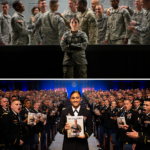
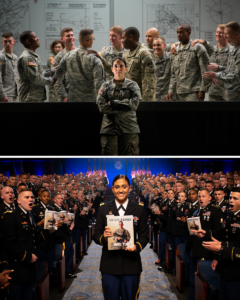
Avery Vance appeared in an old but crisp uniform. She was no longer the young girl in the Korengal Valley, but her eyes remained as sharp as a wolf’s.
As she stepped onto the podium to receive the Medal of Honor—the nation’s highest military decoration—the room went silent. Her old comrades from the 3rd Platoon stood up, tears streaming down the faces of these battle-hardened men. They gave her a slow, crisp salute—the highest military honor they had owed her for 15 years.
Avery took the microphone. She didn’t speak of injustice. She simply looked at the book in her hand and said: “I didn’t write this book to claim a medal. I wrote it so that the women who serve after me will never have to be ghosts on their own battlefields. We don’t need pity; we need the truth.”
That day, America didn’t just learn about a hero. They learned that sometimes the greatest victories are found in the silent pages of a diary, waiting for the day to move the world.
News

A 2026 CINEMATIC SMASH: YoungBoy’s concert documentary officially hits 1,000 theaters nationwide!
Tickets are officially on sale for the American YoungBoy tour film, a feature-length documentary chronicling the record-breaking Make America Slime Again (MASA) tour. The…

THE GO.Y.A.RD BAG MYSTERY: What was inside that caused it to be stolen at the rapper’s fatal moment?
New questions have surfaced surrounding the final hours of Lil Poppa after a message shared online claimed that the rapper’s personal…

Hilton hotel parking lot near Interstate 285 and Virginia Avenue in Atlanta: Anyone who was at this area and has information related to this matter, please contact Lil Poppa’s baby mother immediately
New questions have surfaced surrounding the final hours of Lil Poppa after a message shared online claimed that the rapper’s personal…

Lil Poppa’s baby mother issues an urgent plea, calling for public assistance
New questions have surfaced surrounding the final hours of Lil Poppa after a message shared online claimed that the rapper’s personal…
Forget the Father’s Scandal or Marriage Woes: This is the only struggle Beatrice and Edoardo are truly facing
t’s nearly two years since Princesses Beatrice and Eugenie stepped out to support the Prince of Wales at a garden party at Buckingham Palace….
So Close, Yet So Far: King Charles and Harry remain worlds apart despite being in the same country
Prince Harry speaks at the International Association of Privacy Professionals Conference on March 31, 2026 in Washington, D.C.Credit : Shannon Finney/Getty…
End of content
No more pages to load