Part 1
The man I trusted more than my own blood looked me in the eye and said, “You were never meant to know the truth, Cassia.”
There are sentences that crack through your life like lightning. They do not fade when the storm passes. They stay in the walls. In the plumbing. In the back of your throat when you wake up at three in the morning and the house is too quiet. That one stayed with me for eight years.
He had said it in a dim operations room that smelled like stale coffee, gun oil, and hot plastic from overworked screens. His face had been half lit by a monitor, half swallowed by shadow. Commander Reed Mercer had always known how to stand like that, as if even the light answered to him. He had one hand on a classified folder and the other braced against the metal table between us. I remember the silver nick on his wedding band. I remember the hum of the air unit. I remember thinking that if he lied to me next, something in me would never go back the way it had been.
Then he took the folder, turned his back, and walked out.
I built my life in Boulder because it was the sort of place where people argued about trail conditions and organic tomatoes, not covert routing architecture and buried bodies. My townhouse was small, drafty, and stubbornly ordinary. Early autumn had come thin and sharp that week. The chill slipped through my window frames before sunrise, no matter how many times I sealed them, and gathered in the kitchen tiles until my bare feet ached. I liked that. Pain you could explain had a calming effect.
I had a report due by noon for Orionet, a civilian network security company that paid me well and asked few personal questions. I worked contract. Remote. Mostly backend diagnostics, anomaly reports, containment modeling. Boring enough to keep me fed, technical enough to keep my hands busy, and far enough from my old life that I could pretend I had one.
The router on my shelf kept blinking.
Not the ordinary chaotic flutter of apartment traffic. Not the steady chatter of a neighborhood waking up. This was patterned. Offbeat. Uneven. Three short pulses, pause, two long, another pause, then a curl of data that struck something deep in my spine.
I stared at it over the rim of my coffee mug while steam fogged one lens of my glasses. The display reflected in the dark kitchen window like a tiny blue heartbeat. I opened the internal protocol panel out of habit more than concern. I expected drift, interference, maybe a piece of cheap hardware dying two floors down.
Instead I got a sequence I hadn’t seen in almost a decade.
Not the exact code. Nothing that neat. But the rhythm was familiar in the way a scar can be familiar under your fingertips. It looped with the same asymmetrical timing I used to build into field systems so they would look like noise to anyone who didn’t know what to hear. My stomach tightened. I ran the parse again, slower. Same result. Wrong for Orionet. Wrong for consumer equipment. Wrong in a way that made old instincts stand up inside me like dogs hearing a footstep on gravel.
I shut the laptop harder than I meant to.
“Glitch,” I told the empty kitchen.
The word sounded flimsy.
Routine had saved me before, so I laced my running shoes and went out anyway. The air smelled like wet bark and cold dust. Somebody a block over was burning cedar in a chiminea, and the smoke drifted low across the sidewalks. I stretched under a cottonwood that had already started dropping yellow leaves in clumps. My neighborhood was one of those quiet pockets where everyone pretended not to watch each other but noticed everything. Dog walkers. Porch pumpkins. Wind chimes. Delivery vans. It should have felt safe.
Halfway down the next block, I saw the gray RV again.
I had clocked it the two previous mornings under the same elm tree by the corner house with the blue shutters. Same angle. Same dark windshield that swallowed the pale light instead of reflecting it. No camping stickers, no state park pass, no laundry bag hanging in the window, none of the sloppy clutter people leave in vehicles they actually use. It looked parked the way a camera looks casual.
I kept jogging. Didn’t turn my head. Didn’t speed up.
Then I heard it.
A faint metallic click overhead. Tiny. Clean. Distinct enough that I felt it in my teeth before I fully recognized it. Rotor adjustment. Lightweight casing. Small surveillance drone changing pitch.
Cold slid down my back.
I finished my loop without rushing. That mattered. Panic narrows your field of view, and I had spent too much of my life teaching other people not to panic to indulge in it now. Still, by the time I reached my front walk, my pulse had settled into that precise low rhythm I only hit when violence was possible and not yet admitted.
Inside, I checked the windows, the back gate, the crawlspace sensor I had installed myself and never told anyone about. Nothing tripped. Nothing obvious. The sort of nothing that always worried me more.
By noon I had almost convinced myself I was overreacting.
Then the doorbell rang.
Three times. Clean, evenly spaced presses. Not tentative. Not apologetic. The pattern of somebody signaling rather than requesting.
I wiped my hands on a dish towel and opened the door with the chain still on.
Three men stood on my porch in Orionet field uniforms.
The shirts were right at first glance. The tool bags, too. Their boots were dusty in the same local beige dirt I’d seen on half the contractors in town. One of them held a tablet. Another wore a baseball cap low over his eyes. The third smiled in a way that showed he had practiced smiling in mirrors and never meant any of them.
“Ma’am,” the one with the tablet said, “we’re checking a neighborhood signal issue. We got a flag from your block.”
His tone was calm. His eyes were not. He never once looked at my face for longer than a second. He kept tracking my right hand.
I let the door open another inch and crouched as if to retie a shoelace. My lace didn’t need tying. I just wanted a better angle.
The logo on their shirts was a shade too dark. Their ID badges lacked the reflective strip Orionet had added six months earlier after a field incident in Tucson. The man on the left had the squared outline of body armor under his vest. The one with the smile had a slight bulge at his waistband tucked too high and too close for a phone.
My pulse slowed.
Part 2
“Of course,” I said softly, keeping my voice neutral. “Signal issues have been weird all morning.”
I stood, let the door open just enough for them to see inside—but not enough to step through.
“Can I see your credentials again?”
The man with the tablet smiled. Too quick. Too ready.
“We already—”
“I know,” I cut in gently. “Company policy. Mine.”
That bought me three seconds.
Three seconds was everything.
Behind my back, my thumb pressed the underside of the doorframe—right where I’d embedded a contact trigger years ago and never told a soul about. A silent ping shot through my internal network, waking systems I hadn’t used since I walked away.
Inside, the router’s strange pulse shifted.
Responded.
The man in the cap noticed it first. His eyes flicked—not to me, but past me, toward the shelf.
Mistake.
I stepped back suddenly, as if inviting them in.
They moved.
Fast. Coordinated. Professional.
Also predictable.
The chain snapped under the first shoulder hit—but I was already moving. I pivoted left, grabbed the cast-iron pan from the counter, and swung low. Not at the head. At the knee.
Bone doesn’t like that kind of force.
The man went down hard.
The second one lunged for me—I ducked, slammed the edge of the counter into his ribs, felt air leave him in a violent rush. The third—smiling man—finally dropped the act.
Gun out.
Clean. Efficient. Trained.
“Don’t,” he said.
The word was quiet.
Deadly.
I froze.
The barrel pressed cold against my temple.
For a moment, everything narrowed to that single point of contact. The weight. The pressure. The certainty.
“You’re coming with us,” he said.
I didn’t answer.
Because in that moment—
The router behind him blinked again.
Three short.
Two long.
Pause.
And then—
A response I hadn’t seen in eight years.
My code.
But altered.
Improved.
Someone had taken what I built… and evolved it.
“Who sent you?” I asked quietly.
The man hesitated.
Just a fraction.
Then he said, “You already know.”
And that’s when I understood.
Not guessed.
Not suspected.
Knew.
My stomach dropped—not from fear.
From recognition.
“Mercer,” I whispered.
The man didn’t confirm it.
He didn’t have to.
Because the router pulsed again—
And this time, the message wasn’t hidden.
It was direct.
STAND DOWN. DO NOT HARM. ASSET MUST REMAIN INTACT.
The man with the gun stiffened slightly.
Confused.
That confusion was all I needed.
I moved.
Fast. Precise. Old instincts snapping back into place like they’d never left.
I twisted under his arm, drove my elbow into his wrist—gun discharged into the ceiling—grabbed, turned, disarmed.
Three seconds.
Three men down.
Silence flooded the house again.
Except for the router.
Still blinking.
Still speaking.
I stared at it.
And for the first time in years—
I felt something worse than fear.
I felt pulled.
Part 3
I didn’t run.
That’s the part most people get wrong.
Running means you think you can escape.
I knew better.
If Mercer had found me—after eight years, off-grid, buried in civilian noise—then this wasn’t a hunt.
It was a recall.
I zip-tied the men. Efficient. Temporary. They weren’t the threat anymore.
They were the message.
Back at the router, I opened the panel again.
The signal was no longer pretending.
It was broadcasting.
Coordinates.
Encrypted—but not from me.
Never from me.
I stared at the pattern, heart steady in that cold, controlled rhythm I hadn’t felt since the old days.
“Why now?” I murmured.
The screen flickered.
Then a new line appeared.
Not code.
Text.
Plain.
Deliberate.
BECAUSE YOU WERE NEVER THE OPERATIVE.
My throat tightened.
Another line.
YOU WERE THE PROTOTYPE.
The room felt smaller.
Colder.
Memories I had buried—training simulations that didn’t make sense, missions I was pulled from at the last second, the way Mercer always watched instead of led—
Not a commander.
An observer.
A handler.
A designer.
My hands trembled—not from fear.
From clarity.
“I wasn’t deployed,” I whispered.
“I was tested.”
The screen pulsed once more.
Final message.
AND NOW YOU’RE NEEDED AGAIN.
Outside, in the distance—
Sirens.
Not local police.
Too synchronized.
Too fast.
I closed the laptop slowly.
Stood still in the center of my too-quiet, too-ordinary house.
Eight years of pretending collapsed in on itself like a burned-out structure finally giving way.
Mercer didn’t want me dead.
He never did.
He wanted me back.
Alive.
Functional.
Controlled.
I picked up the gun from the floor.
Checked the chamber.
Old habits.
Old truths.
Then I looked at the door.
And for the first time since that operations room—
I smiled.
Not because I was safe.
But because now…
I knew exactly what I was.
And this time—
I wasn’t going back as his creation.
I was going back as his worst mistake.

News
A QUIET L0SS… A LIFE THAT MEANT SO MUCH… — MEL SCHILLING’S PARTNER SHARES A MAJOR DECISION AFTER HEARTBREAKING L0SS
Exactly one month after saying goodbye, Mel Schilling’s widower has shared some bittersweet news with her adoring MAFS fans. To the background…

WHAT DID YOU DO, MOM? — A Question Caught on Camera in the Carolina Flores Gómez Case That Sent Chills Down Everyone’s Spine…
Bone-chilling new video captures the moment a former Mexican beauty queen is gunned down in front of her baby —…
SHE THOUGHT SHE WAS SAFE… THEN EVERYTHING CHANGED — Beauty Queen Case Leaves Mexico Demanding Answers!
Bone-chilling new video captures the moment a former Mexican beauty queen is gunned down in front of her baby —…
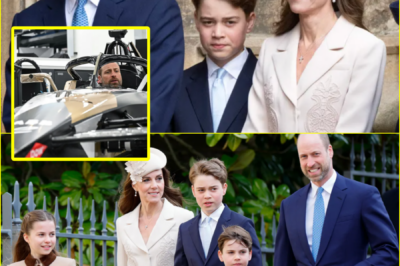
JUST A JOKE… OR SOMETHING MORE? — Prince William MAKES A SURPRISING HEIGHT JOKE RIGHT AS Prince George HAS EVERYONE TALKING
Prince William is 6 feet 3 inches, and it appears his eldest son may be taking after him Prince William,…

BREAKING — MEGHAN MARKLE MENTIONS “THE HARDEST SEVEN YEARS” ON INSTAGRAM, ONE DETAIL HAS EVERYONE TALKING…
The Duchess of Sussex also shared a horoscope post that referenced themes of self-worth and insecurity Meghan Markle in Washington,…
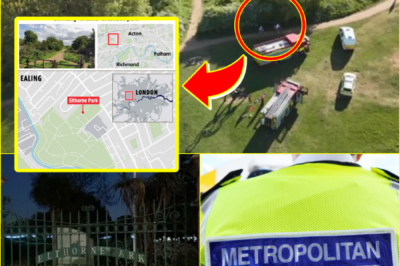
POLICE CONFIRM TRAG-IC UPDATE IN LONDON PARK INCIDENT INVOLVING MOTHER AND CHILD
4 The entrance at Elthorne Park last nightCredit: Jordan Reynolds/PA Wire 4 The pair were recovered from the water,…
End of content
No more pages to load