
Tesla CEO Elon Musk has done it again, dropping a major hint about the future of robotics. In a recent announcement, Musk revealed that Tesla’s Bot Gen 3 Optimus humanoid robot is slated for mass production in 2025, with a staggering target price of $10,000 per unit. This development has electrified both tech enthusiasts and industry experts, sparking conversations about how Tesla plans to achieve such an ambitious goal.
The Optimus robot, first introduced as part of Tesla’s push into humanoid robotics, is designed to handle tasks that are dangerous, repetitive, or physically demanding. Musk has emphasized that the goal is not just to build a robot, but to create a workforce assistant capable of integrating into everyday life. While the prototype models have impressed audiences, the leap to mass production at such a low cost is unprecedented.
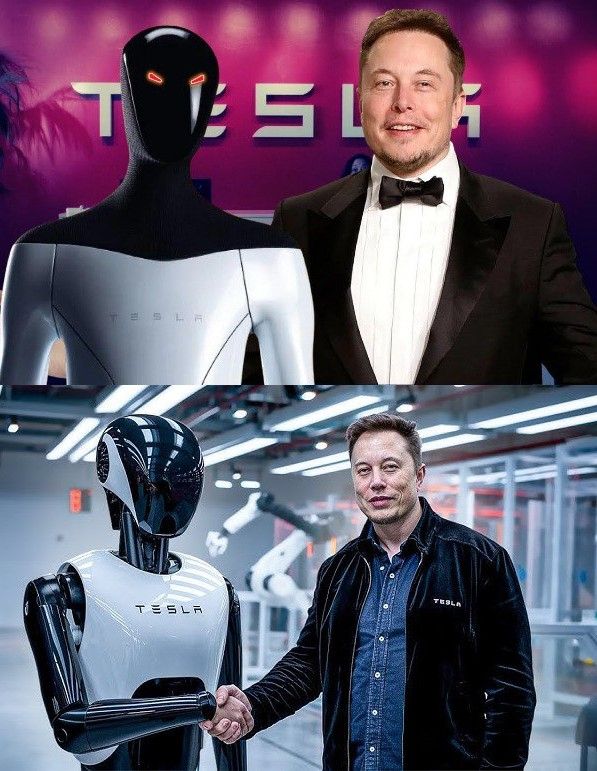
Early Production: Handcrafted Units at Giga Texas
As of now, Tesla has produced roughly 100 Optimus units, primarily at a small, handcrafted production facility within Giga Texas. These early models are assembled by hand, showcasing the intricate engineering required for humanoid robotics. Elon Musk himself has acknowledged the complexity of the project, stating on X (formerly Twitter):
“Complexity per unit mass is much higher with humanoid robots, but still I think it ends up costing less than half of a car.”
This admission highlights the enormous challenge Tesla faces: humanoid robots are inherently more complex than vehicles in terms of motion, artificial intelligence, and sensory integration. From advanced motors to precision sensors and AI-powered decision-making, every unit represents a remarkable technological feat.
How Tesla Plans to Scale
The real question on everyone’s mind is: how will Tesla scale production to thousands of units per year? Musk has confirmed that 2025 will see the production of thousands of Optimus units for internal testing and training, ahead of a public launch expected at the end of 2025 or early 2026. This approach allows Tesla to refine assembly processes, improve AI training, and ensure the robots meet performance standards before mass release.
Unlike cars, robots require integration of multiple fields of science and engineering, from mechanical and electrical systems to machine learning and advanced sensors. Tesla’s approach appears to focus on automation in assembly, where many units can be produced efficiently once initial prototypes and processes are perfected. Musk’s claim that each robot could cost less than half a car reflects Tesla’s confidence in streamlining production at scale.
Challenges and Opportunities
Historically, Tesla has faced significant production hurdles. From the Model 3 “production hell” to the Cybertruck and Semi, Musk has repeatedly pushed the limits of manufacturing while overcoming obstacles. Optimus, a humanoid robot, represents a new frontier — arguably more complex per unit mass than a car — but Tesla is applying lessons learned from its automotive production lines.
Experts speculate that the success of mass-producing Optimus depends on several factors: automating precision assembly, reducing material costs, refining AI integration, and ensuring robust testing. Given Tesla’s reputation for innovation and Musk’s ambitious timelines, the company may indeed achieve what no other robotics firm has: affordable humanoid robots at scale.
Implications for Industry and Society
If Tesla succeeds, the Bot Gen 3 Optimus could transform industries ranging from manufacturing and logistics to healthcare and home assistance. Robots could handle repetitive or dangerous tasks, reduce labor shortages, and create a new wave of productivity. For consumers, a $10,000 humanoid robot opens possibilities that were previously unimaginable, from home assistance to personal robotics.
Moreover, mass production of Optimus represents a milestone in AI integration with physical robotics, potentially making humanoid robots a common part of daily life. Tesla’s move could accelerate the adoption of robotics globally, reshaping workforce dynamics and inspiring competitors to innovate at unprecedented speed.
The Road Ahead
As Tesla prepares for the first large-scale rollout of the Optimus Bot Gen 3 in 2025, the tech world watches with anticipation. The combination of affordable pricing, advanced AI, and robotic engineering makes this one of the most ambitious projects in recent history. While challenges remain, Musk’s vision is clear: to make humanoid robots accessible, practical, and integrated into modern life, potentially revolutionizing the way we live and work.
In a few short years, what began as a futuristic concept may become a tangible reality, as Tesla continues to push the boundaries of robotics and artificial intelligence. The $10,000 Optimus is more than a robot — it’s a glimpse into a future where advanced technology is affordable, scalable, and transformative.
News

WORDS TURNED D-E-A-DLY? — Jaro City’s Lil Mikey Gu-nned Down After Explosive Argument Tied to Viral Diss
The hip-hop community is once again grappling with tragedy following the fatal shooting of Jaro City rapper Lil Mikey, an…

IT WAS ALL GONE IN MINUTES — Community Heartbreak as Heroic Grandparents Lose Home in Sh0cking Blaze
An Adelaide community is rallying around two much‑loved grandparents and volunteers who have lost everything in a ferocious house fire….

HE SAID TOO MUCH? — NC Rapper Gu-nned Down Moments After Sh0cking Facebook Live Confession
A shocking and deeply disturbing incident has rocked the hip-hop community after a North Carolina rapper was fatally shot just…

HIS STORY ISN’T ADDING UP — Tiger Woods’ DUI Arrest Takes Dark Turn as New Details Raise Serious Questions
Tiger Woods called President Donald Trump in the moments after his shocking car crash in Florida, new bombshell footage appears to show. The golf…
FROM GIVEAWAY TO GRIDLOCK — CCTV Shows Melbourne Petrol Station Descend Into Complete Chaos Over $100K Fuel Promotion
Police have been forced to shut down a $100,000 fuel giveaway at a Melbourne petrol station after the stunt resulted in traffic mayhem. The…

SHE WAS ONLY SEVEN MONTHS OLD — Distu-rbing Video Shows NYC Mom’s Agonizing Realization After Baby Sh0t D-ead
A video captured the heart-wrenching moment a young mom realized her 7-month-old daughter had been shot by a stray bullet while…
End of content
No more pages to load