

“I Will Be the Upper Hand”
He said it softly, almost tenderly, as they danced beneath chandeliers and polite applause.
“Darling, I will be the upper hand in this relationship.”
She laughed then, thinking it was a joke whispered too close to the ear, the kind men make when confidence tips into charm. She did not yet know that some sentences are not metaphors. Some are contracts.
Before the rockets, before the electric cars, before the world learned to say his name with awe or suspicion, there was a man who loved with the same intensity he worked—with hunger, with certainty, with no tolerance for refusal.
He fell in love as he did everything else: decisively.
At university, when he saw her—blonde, brilliant, standing among many beautiful women—he did not wonder if she would be his. He wondered when. He pursued her relentlessly. Later, she would describe it simply: He did not accept no.
At first, this felt like devotion. Then it began to feel like pressure.
Marriage did not soften him. It clarified him.
He corrected her constantly. Her thoughts, her tone, her ambitions—everything felt like something to be optimized. When she protested, reminded him that she was his wife, not his employee, he replied calmly, almost kindly:
“If you were my employee, I would have fired you by now.”
She learned then that love, to him, was hierarchical.
Even so, he never hid this truth. On their wedding night, while the music swelled and guests smiled, he leaned in and told her exactly who he was. That was his honesty. Whether she could live with it was her problem.
Years later, when she gave him an ultimatum—choose me or lose me—he chose efficiency. By morning, her credit cards were canceled. Divorce papers were filed. The decision had been made overnight, as easily as deleting a file.
And the world still admired him.
The second woman arrived like a fairy tale.
A nightclub in London. Velvet, mirrors, wealth heavy in the air. She appeared in a dress that caught the light like destiny. He invited her to dinner the next night. Within weeks, he proposed.
Love, with him, moved at escape velocity.
He spent money recklessly in those days, intoxicated by romance and risk. Then one evening, almost as an aside, he confessed that his fortune was tied up, that he was nearly broke—for now. Rockets had to be launched. Futures had to be built. She married him anyway.
They married. They divorced. They married again. They divorced again.
To love him was to orbit a planet that could not stop moving.
She said once that she had loved him desperately. That she missed him when he was gone. Many believed her. Few questioned why missing him felt like relief.
When asked where he wanted to die, he answered without hesitation:
“On Mars.”
And if his wife and children wished to stay on Earth?
Well. That was their choice.
By then, women no longer pursued him quietly. They admired him openly, hungrily. Genius has gravity. Power has allure. He chose from abundance.
The last woman the world fixated on was beautiful in a way that seemed almost mathematical. Blonde. Luminous. Scientifically perfect, they said. Her smile looked like sunlight distilled into human form.
They called her a gold digger.
But what gold could compare to being chosen by a man who believed he was reshaping humanity?
Even so, she was not the exception.
She, too, was the lower hand.
They broke apart like all the others.
This is not a story about villains or victims. It is a story about scale.
When a man believes he is meant for Mars, Earth becomes negotiable. When someone sees relationships as systems, love becomes a structure with levels, controls, exits.
He is admired because he builds futures.
He is feared because he does not look back.
And somewhere, echoing beneath rockets and headlines, remains that first sentence—quiet, honest, unchanging:
“I will be the upper hand in this relationship.”
He always was.
News
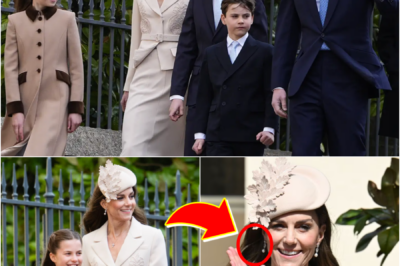
🔥 Royal Fans Are Stunned by Catherine’s Easter Appearance — The Subtle Detail Everyone’s Whispering About!
Her return to the Easter service after two years, Queen Elizabeth II’s historic jewels, and a new hat signal continuity,…
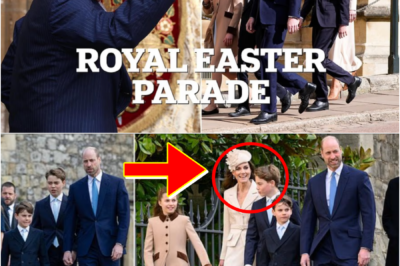
All eyes on Prince George at the Easter service — and the reason has fans “gasping”…
Royal fans are in awe at how tall Prince George, 12, has gotten – as William and Kate’s eldest son…
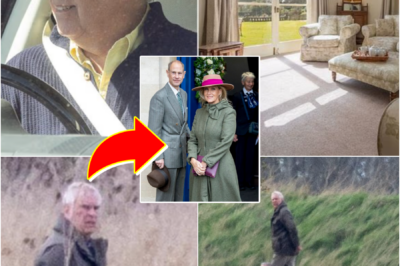
SH0CKING ROYAL EASTER INCIDENT! Prince Edward and Sophie found themselves in an awkward situation following a puzzling move by Andrew Mountbatten-Windsor, leaving royal watchers constantly speculating
Prince Edward and Sophie were forced to use a ‘holiday let’ in Sandringham because Andrew Mountbatten-Windsor refuses to leave their vacation…

FIRED FOR BEING ‘USELESS’…” — THEY HAD NO IDEA THIS SMALL FEMALE MEDIC PULLED THEIR COMMANDER BACK FROM D3ATH TWICE UNDER FIRE!
Part 1 Fired For “No Skills” — Not Knowing This Medic Girl Saved Their Commander’s Life Twice During War The…

They Shaved Her Head Clean…” — The Entire Base Mocked Her… Until a General Roared: “She’s Your Superior!
Part 1 The first thing Avalene Crossmore noticed about Black Ridge wasn’t the razor wire, or the blunt gray buildings…
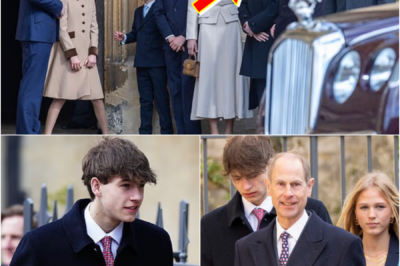
👀 The gaze that’s sending sh0ckwaves at the Earl of Wessex’s Easter appearance has royal watchers buzzing!
He’s previously been dubbed the ‘hidden royal’ – having missed occasions with his wider family in the past while concentrating on…
End of content
No more pages to load