“Women Are Not Small Men”: From an Olympic Champion’s Tragedy Raises an Alarm Over a Modern Medicine Forgetting Half the World
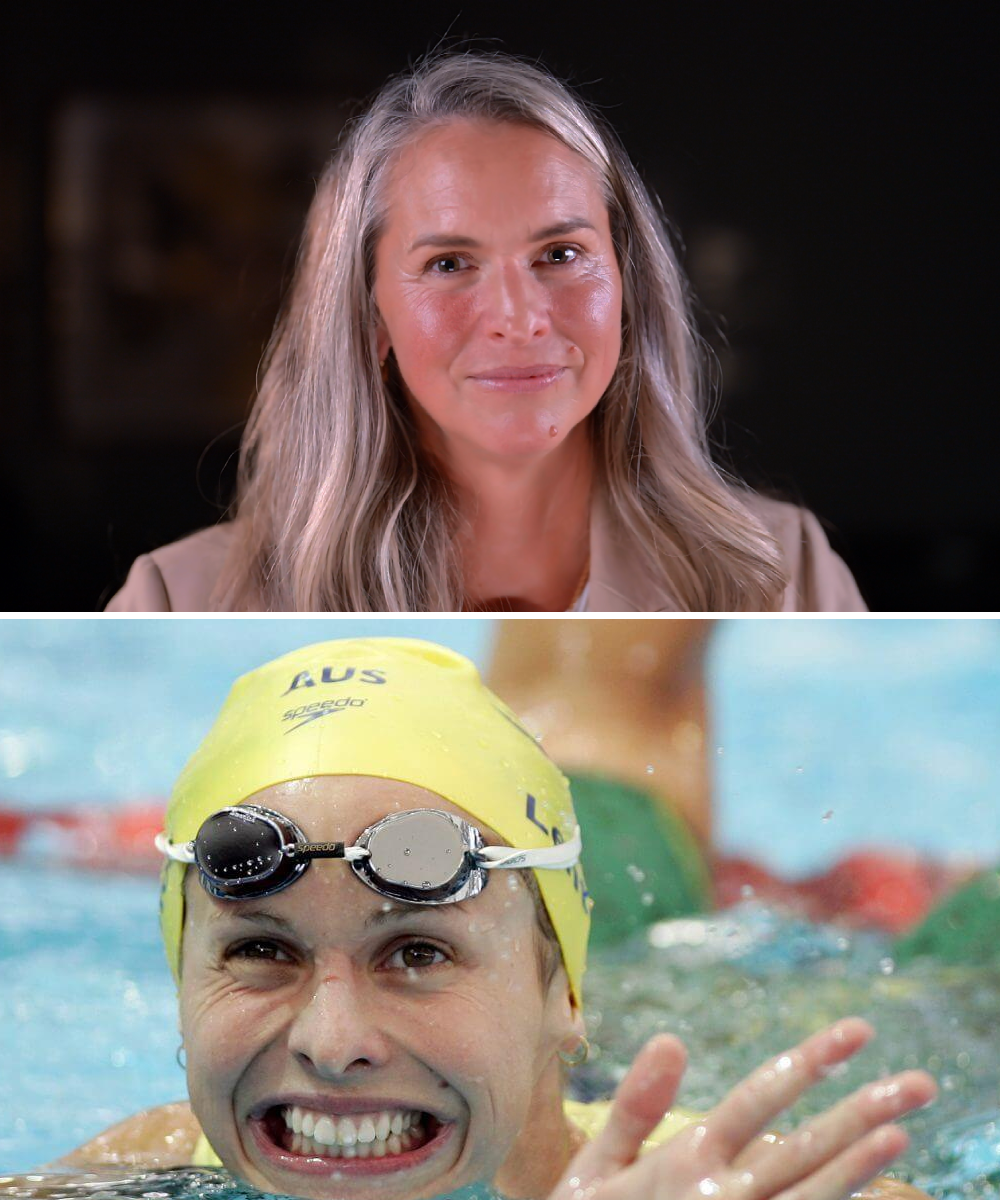
For more than a decade, Libby Trickett was Australia’s golden girl.
A four-time Olympic gold medallist, also with one silver and two bronze medals to her name, she dominated the pool — breaking records in freestyle, butterfly and relay events.

But last year, at the age of 40, the seemingly healthy mother of five suddenly became gravely unwell.
What she felt was unlike anything she had ever experienced.
“I was two months postpartum and I was taking my girls to swimming lessons,” Trickett recalled.
“I remember this tightness in my chest. I wouldn’t describe it as pain — it was pressure. It felt really scary. Then there was this overwhelming sense of unease… almost a sense of impending doom.
“I felt dizzy, out of sorts, just deeply unwell.”

Trickett went to see the doctor she had trusted for more than a decade. She was told she’d suffered a panic attack.
But it wasn’t a panic attack.
It would take another eight months before she finally received a devastating diagnosis.
She had suffered a SCAD — a spontaneous coronary artery dissection — a tear in the wall of a coronary artery.
It is a catastrophic cardiac event. Sometimes fatal. And it disproportionately affects women, particularly during or after pregnancy.
Part of the reason it took so long to diagnose is because SCAD remains poorly understood and under-researched.
Without answers, Trickett now lives with the fear that it could happen again.
“I obviously want to be around to watch my kids grow up and thrive and have adventures,” she said through tears.
“The thought that I might not get to experience that with them makes me really sad.”

She believes her experience reflects a much larger problem in women’s healthcare.
“The amount of families destroyed because a woman has this catastrophic event is more than I can bear,” she said.
“As a society — scientists, researchers, governments — we need to put far more funding into research for women and the conditions that affect women.”
Trickett is now one of many women speaking out about longstanding inequalities in medical research.
And the reality is startling: for decades, much of modern medicine was designed around male bodies.
“Health and medical research has been designed for and tested on males, and then rolled out to the broader population,” says Professor Bronwyn Graham from The George Institute for Global Health.

“And that broader population is far more diverse than that. That’s where the great experiment begins.”
The consequences are significant.
Women are more likely to experience adverse reactions to medications and vaccines, in part because female biology has historically been overlooked in clinical testing.
“Eight out of 10 drugs removed from the market were withdrawn because women experienced greater adverse effects than men,” Professor Graham says.
The knowledge gaps extend into some of the most serious health challenges women face.
“Mental health — particularly anxiety disorders — is actually one of the greatest burdens across a woman’s lifespan, even greater than cardiovascular disease,” she explains.
“Yet we continue to deliver psychiatric and psychological treatment through a gender-neutral lens.”
Women and men can experience and express mental illness differently, but research has often failed to account for those differences.
“One example is trauma,” Professor Graham says.
“When men discuss trauma symptoms, they are more likely to receive a PTSD diagnosis. Women discussing the same symptoms are more likely to be diagnosed with a personality disorder.
“And much of the early PTSD research was conducted on male veterans.”
A shift in women’s health
There are signs, however, that the tide is beginning to turn.
One of the leading voices driving change is Dr Stacy Sims — a scientist, researcher and bestselling author whose message has resonated with millions of women worldwide.
With a PhD in exercise physiology and metabolism, Dr Sims argues women have spent decades following health and fitness advice based largely on male research.
“If women had had a seat at the table when scientific design first started, we wouldn’t have this gap,” she said from her home in New Zealand.
“Now we’re at this precipice where science is changing, and women need a seat at the table so we’re not left behind again.”

Her mantra has become a global rallying cry:
“Women are not small men.”
“Our health outcomes will continue to differ until we fully understand that,” she said.
Dr Sims believes women’s fitness culture has focused too heavily on weight loss, restrictive dieting and excessive cardio — often at the expense of long-term health.
Instead, she says women should prioritise strength.
“Use the muscle by lifting loads, pushing loads, being active however you can,” she said.
“It’s so important to maintain muscle, muscle function and muscle quality — especially as we age.”
Cardio still matters, she says, but shorter, sharper bursts of exercise are often more beneficial than endless endurance sessions.
Nutrition is another key focus.
Dr Sims advocates a balanced approach built around plants, grains and protein-rich foods — not fad diets.
“When we talk about protein at every meal, that doesn’t mean a giant slab of meat,” she said.
“It’s about bringing together fruit, vegetables, grains and other foods that work together nutritionally.”
Dr Sims also warns against extreme fasting trends.
“We want to fuel the body throughout the day,” she explained.
“The simplest approach is to stop eating a few hours before bed, allowing for a natural overnight fast of 12 or 13 hours so the body can recover properly.”
Building stronger bones
Improving women’s health outcomes is also the life’s work of Professor Belinda Beck from The Bone Clinic.
Professor Beck is focused on osteoporosis — a disease affecting an estimated 1.2 million Australians, with another 6.3 million living with low bone density.

“I don’t want to say osteoporosis is inevitable, because it’s not,” she said.
“But it is associated with ageing, partly because we become more sedentary and stop doing the kinds of movement bone responds best to.”
Her research challenged long-held assumptions that bone loss in older women could not be reversed.
Participants in Beck’s study underwent bone scans before beginning a carefully supervised high-load strength training program.
“We started very gradually,” she said.
“We increased the weight slowly and cautiously. But after a while the participants were saying, ‘This is too light — let’s really get stuck in.’”
The results were remarkable.
Some participants improved their bone density by up to 9 per cent over several years — effectively reversing osteoporosis.
Professor Beck says many women misunderstand what bone health actually requires.
“Bone doesn’t need endless duration,” she explained.
“It needs high strain at one time. Thirty minutes, twice a week, can be enough.”
Her work has inspired women across Australia to embrace strength training — though she stresses proper supervision is essential to avoid injury.
It is difficult to believe that the health of half the population has been overlooked for so long.
But researchers and advocates like Bronwyn Graham, Belinda Beck and Stacy Sims are helping change that.
They are not asking for special treatment.
They are asking for better science.