When 50 Cent was at the top of the rap world in 2004, every major company wanted a piece of him. Record-breaking album sales, sold-out tours, and global fame meant endorsement deals were flying in from every direction. Most artists took the obvious route: upfront cash, quick checks, fast wins. But 50 Cent wasn’t interested in what everyone else was doing.
Then came Glacéau — the parent company of Vitamin Water.
They offered him a standard celebrity endorsement deal worth around $1 million. A massive paycheck at the time. But instead of cashing in immediately, 50 did something unheard of for an artist in his position:
he refused the money and demanded equity.
He didn’t want to be a face on a bottle.
He wanted to be a partner.
Executives were stunned. But they agreed, giving him a minority stake in exchange for promoting Vitamin Water’s “Formula 50” flavor. To outsiders, it looked like a risky move — why pass up guaranteed money for a slice of a company that might go nowhere?
Because 50 Cent was playing a long game most artists don’t even consider.
And the reason goes back to where he grew up.
Queens taught him everything about product, profit, and power. In the hustler economy, there’s one rule:
“The owner of the product is the one who gets rich.”

Workers get paid. Owners get fortunes.
So he applied street logic to corporate America.
Three years later, in 2007, the business world was blindsided when Coca-Cola announced it was acquiring Glacéau for $4.1 billion. Almost instantly, the quiet little equity deal 50 negotiated became one of the most legendary celebrity business moves of all time.
Industry insiders estimate that his stake earned him up to $100 million from the sale — in a single day.
That kind of money doesn’t come from endorsements.
It comes from ownership.
The move permanently changed the way celebrities approach business. Suddenly, stars in music, sports, and Hollywood weren’t asking for checks — they were asking for shares. Equity became the new gold. And it all traces back to a rapper from South Jamaica, Queens, who realized that the real power in America isn’t fame, hits, or popularity…
It’s leverage.
It’s ownership.
It’s the ability to turn a drink flavor into generational wealth.
Even today, the Glacéau deal stands as one of 50 Cent’s greatest business triumphs. It wasn’t an accident. It wasn’t a lucky bet. It was a calculated decision rooted in the survival lessons he learned long before he ever stepped into a boardroom.
And that’s why, nearly 20 years later, the world still talks about it:
Because 50 Cent didn’t just endorse a product —
he became the owner of the opportunity.
News
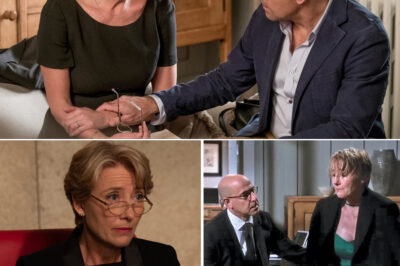
Netflix Is Removing Emma Thompson’s Most Heartbreaking Drama—And Fans Say Missing It Will Be a Huge Mistake
Fans of the powerful 2018 drama The Children Act are in for a massive surprise. The critically acclaimed film, which starred Emma…
Netflix’s Addictive New Thril-ler Is Keeping Viewers Awake Until 3AM—And the Twists Only Get Darker
View 2 Images Viewers are staying up until 3am to binge the series (Image: IDRIS SOLOMON/NETFLIX) We all require a compelling…

Hospital Chaos Explodes in The Pitt: Dana and Robby’s Feud Turns Deadly as Emma Fights for Life on the Table
THE BREAKING POINT: Dana and Robby Clash as Emma’s Fate Hangs in the Balance in ‘The Pitt’ Season 2, Episode…
He Looks Like the Perfect Gentleman—But Tom Hayward’s Dark Past Is Shocking Fans Worldwide
View 3 Images Mr Hayward plays an important role in The Other Bennet Sister The Other Bennet Sister fans are…
CBS Sparks Outrage with NCIS Retcon — 18 Years of Storylines Rewritten in Shocking Twist That Divides Fans
CBS Retcons 18 Years of NCIS History With Shocking Timothy McGee Reveal By Ana Dumaraog | Published Apr 9, 2026,…

Kaitlin Olson Drops Explosive Twist in High Potential Season 2 Finale — Morgan’s Loyalty Shattered as Soto and Karadec’s Secret War Comes to Light
Spoiler Alert ABC What To Know High Potential star Kaitlin Olson reveals which work relationship dynamic matters the most to…
End of content
No more pages to load