On March 31, 1972, American television shifted — not because of breaking news, not because of a ratings stunt, but because one woman decided that politeness would no longer outrank dignity.
That night on The Dick Cavett Show, comedian Lily Tomlin, then a rising star, sat alongside actor Chad Everett, the heartthrob of the era. The atmosphere was light, cordial, even charming — the kind of television moment audiences expected in the early 1970s.
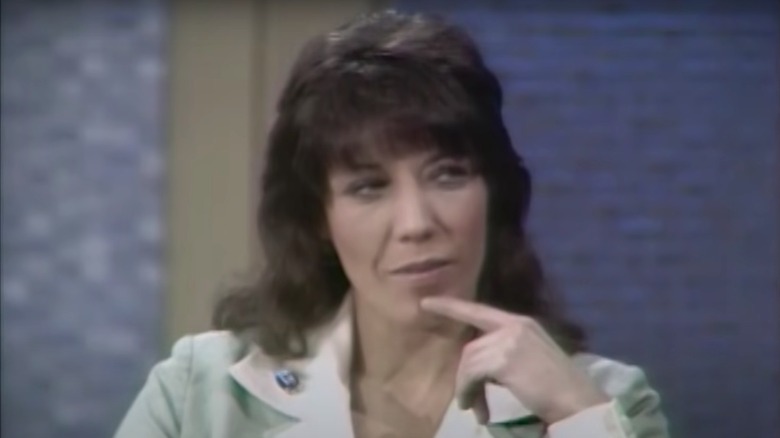
Until it wasn’t.
During casual conversation, host Dick Cavett asked Everett about his “possessions.” Without hesitation, Everett began listing them: “I have three horses, three dogs… and a wife.” Nervous laughter rippled through the studio. Cavett, sensing danger, gently offered an out: “Do you want to reconsider that order?”
Everett did not.
Instead, he doubled down — looking directly at the cameras and delivering the line that froze the room:
“No. She’s the most beautiful animal I have.”
In 1972, the social script was clear. Lily Tomlin was expected to laugh it off, deflect with humor, or smooth the moment over for the sake of television. That’s what women were trained to do — absorb discomfort so others wouldn’t have to feel it.
Tomlin chose something else.
She rose calmly from her chair and said simply, “I have to go.”
No shouting.
No lecture.
No dramatic monologue.
She walked off the stage.
The studio fell into stunned silence.
Later, Tomlin would describe the moment not as calculated protest, but instinct — as if, she said, “angels had carried me away.” But instinct can be revolutionary, especially when it defies decades of expectation. In those few quiet footsteps, Tomlin rejected the idea that humor excuses dehumanization.
That moment came to define her far more than any punchline.
Her career trajectory proved it. Tomlin went on to embody women who refused to tolerate sexism — from battling exploitative bosses in 9 to 5 to building a decades-long creative and personal partnership with her wife, Jane Wagner. Long after many of her contemporaries faded from relevance, Tomlin thrived — earning a new generation of fans with Grace and Frankie well into her seventies.
Looking back, the power of that 1972 moment lies not in confrontation, but restraint. Tomlin didn’t argue. She didn’t demand an apology. She didn’t perform outrage. She simply refused to participate.
And in doing so, she exposed the comment for what it was — without amplifying it, without legitimizing it through debate.
Today, that clip continues to circulate not because of scandal, but because of clarity. It reminds viewers that courage doesn’t always roar. Sometimes it whispers. Sometimes it stands up, says “I have to go,” and leaves.
In an industry built on applause and approval, Lily Tomlin chose self-respect. And in the echo of her exit, American television learned a lesson it’s still catching up to:
The loudest act of courage is not always a protest — sometimes, it’s the sound of footsteps walking away from a place where dignity is not welcome.
News

Real Doctors Left Shaken by The Pitt: Noah Wyle Reveals Why This Brutal Medical Drama Hits “Too Hard”
HBO Max’s The Pitt is not just another medical drama — it’s a raw, unflinching portrayal of emergency medicine that has real-life…

YNW Melly Trial Mystery Deepens—Mistrials, Disputed Evidence, and a 2027 Retrial Shock
The case surrounding YNW Melly has become one of the most prolonged and controversial legal battles in modern hip-hop — and as…

Classic Romance… With a Dark Twist: The Jane Austen–Inspired Drama Everyone Is Suddenly Obsessed With
The BBC’s latest Jane Austen drama, The Other Bennet Sister, has had viewers glued to their screens since it premiered on Sunday night….

Netflix’s New 10-Episode Cr-i-me Series Is Taking Over — Fans Are Staying Up All Night to Finish It
Lincoln Lawyer Season 4 Just Hit Netflix – What It’s About The fourth season of The Lincoln Lawyer arrived on Netflix this…

‘My Eyes Are Up Here!’ — Sarah Sherman Sends SNL Into Chaos With Explosive Kristi Noem Satire
The costume was “shimmering”—but the scandal was ‘shatteringly’ bizarre. In a segment that has been branded “the most ‘soul-searing’ and…

SNL Weekend Update Explodes: Colin Jost and Michael Che Spark Viral Storm With Bold White House Satire
The Sharpie was “shimmering”—but the memories were ‘shatteringly’ redacted. In a broadcast that has been branded “the most ‘soul-searing’ and…
End of content
No more pages to load