
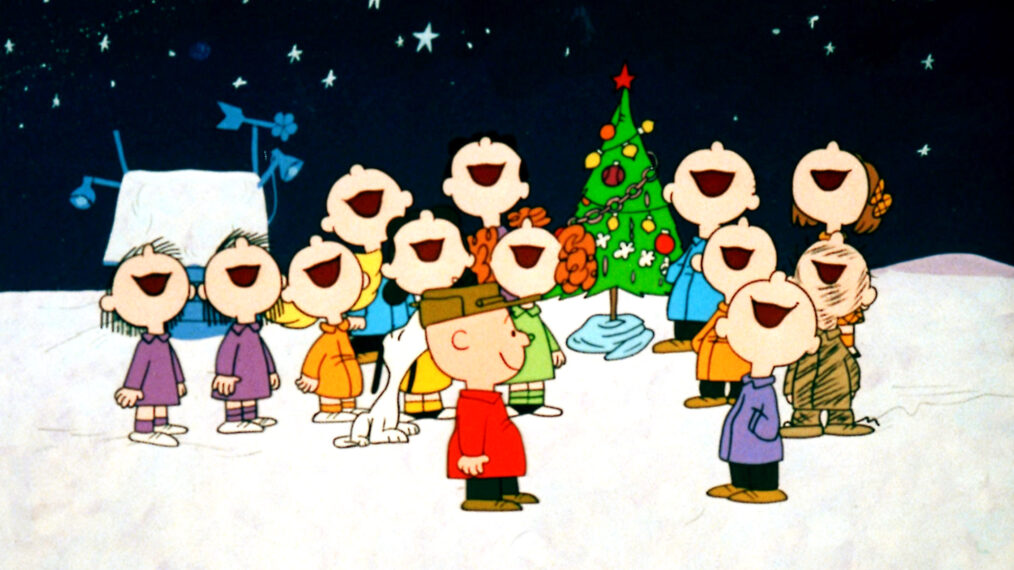
CBS Thought This Christmas Special Would Fail
Instead, It Became One of the Most Beloved Holiday Traditions of All Time
In the fall of 1965, CBS executives were quietly bracing for embarrassment.
They had agreed—somewhat reluctantly—to air a low-budget animated Christmas special based on a comic strip that, while popular in newspapers, had never been tested in prime time television. Promotion was minimal. Expectations were lower still. Behind the scenes, there was real concern that the project had gone terribly wrong.
One animator later admitted he feared they had “ruined Charlie Brown forever.”
CBS didn’t just doubt the special would succeed—they worried it might actively damage the network’s reputation.
Then December 9, 1965 arrived.
And nearly half of all televisions in America were tuned in.
A Show That Broke Every Rule of 1960s Television
From the moment A Charlie Brown Christmas began, it was clear this was nothing like anything else on TV.
There was no laugh track.
No flashy animation.
No celebrity voices.
The characters moved slowly. They paused. They felt awkwardly human. And the story didn’t revolve around big jokes or grand spectacle—it revolved around loneliness, disappointment, and the quiet anxiety of not feeling happy when everyone else seems to be.
For a children’s Christmas special, this was unheard of.
And for CBS executives watching from their offices, it was terrifying.
Why CBS Was Certain It Would Bomb

Several decisions made the network deeply uncomfortable:
1. Real Children’s Voices
The characters were voiced by actual children, not professional adult actors. Their delivery was hesitant, imperfect, and sometimes flat—exactly the opposite of what TV executives believed audiences wanted.
2. A Jazz Soundtrack
Instead of cheerful orchestral music, the special featured soft, melancholic jazz by the Vince Guaraldi Trio. Jazz was considered risky, adult, and far from “Christmas-safe.”
3. No Santa. No Gimmicks.
There were no flashy toys, no magical sleigh rides, and no commercial tie-ins. The central image of the show—a sad, scrawny Christmas tree—felt almost anti-holiday.
4. A Biblical Reading in Prime Time
Perhaps the most alarming choice: Linus recites a passage from the Gospel of Luke, quoting Scripture word-for-word in the middle of a network television broadcast.
In 1965, that was a gamble CBS was not prepared to defend.
The Moment Everyone Thought Would End the Show
When Linus steps into the spotlight and calmly says, “Lights, please,” executives reportedly expected phones to start ringing—with complaints.
Instead, something else happened.
The room went quiet.
Millions of households across America—children and adults alike—sat still as a small cartoon boy explained the meaning of Christmas with gentle sincerity.
No jokes.
No irony.
No winking at the audience.
Just honesty.
The Ratings That Shocked Everyone

By the end of the broadcast, the numbers were staggering.
An estimated 45% of all televisions in the United States were tuned in. Viewers didn’t just watch—they stayed. Families talked about it the next day. Critics praised it. Parents wrote letters asking when it would air again.
CBS, which had nearly canceled the project, suddenly realized it had something extraordinary on its hands.
They immediately ordered it to become an annual broadcast.
Why It Still Works Nearly 60 Years Later
A Charlie Brown Christmas didn’t succeed in spite of its risks—it succeeded because of them.
It treated children seriously.
It acknowledged sadness during a season obsessed with happiness.
It trusted quiet moments instead of noise.
In a world of increasingly loud holiday entertainment, its restraint became its power.
What CBS feared would alienate audiences became the very reason people fell in love.
The Holiday Classic That Almost Never Was
Today, A Charlie Brown Christmas is considered untouchable—a sacred piece of holiday culture. But its existence was never guaranteed. It survived because its creators refused to sand down its edges, even when everyone told them they should.
And that may be the most Charlie Brown lesson of all.
News

A Powerful Memorial Unites Grief and Legacy as Cole Brings Plenty Is Honored Alongside Monica
Marshals dedicated a memorial for Monica one year after her death, which also served as a ceremony to Yellowstone star Mo Brings Plenty‘s late nephew Cole….

Douglas Henshall and Sheridan Smith’s Cr-i-me Thri-l-ler Climbs Netflix Top 10 — Here’s Why Everyone’s Hooked
alling all Douglas Henshall fans! The Scottish actor’s compelling 2015 detective thriller, in which he stars opposite Sheridan Smith, is leaving Netflix soon. Black Work,…

This Dark Netflix Thril-ler Is So Addictive, You’ll Finish It in One Night
Just Finished Watching Her Mother’s Killer on Netflix… And I’m Still Processing That Wild Ending If you’re searching for a series that…

NCIS Season 23 Delivers a Devastating Twist as McGee Becomes Director After Vance’s De-ath
Who Will Be New ‘NCIS’ Director After Vance’s Shocking Death? We’ll admit that we hate to think about the day that someone…

A Brutal Finale in Dark Winds Season 4 Leaves Fans Stunned and Searching for Answers
Fair warning: There are spoilers for the Dark Winds Season 4 finale ahead! As viewers will recall, Leaphorn was kidnapped by Irene Vaggan…

“No Notes, No Flaws”: Outlander Season 8 Episode 6 Trailer Leaves Fans Speechless
The way Jamie looks at Claire in the opening frame? The return of the “Faith” theme music? The absolute BOSS…
End of content
No more pages to load