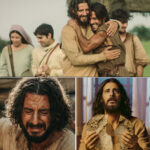
Jonathan Roumie’s portrayal of Jesus in The Chosen has already been widely praised for its emotional depth, but it was during the filming of the crucifixion scenes that the actor reached what he now describes as the most intense and transformative moment of his life. What unfolded on set was not just another demanding acting challenge—it became a deeply personal journey that pushed him to his physical and emotional limits.
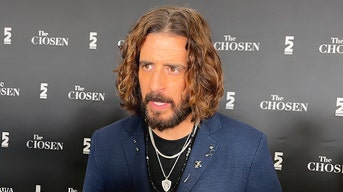
The scene in question, centered on the final hours of Jesus, required Roumie to immerse himself completely in the experience of suffering and sacrifice. From the beginning, he approached the role with a sense of responsibility that went far beyond performance. As a man of faith, he did not simply want to act the part—he wanted to understand it, to feel it, even if only in a small measure. That intention would ultimately shape everything that followed.
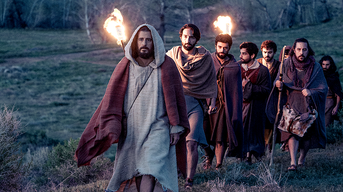
To prepare, Roumie spent significant time in prayer, asking for the ability to convey authenticity in a way that would resonate with viewers. He later explained that he was willing to endure discomfort if it meant bringing truth to the portrayal. This mindset, while admirable, came with consequences that few could have anticipated.
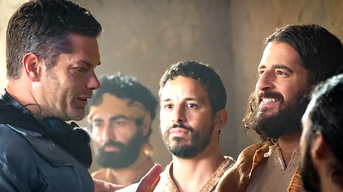
On the very first day of filming the crucifixion sequence, Roumie suffered a shoulder injury after a fall—ironically affecting the same shoulder he would use to carry the cross. The injury was painful and persistent, but instead of stepping back, he chose to continue. As filming progressed, additional physical strain took its toll, including a head injury that led to ongoing discomfort. These incidents, while accidental, contributed to an experience that Roumie described as both physically exhausting and emotionally overwhelming.
The atmosphere on set reflected the gravity of what was being recreated. Crew members and fellow actors reportedly found it difficult to remain unaffected, with some moved to tears by the intensity of the scenes. One observer described the environment as “unlike any other production,” noting that the emotional weight seemed to linger long after each take was completed. It was not just Roumie who felt the impact—the entire team became connected through the shared experience.
Roumie himself later admitted that the process felt almost like a form of endurance. He spoke about moments when the line between acting and reality seemed to blur, where the pain he experienced—both physical and emotional—became part of the performance itself. Rather than resisting it, he chose to embrace it, offering what he endured as a form of spiritual expression. “If this can touch even one person,” he suggested, “then it’s worth it.”
What makes this story particularly striking is not just the difficulty of the scene, but the transformation it brought about. Roumie has openly shared that the experience changed how he views faith, suffering, and purpose. The role did not end when filming wrapped; it stayed with him, influencing how he approaches life and his connection to spirituality. Even now, he continues to process what he went through, especially as he reflects on religious seasons like Easter with a deeper sense of meaning.
Public reaction to these revelations has been strong. Many viewers have expressed admiration for Roumie’s dedication, seeing his commitment as a reflection of sincerity in a role that carries immense significance for millions of people. “You can feel that it’s not just acting,” one fan commented. “There’s something real behind it, and that’s what makes it so powerful.” Others have noted that such intensity raises questions about the limits actors should push themselves to, highlighting the fine line between authenticity and self-sacrifice.
Still, there is little doubt that Roumie’s performance has left a lasting impression. His willingness to fully engage with the emotional and physical demands of the role has contributed to a portrayal that resonates deeply with audiences around the world. For many, it is not just the story being told that matters, but the way it is brought to life—with honesty, vulnerability, and a sense of purpose.
In the end, what began as a challenging scene became something far greater. It was a moment that tested Roumie’s strength, reshaped his perspective, and created a connection between actor and audience that goes beyond entertainment. Whether viewed through the lens of faith, artistry, or personal endurance, his journey stands as a reminder that sometimes, the most difficult paths lead to the most profound transformations.
News
Dark Winds Season 5 Begins Filming as Zahn McClarnon Returns to Direct — A Darker, More Twisted Chapter Is Coming
AMC Dark Winds Season 4 is concluding on AMC, but fans can rest easy knowing Season 5 of the series is already…
Real Doctors Left Shaken by The Pitt: Noah Wyle Reveals Why This Brutal Medical Drama Hits “Too Hard”
HBO Max’s The Pitt is not just another medical drama — it’s a raw, unflinching portrayal of emergency medicine that has real-life…
YNW Melly Trial Mystery Deepens—Mistrials, Disputed Evidence, and a 2027 Retrial Shock
The case surrounding YNW Melly has become one of the most prolonged and controversial legal battles in modern hip-hop — and as…

Classic Romance… With a Dark Twist: The Jane Austen–Inspired Drama Everyone Is Suddenly Obsessed With
The BBC’s latest Jane Austen drama, The Other Bennet Sister, has had viewers glued to their screens since it premiered on Sunday night….
Netflix’s New 10-Episode Cr-i-me Series Is Taking Over — Fans Are Staying Up All Night to Finish It
Lincoln Lawyer Season 4 Just Hit Netflix – What It’s About The fourth season of The Lincoln Lawyer arrived on Netflix this…
‘My Eyes Are Up Here!’ — Sarah Sherman Sends SNL Into Chaos With Explosive Kristi Noem Satire
The costume was “shimmering”—but the scandal was ‘shatteringly’ bizarre. In a segment that has been branded “the most ‘soul-searing’ and…
End of content
No more pages to load