Heartbreaking Reality: Four Alleged Murd3rs Reignite Fears Australia Is Still Failing to Protect Women
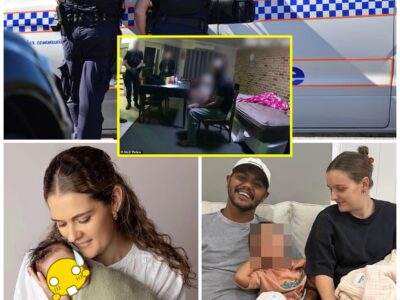
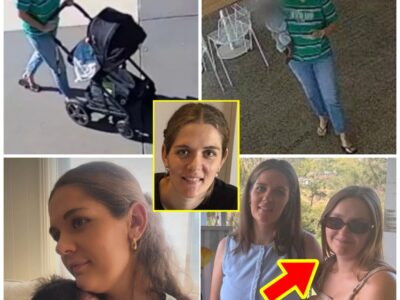
Two women and two teenage girls have been allegedly murdered in Australia in the last seven days alone: Lavanya Chappa, 39, Jana Armstrong, 30, Layla Jeffery, 13, and an unnamed 17-year-old girl.
Their deaths have rocked the nation and, while the cases against those accused of murdering them are yet to be concluded, have prompted many to ask when Australia will finally put a stop to this epidemic of violence against women.

Jana Armstrong’s body was found in bushland north of Toowoomba late on Saturday. 9News
“If another death was enough to transform Australia, we would’ve done it years ago,” Tarang Chawla, co-founder of Not One More Niki and educator, told nine.com.au.
“The danger is believing that the next tragedy will somehow become the turning point.”
If that was the case, violence against women should have stopped after Molly Ticehurst died after being stabbed 15 times by her former partner in 2024.
It should have stopped after Lilie James was murdered by her ex-boyfriend in 2023, or after Arnima Hayat was killed and thrown into a bathtub full of acid by her husband in 2022.
It should have stopped after Hannah Clarke and her three children, Aaliyah, Laianah, and Trey, were murdered by her estranged husband in 2020.
Each of their senseless deaths sparked outrage and powerful pushes for change as Australians, including politicians, insisted enough was enough.
But the headlines about abused and murdered women keep coming.
“When my sister Nikita was murdered in 2015, I remember thinking that surely her death would mean something had to change,” Chawla said.
“But families like mine learn very quickly that public outrage has a short life, while grief doesn’t. The headlines move on.
“And then another woman is killed, and another family is pulled into a life they never chose.”
DV deaths are tragic, but not uncommon
Armstrong vanished from her Toowoomba home last week.
Five days later, her body was discovered on a rural property about 80km away.
Her former partner, Dharminder Singh, was arrested and charged with her murder and domestic violence offences. He faced court for the first time yesterday.
Police will allege he killed Armstrong last Tuesday night, then dumped her body.
Singh is defending the charges.

Jana Armstrong’s son will now have to grow up without a mother. 9News
Though tragic and shocking, Armstrong’s death isn’t the first to make headlines this month.
Advertisement
A 16-year-old boy has been charged with murder over the death of Jeffery, who went missing in rural Victoria on July 4.
Last week, Srinivas Achanta was charged with the alleged murder of his wife Chappa in Melbourne.
A 34-year-old man was also charged with murder after the body of a 17-year-old girl was found in the Northern Territory.
“We keep seeing headlines [like this] because men keep [facing allegations of] killing women,” Chawla said.
“That’s what makes these stories so confronting. They no longer feel shocking because we’ve seen them too many times.”

Tarang Chawla’s sister Nikita Chawla was murdered in 2015. He said not enough has been done since then to prevent more deaths. Instagram
Armstrong is the 27th woman to die in Australia due to alleged gender-based violence this year, according to Counting Dead Women Australia researchers from Destroy The Joint.
That’s equivalent to one woman killed about every 14 days, but the national average is much higher.
Advertisement
On average, one woman is killed every nine days by a current or former partner in Australia, according to a report from the Australian Institute of Criminology.
Two in five women have experienced violence since the age of 15, per Australian Bureau of Statistics data, and one in four has experienced violence, emotional abuse, or economic abuse by a cohabitating partner since the age of 15.
Research shows about one in four men aged 18-45 admit to using physical and/or sexual violence against a partner, and men aged 18-30 who identify with rigid stereotypes of masculinity are 17 times more likely to say they’ve hit a partner.
“We should not need another horrific headline or another grieving family to justify action,” White Ribbon Australia director Claire Hurst told nine.com.au.
“We already know enough to act.”
DV services can’t keep up with demand
Domestic violence murders and protection order breaches have increased across Queensland recently.
Yet, the Queensland government has slashed domestic and family violence funding by more than $38 million in its 2026–27 budget, and reduced staffing.
DVConnect – which supports Queenslanders impacted by domestic, family and sexual violence – responds to a call every two minutes and said funding is essential to keep support services up and running.
“It’s critical that governments continue to invest in domestic and family violence services, particularly those operating on the frontline of this crisis,” it said in a statement.
Other states are struggling to meet demand for domestic violence services even with funding boosts.
In 2025, about 20 per cent of calls to South Australia’s domestic violence crisis line went unanswered due to unprecedented demand.
Only half of the calls received by Canberra’s crisis line in the ACT are answered.
It paints a grim picture of the barriers victim-survivors face when seeking support, and those barriers persist long after they make the first report.
Family violence specialist Naomi Pearce told nine.com.au Australia’s police and court systems have not kept up with our changing understanding of coercive control, stalking, escalating abuse and separation-related danger.
“We still respond too often to an individual incident rather than examining the perpetrator’s overall pattern of behaviour,” she said.
“We must stop measuring danger only by what a perpetrator has already done; we must also assess what that person may be capable of doing next.”
When will enough be enough?
Australia has been trying to tackle the epidemic of violence against women for decades, but deaths keep piling up; so, where does the nation go from here?

Armstrong leaves behind a four-month-old baby boy, who was in the care of her alleged killer Dharminder Singh. Facebook
“Cultural change will not come from one campaign, one school lesson, one funding announcement or one moment of national outrage,” Hurst said.
“Prevention must be sustained and embedded across families, schools, workplaces, sporting clubs, online spaces and communities.”
Australia’s National Plan to End Violence Against Women and Children 2022–32 is focused on prevention, early intervention, response, and recovery and healing.
The federal government has also been working with state and territory governments to develop action plans to tackle domestic and family violence.
Charities, organisations and grassroots programs across the country work tirelessly to protect women, prevent violence, and create a better future.
But that future won’t arrive without sustained investment, political support, changes to police practices, court system reform, and nationwide dedication to systemic change.
“Male violence against women doesn’t end because the headlines become more horrific,” Chawla said.
“It ends when we collectively decide that prevention deserves the same level of urgency as other issues […] not just after particularly shocking cases, but year after year.”
Men also need to be part of the solution; not just because they are the most common perpetrators of violence against women, but because we live in an age where misogyny is spreading faster than ever online.
And every TikTok video, Reddit thread and Twitch comment condoning or making light of violence against women just makes things worse.
“Men need to look at what they tolerate in other men,” Chawla said.
“It isn’t enough for men to say, ‘I would never do that’. The question is what they do when another man does.”

Sexism soaring in schools as boys target female teachers and peers
‘Honour them by refusing to accept this’
Australia can’t just hope for a future where women aren’t abused and killed; we have to actively work towards it.
“The reason this keeps happening is because, unfortunately, domestic violence still exists [and] we won’t just wish that out of existence,” Full Stop Australia’s chief executive Karen Bevan told nine.com.au.
“Women should not die, and it’s not inevitable that this kind of violence is going to happen.
Advertisement
“We can actually make it stop, but we all have to get onto it every single day. It it won’t happen overnight, but it can happen.”
That means governments providing long-term funding for prevention and frontline services, not just when another murder makes headlines.
It means addressing coercive control, online harassment, image-based abuse, mental, emotional and financial abuse, as well as physical violence.
It means institutions being willing to confront the men they would rather protect, even when it will affect their reputations.
It means men taking responsibility not only for their own behaviour, but for the cultures and gender roles they help create and uphold.

Layla Jeffery, 13, and Lavanya Chappa, 39, should both still be here. Police Media/Supplied
Only then will we see real change for women like Jana Armstrong, Lavanya Chappa, Layla Jeffery, Molly Ticehurst, Lilie James, Arnima Hayat, Hannah Clarke, and Nikita Chawla.
“We do not honour them by being briefly devastated,” Tarang Chawla said.
Advertisement
“We honour them by refusing to accept this as inevitable, and by doing the difficult, sustained work that prevention actually demands.”