The recent revelation in the ongoing investigation into the Mosman Park family tragedy has added a layer of profound sorrow and speculation to an already heartbreaking case. Police forensic analysis of phone records reportedly shows that four mobile devices belonging to the family members—likely those of parents Jarrod Clune (50) and Maiwenna Goasdoue (49), and their sons Leon (16) and Otis (14)—remained active for over three hours during the critical period of the incident on the morning of January 30, 2026. Despite this prolonged activity, no outgoing call or message to emergency services (such as triple-0 in Australia) was detected from any of the devices, even a brief attempt lasting just three seconds.
This detail, emerging from preliminary forensic examinations and leaked or reported elements of the police investigation, has fueled intense online discussion and media commentary. It underscores the premeditated and irreversible nature of the events, as classified by Western Australia Police as a suspected double murder-suicide. The absence of any distress signal stands in stark contrast to scenarios where a last-minute change of heart or cry for help might have altered the outcome.
The incident unfolded after a caregiver, arriving for a scheduled appointment to support the boys (who had significant health challenges, including autism spectrum conditions requiring ongoing NDIS-funded care), discovered a note affixed to the front door. The note instructed the visitor not to enter and to contact police immediately. Upon arrival around 8:15 a.m., officers entered the Mott Close property and found the bodies of the four family members in different areas of the home, along with three deceased pets (two dogs and a cat). No weapons were involved, and there was no prior record of family violence or police interactions with the household.
A second, more detailed note discovered inside the residence has been pivotal in shaping investigators’ understanding. While police have not released its full contents publicly—citing the sensitivity of the ongoing probe—reliable reports from outlets like WA Today, The West Australian, and others indicate it contained expressions of the parents’ shared decision-making, financial instructions for after their deaths, and reflections on the family’s long-term struggles. Sensationalized social media posts and some online articles have circulated partial or paraphrased quotes, such as variations of “The last thing we ever wanted to do…” or admissions of exhaustion from years of caregiving without adequate respite. These align with broader community discussions about the immense pressures on families raising children with complex disabilities.
The phone data revelation amplifies the tragedy’s sense of finality. With devices active over an extended timeframe—potentially spanning the hours leading up to or during the act—experts and commentators have noted that even a fleeting 000 call could have prompted rapid emergency response. Ambulance and police arrival times in affluent suburbs like Mosman Park are typically swift, and intervention might have saved lives if help had been summoned. However, the lack of any such attempt reinforces police conclusions of deliberate planning rather than a spontaneous or impulsive act.
This aspect has sparked ethical and emotional debates online and in public forums. Some express anguish over what might have been—”just three seconds could have changed everything”—while others caution against oversimplifying complex mental health crises or caregiving burnout. Disability advocates have reiterated calls for systemic improvements to Australia’s NDIS, including better mental health integration, increased respite options, and reduced isolation for primary carers. Former support workers and neighbors have described the family as increasingly withdrawn, devoted but overwhelmed by the demands of round-the-clock care for non-verbal or severely affected children.
WA Premier Roger Cook described the deaths as “unimaginable” and “heartbreaking,” echoing sentiments from local MP Kate Chaney and community leaders. The boys attended prestigious schools, with earlier years marked by typical childhood activities now contrasted sharply against their final days.
As forensic toxicology, autopsies, and full analysis of digital evidence continue, authorities urge restraint from speculation that could retraumatize those close to the family. The case highlights hidden strains in caregiving households and the critical need for accessible support networks. Helplines such as Lifeline (13 11 14), Beyond Blue (1300 22 4636), and NDIS-related counseling remain available for anyone experiencing similar pressures.
In this quiet, affluent corner of Perth, the silence of those unmade calls lingers as a poignant reminder of despair’s depth—and the fragile line between intervention and irreversible loss.
News

“The Forgotten Sister Speaks”: BBC’s Dark Reimagining of Pride and Prejudice Flips the Classic Story on Its Head
THE SISTER THEY IGNORED IS FINALLY TELLING HER TRUTH… AND IT’S SHATTERING. For centuries, she was the punchline. The shadow. The…
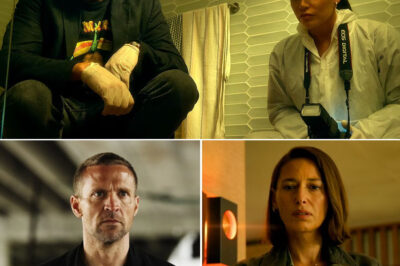
Netflix’s New 9-Episode Cr-i-me Thr-i-ller Scores a Rare Perfect Rating — Viewers Hooked From the First Minute
Netflix viewers who tuned into the latest Nordic noir, Jo Nesbø’s Detective Hole, have been hooked since its release on Thursday. The addictive…

Betrayal, Tension, and Fate Collide — The Chosen Season 6 Promises Its Most Emotional and Shattering Storyline Yet
The official countdown to The Chosen Season 6 has begun, and it looks to be unlike any previous season. As…

🔥 Netflix Drops a “Near-Perfect” Masterpiece — Joel Edgerton and Felicity Jones Deliver a Devastatingly Beautiful Drama Critics Call One of the Year’s Best
Train Dreams, the acclaimed drama starring Joel Edgerton and Felicity Jones, has now landed on Netflix. Regarded as “one of the…

🔥 Netflix Unleashes Chil-ling Detective Thr-il-ler Based on Bill Hodges Trilogy — Brendan Gleeson Delivers a Haunting, Career-Defining Performance
etflix has added another gripping detective show to its ever-increasing list of crime dramas – and this one is a must-watch…

⚠️ Four Episodes, One Ha-unting Finale: Netflix’s New True-Cr-i-me Series T3rrifies Fans With Chil-ling Real Footage
View 2 Images It’s available to stream on Netflix(Image: Netflix) A criminally overlooked drama series has captivated audiences with its intimate…
End of content
No more pages to load