Knock at Midnight – 1944
Rain pressed against the windows like nervous fingers, tapping and sliding down the glass in thin silver trails. Wind howled through the narrow streets of the small Pennsylvania town, bending the bare branches of winter trees into crooked silhouettes. Inside the dim kitchen, a single lamp burned weakly above a wooden table scarred by decades of family meals and quiet prayers.
Margaret Hale sat alone, hands wrapped around a mug of untouched tea that had long gone cold.
Sleep had abandoned her for weeks.
Ever since her son, Private Daniel Hale, stopped writing from somewhere in France, nights had become endless corridors of listening — listening for the hum of distant trains, the creak of old pipes, the tick of the clock that never seemed to move fast enough, and the fragile hope that tomorrow might bring a letter, a telegram, anything that meant he was still breathing.
A clock ticked on the wall.
11:47 p.m.
Margaret stared at the second hand, watching it crawl forward like a wounded insect.
“Please,” she whispered into the empty room. “Just let him be alive.”
A sudden sound shattered the quiet.
Knock.
Sharp. Hollow. Final.
Margaret’s breath caught in her throat.
Nobody knocked on doors this late in town. Not neighbors. Not friends. Not anyone bringing good news.
Another knock followed, heavier, more deliberate.
Her fingers trembled as she set the mug down. A cold wave traveled up her spine. For one terrifying moment, she considered pretending not to hear it. But the sound echoed again, louder now, demanding an answer.
Each step toward the front door felt like walking into deep water. The hallway light flickered. Shadows stretched across the wallpaper like reaching hands.
Margaret opened the door.
Two men stood on the porch under the yellow glow of the streetlamp. One wore a dark military coat, rain glistening on its shoulders. The other carried a rectangular wooden box sealed with metal clasps, dark stains soaking through the edges.
Blood.
Her knees nearly gave way.
“Mrs. Margaret Hale?” the officer asked gently.
She nodded, unable to speak.
“I’m Captain Robert Ellis, United States Army.” His voice softened. “May we come in?”
Margaret stepped aside mechanically, barely aware of her own movements. The men entered, bringing with them the cold night air and the heavy scent of rain and metal.
The box was placed on the dining table.
Up close, the stains looked even darker, almost black, as if the wood itself had absorbed a piece of violence that could never be washed away.
Margaret’s eyes locked onto it.
“What… what is that?” she whispered.
Captain Ellis hesitated. His jaw tightened slightly, a man trained to deliver words that shattered lives.
“These are your son’s personal effects, recovered from the battlefield.”
The room tilted.
Personal effects.
That phrase — cold, official, lifeless — crushed her chest.
“Is he…?” Her voice broke.
Ellis lowered his gaze. Silence answered for him.
A sound escaped Margaret’s throat that did not feel human. She gripped the edge of the table to keep herself upright, nails digging into the wood. The world narrowed into a tunnel where only the box existed.
The captain continued softly, “There are… items inside that he wanted returned, should anything happen.”
Margaret swallowed hard.
Her fingers hovered above the metal clasp.
Opening it felt like opening a grave.
With a trembling breath, she released the latch.
The lid creaked.
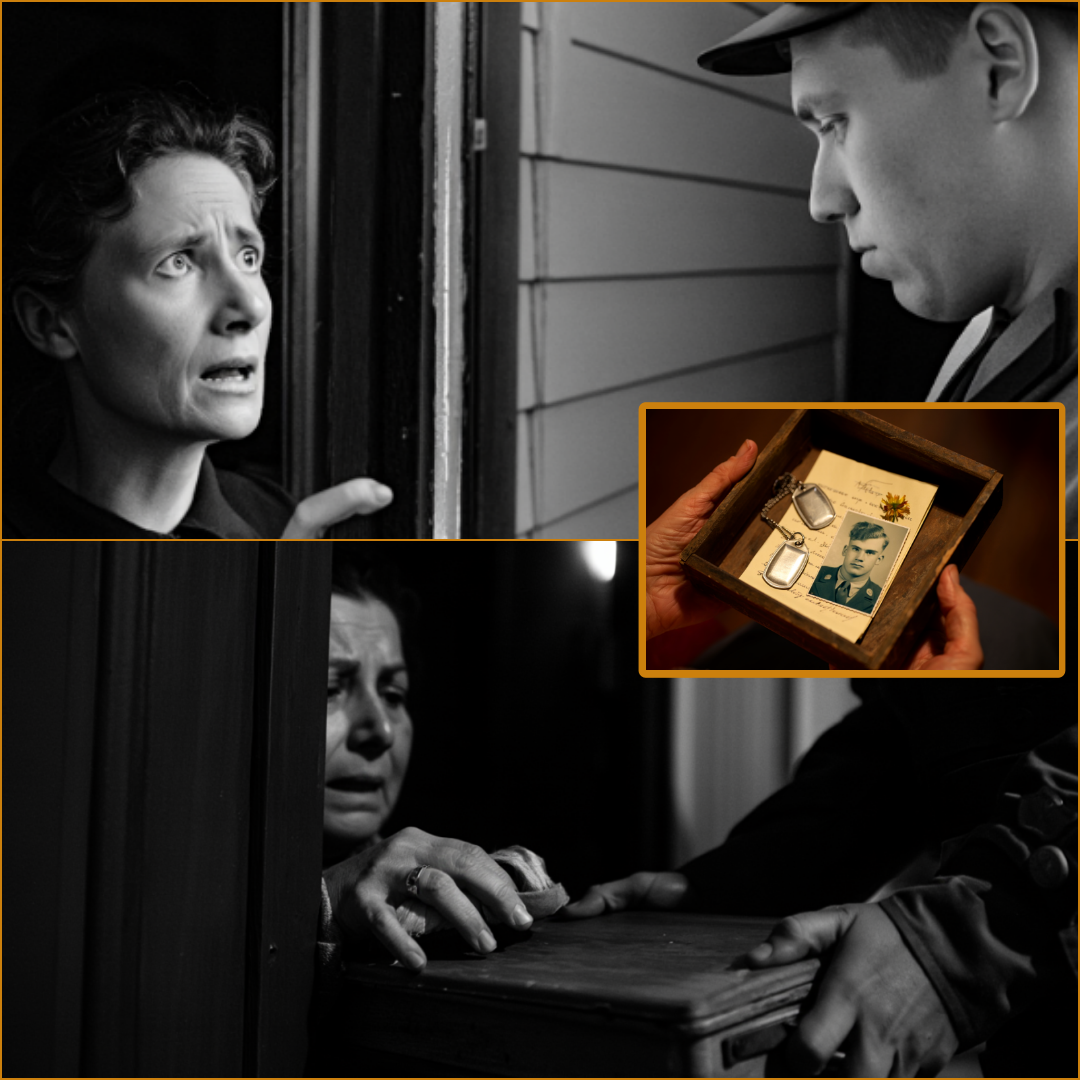
Inside lay neatly arranged objects: a folded military jacket stained with dried mud and blood, a dented canteen, a cracked wristwatch frozen at 6:12, a bundle of letters tied with twine, and at the very bottom, wrapped in a piece of cloth — something small and solid.
Margaret lifted the jacket first, pressing it to her face. The faint smell of smoke and earth clung to it, as if a fragment of Daniel’s final moments had traveled home with the fabric.
“I washed this for him,” she murmured to no one. “Before he left.”
Her fingers brushed the frozen watch.
6:12.
Was that the moment his heart stopped?
Her hands shook violently as she untied the bundle of letters. Every envelope bore her handwriting — prayers, recipes, stories about neighbors, reminders to eat well and stay warm. Letters he had carried through mud, gunfire, and fear, like pieces of home folded against his heart.
Tears blurred her vision.
Then she reached for the cloth-wrapped object.
Slowly, she unfolded it.
A small wooden carving emerged — a bird with wings half-spread, carefully shaped but imperfect, its surface darkened by dried blood.
Margaret gasped.
Daniel had carved birds as a boy. Whenever his father scolded him for whittling the furniture, Daniel would grin and say he was “freeing the bird inside the wood.”
Her fingers traced the rough edges. A memory rushed back: Daniel at age nine, sitting on the porch steps, tongue sticking out in concentration as he carved his first crooked sparrow.
“I’m making you something to keep me safe when I grow up,” he had said proudly.
A sob shook her body.
Captain Ellis cleared his throat gently. “There’s something else, ma’am.”
He reached into the box and pulled out a sealed envelope. Unlike the others, this one was not addressed.
“It was found in his pocket,” Ellis said. “Marked for you.”
Margaret stared at the envelope like it might explode.
Her hands felt numb as she broke the seal.
Inside was a folded sheet of paper, stained at one corner.
She unfolded it.
Mom,
If you’re reading this, it means I didn’t make it home. I’m sorry I couldn’t keep my promise. I tried. God knows I tried.
I wasn’t brave every moment. Sometimes I was terrified. Sometimes I wanted to run back to your kitchen, to the smell of bread and the sound of your radio humming old songs. But every time fear swallowed me, I touched the little bird in my pocket and remembered your hands guiding mine when I was learning to carve.
There’s something I need you to know.
On the night before the last attack, I found a wounded German boy in the rubble. He couldn’t have been more than seventeen. He was crying for his mother in a language I barely understood. Everyone else had moved on. I couldn’t leave him. I carried him into a broken cellar and tried to stop the bleeding. He died holding my hand.
I carved the bird for his mother. I don’t know her name. I don’t know where she lives. But I wanted something of kindness to exist in a place that had none. If this bird comes back to you instead, please know it means I never found her. Maybe you can say a prayer for both of us.
Don’t hate me for helping an enemy. He was just a scared kid who missed his mom. Just like me.
I love you more than all the words I ever sent you.
Your son,
Daniel
The room collapsed into silence.
Margaret’s tears fell onto the paper, blurring the ink.
Pain tore through her chest — not only for the son she had lost, but for the invisible mother somewhere across the ocean who would never know her child’s final kindness. Two mothers bound by grief, separated by war, connected by a small carved bird soaked in blood and mercy.
Her fingers closed around the carving.
“He died saving someone,” she whispered.
Captain Ellis nodded slowly. “Yes, ma’am.”
Margaret pressed the bird against her heart. Sorrow crushed her lungs, yet beneath it stirred a fragile warmth — pride tangled with unbearable loss.
That night, after the men left and the house returned to silence, Margaret placed the bird on the windowsill beside Daniel’s childhood photo. Rain had stopped. Moonlight spilled gently onto the wood, illuminating the tiny wings.
She opened the window slightly.
Cold air drifted in.
“Fly,” she whispered softly. “Fly wherever love is still needed.”
Tears slid down her cheeks, but her voice remained steady.
Somewhere beyond the darkness of war, she hoped kindness had survived.
And somewhere in the quiet between heartbreak and healing, a mother learned that even in the bloodiest hours of humanity, her son had chosen compassion.
END
News
ANDREW MOUNTBATTEN-WINDSOR CAUGHT INSPECTING HORSES AFTER RIDING BAN SPARKS ROYAL SPECULATION!
Andrew Mountbatten-Windsor has been spotted inspecting horses near his home in Norfolk after his alleged ‘riding ban’ following his arrest…
SOME THINGS CAN’T BE UNDONE… — PRINCE HARRY & MEGHAN MARKLE FACE GROWING BACKLASH OVER ROYAL FALLOUT
In a recent interview, royal historian Hugo Vickers offered a deeply personal and critical perspective on the final years of…
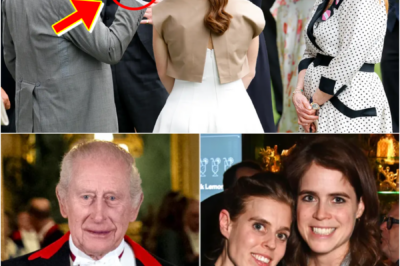
NVITE OR SNUB? — King Charles III’S MOVE TOWARD Princess Beatrice & Princess Eugenie AT Royal Ascot SPARKS ROYAL DRAMA!
While Beatrice and Eugenie won’t join the royals for Easter this weekend, they are expected to join future family celebrations…

A SUBTLE RESPONSE NO ONE EXPECTED… — Diddy REACTS AFTER Usher’S PUBLIC SUPPORT SPARKS VIRAL BUZZ
BEVERLY HILLS, CALIFORNIA – JANUARY 25: (L-R) Sean ‘Diddy’ Combs and Usher attend the Pre-GRAMMY Gala and GRAMMY Salute to…

HE DIDN’T DESERVE THIS… — Boosie Badazz SPEAKS OUT AS Jaden Ivey’S SITUATION WITH THE Chicago Bulls SPARKS BACKLASH
CHARLOTTE, NORTH CAROLINA – JANUARY 22: Rapper Boosie Badazz performs at Spectrum Center on January 22, 2025 in Charlotte, North…

SHE TRIED TO RUN ME OFF THE ROAD… — 2 Chainz REACTS AFTER SH0CK HIGHWAY INCIDENT LINKED TO MONEY CLAIM, WHAT REALLY HAPPENED OUT THERE?
ATLANTA, GEORGIA – FEBRUARY 21: 2 Chainz attends Super Solid Album release party at Escobar Restaurant and Tapas on February…
End of content
No more pages to load