The Foolio Trial Takes a Stunning Twist as Close Associate Testifies in Federal Court 😱
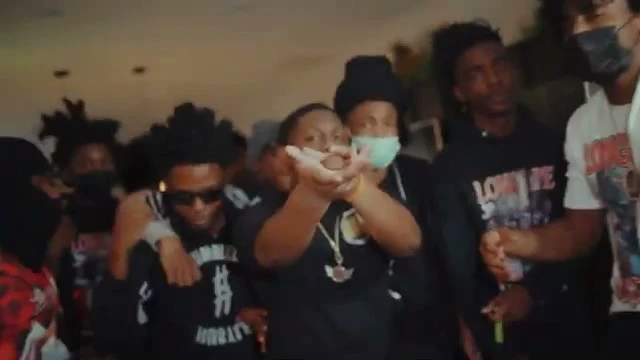
In a jaw-dropping turn of events, the Jacksonville rap scene is buzzing after Foolio’s best friend, Jamal Howard—known on the streets as Kenny Caps—decided to take the stand against the alleged killers of his childhood companion. The dramatic courtroom saga unfolded as Howard, who has a checkered past of his own, walked into a federal courtroom in Tampa and became the unexpected star witness in a case that has sent shockwaves through the hip-hop community.
The timeline of tragedy began on June 23, 2024, when Charles Jones, better known as Foolio, was shot and killed on his 26th birthday. Foolio was a prominent figure in Jacksonville’s rap scene, often embroiled in a violent feud between two rival gangs: KTA (Kill Them All) and ATK (Ace’s Top Killers). The roots of this deadly rivalry stretch back to 2017, when Foolio’s cousin was murdered, igniting a chain reaction of violence that has left a trail of devastation in its wake.

Fast forward to a federal courtroom in October 2025, where Kenny Caps, already facing serious drug charges and with a criminal history that includes manslaughter, made the fateful decision to testify. Under immense pressure from his own looming sentences, Caps laid bare the chilling details surrounding Foolio’s murder. He recounted being present during the ambush that took Foolio’s life, revealing that he had received a phone call from one of the defendants, Rashad Murphy, shortly after the shooting. In that call, Murphy allegedly told Caps, “I forgive you,” a statement that could unravel the defense’s case and put the spotlight squarely on the defendants—Isaiah Chance, Shawn Gathright, Rashad Murphy, and Dave Murphy.
The prosecution had a mountain of evidence against the accused, including surveillance footage, DNA samples, and self-incriminating social media posts from the defendants celebrating Foolio’s death. But it was Kenny Caps’ testimony that brought a human element to the cold, hard facts. His presence in the courtroom added a layer of urgency and emotion, as he not only survived the ambush but was also deeply intertwined in the gang’s narrative.

The courtroom drama has sparked fierce debate online, with opinions sharply divided. Some argue that Caps’ decision to testify is a betrayal of the street code, insisting that no matter the circumstances, loyalty to a fallen friend should outweigh self-preservation. Others contend that justice must prevail, especially in a case where one of the victims can no longer speak for himself. In an era where the conversation around snitching is at an all-time high, Caps’ actions have reignited the age-old debate: does the code of silence still hold weight when the stakes are life and death?
As the trial progresses, it’s clear that the implications of Caps’ testimony extend far beyond the courtroom. This is not just about one murder; it’s emblematic of a larger cycle of violence that has plagued Jacksonville for years. The questions raised by this trial—about loyalty, justice, and survival—will resonate throughout the hip-hop community and beyond.

Caps, who is currently in federal custody, faces a minimum of ten years in prison for drug charges. His testimony is viewed through a lens of skepticism by some, who argue that his motivations are not purely altruistic. They believe he’s attempting to save himself rather than honor his best friend. Yet, others see him as a reluctant hero, one who chose to speak out against the violence that has claimed too many lives.
The defendants in this case are facing severe penalties, including the death penalty if convicted. As the trial continues, the world watches closely, not just for the verdict, but for what it signifies in a broader cultural context. Foolio’s life and death have become a haunting reminder of the costs of the gang wars that have gripped Jacksonville, as well as the complexities of loyalty and justice in a world where the lines are often blurred.
With more testimony expected and tensions running high, the courtroom drama shows no signs of abating. The rap community is holding its breath, grappling with the moral quandaries posed by Kenny Caps’ decision to testify. Will the jury believe his account? And what does this mean for the future of hip-hop in a city that has become synonymous with violence and tragedy?
As the fallout from this case continues to unfold, one thing is certain: the conversation around loyalty, justice, and survival in the streets will not quiet down anytime soon. The implications of this trial will linger long after the final gavel falls, making it a pivotal moment not just for those involved, but for the entire culture of rap music that has emerged from the shadows of gang violence.
Stay tuned, as we keep you updated on the latest developments in this gripping case that is poised to redefine the narrative of loyalty and justice in the world of hip-hop.