

In a dramatic U-turn that has sent shockwaves through the paddock, Formula 1’s governing body has bowed to mounting pressure from drivers and admitted that the controversial 2026 regulations may need urgent tweaks — just three races into the new season.
After weeks of blistering criticism from stars including Max Verstappen, who has labelled aspects of the new cars “not very Formula 1-like”, “a joke” and even compared them to “Mario Kart”, the FIA has confirmed it will consult all 22 drivers in the coming days as it scrambles to address serious concerns over energy management, safety and the overall driving experience.
The move comes hot on the heels of a series of emergency meetings with teams and power unit manufacturers, and follows high-profile incidents — including a frightening 50G crash for Haas driver Oliver Bearman in Japan — that have exposed major flaws in the radical new rules.
F1 fans and pundits alike are hailing it as a victory for the drivers, particularly Verstappen, who has been the most vocal critic since pre-season testing. Many are now asking: has the four-time world champion finally forced the FIA’s hand?
The 2026 Regulations Under Fire: What Went Wrong?
When the new technical and sporting regulations for 2026 were first unveiled, they were sold as a bold step towards a greener, more exciting future for the sport. Smaller, lighter cars. Significantly more electric power — up to 50% of total output from the hybrid system. Active aerodynamics. Advanced sustainable fuels. The goal? Closer racing, lower costs and appeal to a new generation while hitting tough sustainability targets.
In reality, the opening three races of 2026 — Australia, China and Japan — have delivered a mixed and often chaotic spectacle. While there have been thrilling overtakes at times, drivers have complained bitterly about the cars feeling slow in corners, overly reliant on battery deployment, and dangerously unpredictable when electric power runs low.
The biggest headache? Energy management. Drivers must constantly nurse their batteries, lifting and coasting at critical points, which has turned qualifying into something closer to an efficiency test than a flat-out lap record hunt. Safety fears have also escalated, with huge speed differentials between cars running in different power modes creating closing speeds that can reach terrifying levels — something dramatically highlighted by Bearman’s heavy shunt at Suzuka.
Max Verstappen has been relentless in his criticism. After the Chinese Grand Prix, the Red Bull star didn’t hold back: “It’s not fun at all… If someone likes this, then you really don’t know what racing is about.” He has repeatedly warned that the regulations risk “ruining” the sport and has even questioned whether continuing in F1 is “worth it” if the cars don’t improve.
Other drivers have piled in. Lando Norris, Carlos Sainz and Charles Leclerc have all voiced frustrations, with Sainz — a director of the Grand Prix Drivers’ Association (GPDA) — stressing that the issues go far beyond qualifying. “The racing is not OK,” he declared after one particularly processional session.
Even Lewis Hamilton, who has been more measured, has admitted the new cars require a completely different driving style that doesn’t always reward pure skill in the way traditional F1 machinery does.
FIA’s Emergency Response: Meetings, Tweaks and Driver Consultation
The FIA moved quickly after the Japanese Grand Prix. On April 9, technical experts from all teams and power unit manufacturers gathered for the first in a series of high-level meetings in London. The focus? Energy management — the very issue drivers have been screaming about since testing.
In an official statement, the FIA described the discussions as “constructive dialogue on difficult topics” and confirmed there was “general agreement” that, while the early races had produced some exciting racing, tweaks were needed in key areas.
Further meetings are scheduled for April 15 (sporting regulations) and April 16 (technical follow-up), culminating in a crunch high-level gathering on April 20 involving team principals, F1 bosses and power unit manufacturers. Decisions on any changes are expected before the Miami Grand Prix on May 3.
Crucially, the FIA has now confirmed it will consult directly with the drivers again “in the short term” about possible adjustments to the technical regulations. This is a significant step — drivers were not part of the initial April 9 technical meeting, something that drew private criticism from several quarters.
GPDA director Carlos Sainz revealed that drivers had already held talks with FIA single-seater director Nicolas Tombazis in Suzuka, where assurances were given that changes could come as soon as Miami.
Potential tweaks under discussion include:
Reducing the amount of electric energy available for deployment in qualifying
Increasing energy harvesting when cars are in “super clipping” mode (charging the battery while on full throttle)
Adjustments to mitigate dangerous closing speeds when batteries are depleted
Possible simplifications to make the cars feel more responsive and driver-focused
The FIA has stressed it does not want knee-jerk, wholesale changes that could destabilise the regulations agreed years in advance with manufacturers. Instead, it is aiming for targeted “refinements” based on real data from the first three races.
Verstappen’s Victory in the Court of Public Opinion
For Max Verstappen, the FIA’s latest announcement feels like vindication. The Dutchman has been warning about these issues since 2023, long before the cars even turned a wheel. He has consistently argued that chasing fan engagement and sustainability at the expense of pure racing quality would “bite them in the ass”.
His blunt honesty has won him huge support among traditional fans, many of whom feel the sport has become too sanitised and management-heavy in recent years. Social media has been flooded with messages of support: “Finally the FIA is listening to Max” and “Protect Verstappen — he’s the only one telling the truth.”
Even some within the paddock have quietly admitted that Verstappen’s high-profile complaints have accelerated the review process. Former driver Alex Wurz has backed the Red Bull star, saying he fully understands his position.
Not everyone is on board, of course. Toto Wolff of Mercedes suggested some of Verstappen’s frustration might stem from Red Bull’s own early-season struggles, while others have warned that constant negativity could damage F1’s image as it tries to attract new audiences and manufacturers.
Yet the majority sentiment appears clear: drivers — and especially the best driver on the grid — deserve to be heard when they say the cars don’t feel right.
The Broader Implications for F1 in 2026 and Beyond
This sudden willingness to consult drivers and consider tweaks highlights the enormous pressure on the FIA and F1’s commercial rights holder. The 2026 regulations were designed to attract new manufacturers (Audi and Ford are incoming) and make the sport more sustainable. Any major U-turn risks undermining that work and creating uncertainty for teams already investing heavily in the new power units.
On the other hand, ignoring driver feedback — and the very real safety concerns — could lead to worse problems: more accidents, disgruntled stars questioning their futures, and fans switching off if the racing remains artificial or processional.
Insiders suggest the changes being discussed are relatively modest for now, aimed at smoothing the roughest edges rather than ripping up the rulebook. Longer-term adjustments could follow once more data is gathered.
For teams, the situation is delicate. They must balance developing their 2026 cars with the possibility of regulation shifts that could render some work obsolete. Power unit manufacturers, who signed up to the new hybrid-heavy formula, are also watching closely.
Meanwhile, the drivers’ unity has been impressive. From Verstappen’s fiery outbursts to Sainz’s measured GPDA input, the grid has spoken with one voice: make the cars feel like proper Formula 1 machines again.
What Happens Next?
The next few weeks will be critical. The April 20 high-level meeting could prove decisive. Any agreed changes must then be formally approved and implemented in time for Miami — a tight turnaround that will test the sport’s ability to react quickly without chaos.
If tweaks deliver more engaging qualifying and reduce safety risks, the narrative could shift from crisis to cautious optimism. If not, expect the criticism — and questions about Verstappen’s long-term future — to intensify.
The 28-year-old Red Bull star has already hinted he is weighing his options, including more time at home with his family and exploring other forms of racing. His current deal runs until 2028, but performance clauses and escape options mean the landscape could change rapidly.
For F1 as a whole, this episode serves as a timely reminder: no matter how much the sport evolves, the drivers remain its beating heart. When they speak with passion and concern about the very machines they risk their lives in, the powers-that-be ignore them at their peril.
The FIA’s decision to consult the drivers once more is a welcome step. Whether it leads to meaningful change — or simply more meetings and platitudes — will determine if 2026 becomes remembered as a bold new era… or a cautionary tale of good intentions gone wrong.
One thing is certain: with Max Verstappen leading the charge and the entire grid united behind him, the pressure is now firmly on the FIA to deliver.
The engines may have changed, but the roar of driver dissatisfaction has never been louder.
News
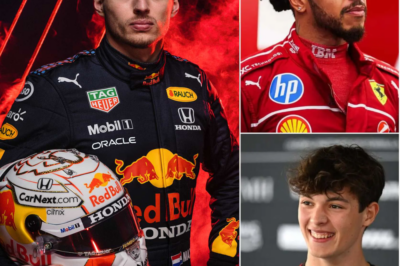
Max Verstappen SHOCK confession leaks: “I no longer feel like I belong here” — F1 world in disbelief
Max Verstappen’s recent statement about his future in Formula 1 has sent shockwaves through the motorsport world. According to reports,…
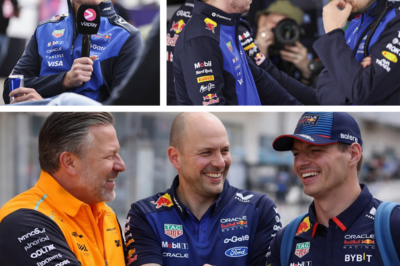
Zak Brown STUNS F1 World With Bold New Move Targeting Verstappen’s Future After Secret Lambiase Signing
Zak Brown had always been known as a calculated leader, but what unfolded in the last thirty minutes sent shockwaves…

The Chosen Season 6 SHOCK: Crucifixion Scene Filmed in SAME Location as The Passion of the Christ
Dallas Jenkins, the creator of the hit drama The Chosen, recently revealed a significant behind-the-scenes detail about the show’s upcoming season….

Landman Season 3 SHOCK: New Release Schedule Drops — Fans Rush to Catch the Explosive Premiere
Fans of Taylor Sheridan’s Landman have been waiting anxiously since the Season 2 finale (Tragedy and Flies, January 18, 2026). Now Paramount+…

High Potential Season 3 CONFIRMED — New Showrunner Teases a DARK Twist That Changes EVERYTHING
High Potential renewed for season 3 with new showrunner after season 2 finale © High Potential renewed for season 3…

“I HAVE LOST EVERYTHING” — Bec Zacharia’s life falls apart as eviction looms after shocking workplace firing
MAFS Australia’s Bec says she’s now ‘unemployable’ and ‘struggling to pay rent’ The fallout from the third Dinner Party proved…
End of content
No more pages to load