Beyond the Picnic Basket: How a Betrayed Wife quietly Shattered Her CEO Husband’s Empire

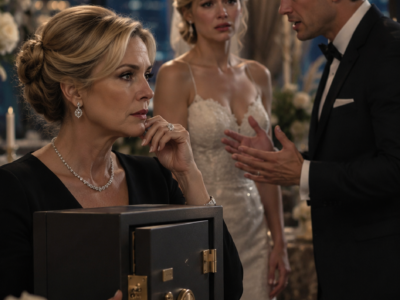
Some objects in a house carry more than memories; they hold the quiet record of everything a family used to be. For nearly fifteen years, our old faded wicker picnic basket had sat high on the pantry shelf, accumulating dust while my husband built an empire. To Nathan, it was merely a piece of sentimental debris left over from a time when he was just an ambitious young manager rather than the CEO of Vale Hospitality Group. He had spent years outgrowing us—trading family Saturdays at Crowders Mountain for investor trips, private flights, and board dinners. Along the way, he traded me for Savannah Price, his vice president of brand partnerships, whose sharp laughter had slowly replaced the rhythms of our home. Nathan thought he had orchestrated his life down to the smallest detail. He believed he could keep the corporate title, the country club stature, the mistress on his arm, and a patient wife waiting in the background to handle his social grace. He was wrong. What he saw as a sudden gesture of surrender sitting beside our front door on a bright April morning was actually the quiet beginning of his absolute undoing.
Part 1: The Illusion of Surrender
Nathan stood in our entryway with Savannah by his side, his smile effortless and practiced. He had brought her right into our home, a calculated move meant to show his sister and our fifteen-year-old son, Ben, that his new reality was non-negotiable. But then his eyes landed on the polished wicker basket resting by the threshold. Beside it lay the red-and-white checkered blanket, washed and pressed, along with the stainless steel thermos cups we hadn’t used in years.
A sudden, triumphant light entered Nathan’s eyes. In his mind, the basket could mean only one thing: I was offering an olive branch. He reached out, his manicured fingers brushing the worn handle as he looked toward his sister. He spoke in that measured, persuasive tone he used to win over hesitant investors, remarking that twenty-one years of marriage had to mean more than a single, isolated mistake.
Beside him, Savannah offered a slow, satisfied smirk. She leaned slightly into Nathan, looking at me with the quiet arrogance of a woman who believed she was about to inherit my house in Myers Park, the Lake Norman retreat, and the entire social standing I had built for our family over two decades. She thought she was stepping into a vacant throne.
I said nothing, letting the silence stretch just long enough for Nathan’s confidence to swell. He genuinely believed that bringing the basket down from the pantry meant I was ready to wipe the slate clean. He had completely forgotten why the tradition ended in the first place—how his promotions, board meetings, and “vital” business trips had gradually pushed us off his calendar. He saw the blanket and the lunch boxes, but his vanity kept him from noticing the details. He didn’t see that there were only two bottles of lemonade packed inside.
The illusion shattered with the sound of tires crunching on the gravel driveway. My daughter, Mia, stepped through the front door wearing heavy hiking boots and a faded windbreaker. She ignored Savannah entirely, glanced at the basket, and looked at me. “Mom, you ready?” she asked.
I picked up my light jacket from the chair. “Ready,” I replied softly.
Nathan’s smile froze, then dissolved completely. His eyes darted from Mia’s muddy boots to the basket, his sharp mind struggling to reassemble a puzzle that no longer fit his narrative. For fifteen years, April had meant Crowders Mountain. Nathan assumed I was begging for his return, but the picnic was never meant for him.
Part 2: The Severed Ties
“Wait a minute,” Nathan said, stepping forward to block the doorway. The casual ease in his posture vanished, replaced by the rigid tension of a executive losing control of a meeting. “I thought this basket meant something.”
“It does,” I replied calmly, adjusting the strap of the basket over my arm. “It means Mia and I are going for a hike.”
Before Nathan could recover, Ben stood up from the sofa. He looked at his father, then at Savannah, who was watching the scene unfold with a faint, contemptuous sneer. Savannah muttered something under her breath about how delightfully “wholesome” and provincial the outing was, her voice dripping with artificial sweetness. Mia’s shoulders stiffened instantly. She knew exactly who Savannah was and what she had done, her young eyes flashing with a fierce desire to defend me.
I placed a quiet hand on Mia’s arm, giving her a small, steadying glance. I would not allow my children to consume their energy fighting a battle that belonged entirely to adults.
“Can I come too?” Ben asked suddenly, stepping away from his father.
Nathan flinched as if he had been struck. “Ben, we had plans today,” he insisted, his voice dropping into that strict, authoritative register he used when he expected immediate obedience.
“I’d rather go to the mountain,” Ben said simply, picking up his hoodie.
Nathan turned to me, demanding a private word in the study. Suddenly, he was less arrogant, his desperate need to control the narrative breaking through his suave demeanor. For seven long months, he had insisted our marriage was over while claiming Savannah had nothing to do with it. Lately, though, he had shifted tactics, talking incessantly about “healing” and “moving forward.” He didn’t want his wife back; he wanted his carefully curated life back—the country club prestige, the Vale Foundation reputation, and the quiet coordinator who made his high-society life run seamlessly behind the scenes.
“You’re making this affair bigger than it ever needed to be,” he muttered under his breath so the kids wouldn’t hear, his eyes pleading for my usual compliance.
I looked at the man who had conducted a year-long affair with his subordinate, using corporate funds for private getaways while expecting me to protect his public image. Seven months ago, I would have yelled, wept, and demanded answers. Today, I felt only a vast, cool clarity.
“Excuse us, Nathan,” I said evenly, stepping around him. “We have a trail to catch.”
Part 3: The Unseen Storm
The drive up to Crowders Mountain was quiet for the first twenty minutes. The tension from the hallway slowly dissipated as the suburban grid of Charlotte gave way to rolling green countryside and wide Carolina skies. In the rearview mirror, I watched my children relax. Ben leaned his head against the window, while Mia tapped her fingers against her knee, her expression deep in thought.
“Did he seriously think the basket was an invitation?” Mia finally asked, breaking the silence.
Ben chuckled softly from the backseat. “Dad actually thought Mom made him sandwiches.”
For the first time in months, a genuine, unburdened laugh echoed through the car. It was a sound I had missed deeply—the sound of my family breathing without the suffocating weight of Nathan’s deception hanging over us. But as the laughter died down, Mia grew quiet again. She looked at me from the passenger seat, her eyes sharp with an intuitive maturity that made my heart ache.
“You filed, didn’t you, Mom?” she asked gently.
I kept my hands steady on the steering wheel, watching the long ribbon of highway ahead. “Yes. On Friday.”
Ben didn’t cry. He just let out a single, quiet word: “Okay.” It was a heavy word, carrying years of witnessed neglect and broken promises, but underneath it lay a profound sense of relief.
When we reached the park, we carried the basket up the winding trail to our old spot overlooking the cliffside. We spread the checkered blanket under the open sky and unwrapped the turkey sandwiches, cranberry mustard, and fresh strawberries. Mia picked up the cooler, paused, and pulled out the two bottles of lemonade I had packed before Ben decided to join us. She looked at the two bottles, then looked at me, a soft, knowing smile touching her lips. She finally had tangible proof that her father had never been part of my equation.
What Nathan failed to grasp was that his vanity had blinded him to reality. He believed Savannah was taking my place, but she was merely inheriting a sinking ship. He thought my silence over the past few months was a sign of defeat.
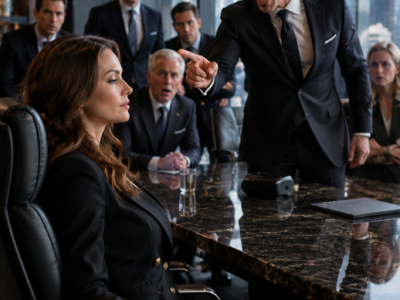
He didn’t know that filing for divorce was merely the opening move. He had spent years assuming that the assets, the foundation, and the corporate empire were entirely his. He had forgotten who audited the accounts, who organized the records, and who paid attention to the paper trails. On Monday morning, at precisely nine o’clock, the board of directors at Vale Hospitality Group would receive a forty-seven-page dossier detailing every dollar of company money Nathan had funneled into his private life.
As I sat on the mountain with my children, listening to the wind through the pines, I took a sip of cold lemonade. Nathan thought he was fighting for a marriage, completely unaware that by Monday noon, he would be fighting for his freedom.