On the night of March 9, 1997, the world of hip-hop lost one of its most influential voices when The Notorious B.I.G., also known as Biggie Smalls, was shot and killed in Los Angeles at just 24 years old. Nearly three decades later, his death remains one of the most haunting and unsolved tragedies in music history.
Born Christopher Wallace in Brooklyn, New York, Biggie rose rapidly to fame in the early 1990s. His debut album Ready to Die (1994) was widely praised for its storytelling, raw honesty, and distinctive flow. Songs like “Juicy,” “Big Poppa,” and “One More Chance” turned him into a defining figure of East Coast hip-hop. Despite a career that lasted only a few years, Biggie’s influence reshaped the sound and culture of rap music.
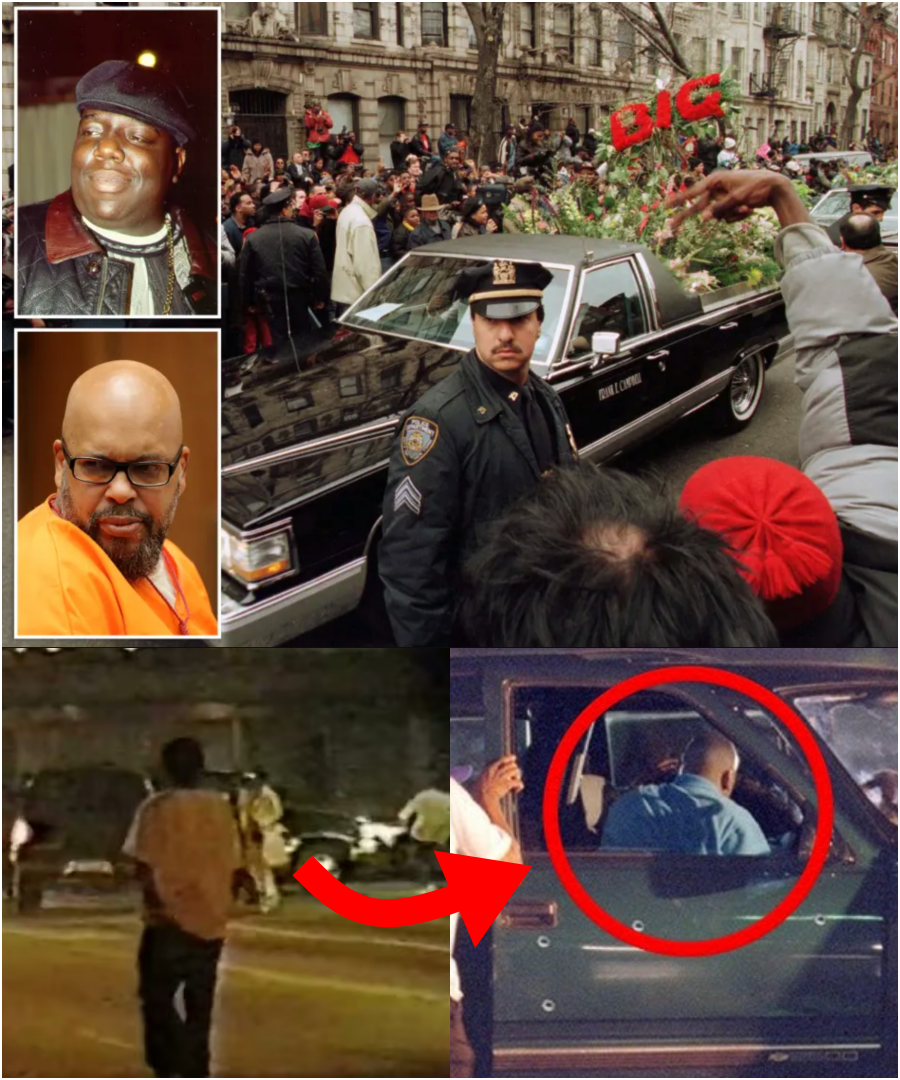
The events that led to his death unfolded in the early hours of March 9, 1997. That evening, Biggie had attended a party following the Soul Train Music Awards at the Petersen Automotive Museum in Los Angeles. The event drew many figures from the music industry, and Biggie was there promoting his upcoming album Life After Death, which would be released just weeks later.
Around 12:45 a.m., Biggie left the party with members of his entourage. He was riding in the front passenger seat of a GMC Suburban while his friend and driver, Gregory “G-Money” Young, sat behind the wheel. Their convoy stopped at a red light at the intersection of Wilshire Boulevard and Fairfax Avenue.
As the vehicles waited, a dark Chevrolet Impala SS pulled up beside Biggie’s SUV. According to witnesses, the driver rolled down the window and fired several shots from a 9mm handgun into the vehicle. Four bullets struck Biggie. One of the shots fatally damaged vital organs.
Biggie was rushed to Cedars-Sinai Medical Center, but despite efforts to save him, he was pronounced dead shortly after arrival. News of the shooting quickly spread across the music world, sending shockwaves through fans and fellow artists alike.
His murder came just six months after the killing of another rap superstar, Tupac Shakur, who had been shot in Las Vegas in September 1996. At the time, tensions between the East Coast and West Coast hip-hop scenes were widely publicized, and the deaths of both artists intensified speculation about rivalry and retaliation within the industry.
However, despite decades of investigation by the Los Angeles Police Department and the FBI, no one has ever been convicted for Biggie’s murder. Numerous theories have circulated over the years, ranging from gang involvement to allegations of police corruption, but the case remains officially unsolved.
What makes Biggie’s death even more tragic is that his career was only beginning to reach its peak. Just sixteen days after his killing, his second album Life After Death was released. The album debuted at No. 1 on the Billboard 200 and later became one of the best-selling rap albums of all time. Tracks such as “Hypnotize,” “Mo Money Mo Problems,” and “Sky’s the Limit” cemented Biggie’s legacy as one of the greatest rappers in history.
Today, nearly 29 years after that fatal night in Los Angeles, fans still remember Biggie not only for the mystery surrounding his death but also for the powerful voice he brought to hip-hop. His storytelling, charisma, and lyrical skill helped define an era and inspired generations of artists who followed.
Though the case remains unresolved, the legacy of The Notorious B.I.G. continues to live on through his music. For millions of fans around the world, March 9 is more than just a date in history—it is a reminder of the night hip-hop lost a legend far too soon. 🎤🕯️
News
JAY-Z SPEAKS OUT: Why He Stepp3d Into Drake & Kendrick Lamar’s Beef — And What He Really Thought…
JAY-Z has finally shared his thoughts on Drake and Kendrick Lamar‘s epic 2024 rap battle — and his stance might surprise you. Despite being…
50 Cent Responds After J. Cole Reveals He Wouldn’t Sign to G-Unit — Fans React to Unexpected Reply
50 Cent Responds to J. Cole’s Revelation that He Wouldn’t Sign Him to G-Unit After J. Cole reveals that 50…
UMG Labels Drake a Hypocrite in “N0t Like Us” Appeal Response — Fans React to Sudden Legal Twist…
Nov 2, 2024; Toronto, Ontario, CAN; Canadian recording artist Drake (center, black outfit) watches the action between the Sacramento Kings…
He Trusted Them… Then They Set Him Up — Lil Mikey Sh0t D3ad, Friends Quickly Come Under Fire…
Over the past several days, social‑media users have shared reports and tributes claiming that an individual known online as Lil…

Inside Princess Beatrice’s Marriage: Edo’s Pre-Wedding Debt, Flash Lifestyle, and Royal Cash-Ins — The Uncomfortable Truths She May Be Avoiding…
Anyone with a passing interest in the House of York saga will know that Princess Beatrice’s dashing husband Edoardo Mapelli Mozzi is in…
King Charles Is Worth $850 Million — Yet Receives No Salary, Leaving Royal Watchers Wondering How His Life and Work Are Really Funded…
The Sovereign Grant, which is one of King Charles’ primary funding streams, grew by $60 million in the 2025-2026 year….
End of content
No more pages to load