YNW MELLY CASE ERUPTS AGAIN — 7 Sh0cking Evidence Pieces REIGNITE the Entire Investigation
7 Critical Pieces of Evidence That Shaped the YNW Melly Double Murder Case
The double murder case involving rapper YNW Melly has become one of the most closely watched criminal trials in recent hip-hop history. What began as a shocking headline in 2018 transformed into a years-long legal saga filled with twists, delays, and heated public debate. At the center of the storm is a single, fundamental question: what truly happened inside that Jeep on the night two young men—YNW Juvy and YNW Sakchaser—lost their lives?
Prosecutors have long argued that the killings were not the result of a drive-by shooting, as initially reported by the defendants, but an execution that occurred inside the vehicle. To support that theory, they’ve assembled a collection of evidence they believe forms a cohesive and damning narrative. Though the defense disputes nearly every point, these seven pieces of evidence have played the biggest role in shaping the case and public conversation around it.
This article breaks down each element, why it matters, and how it fits into the much larger story of the case.
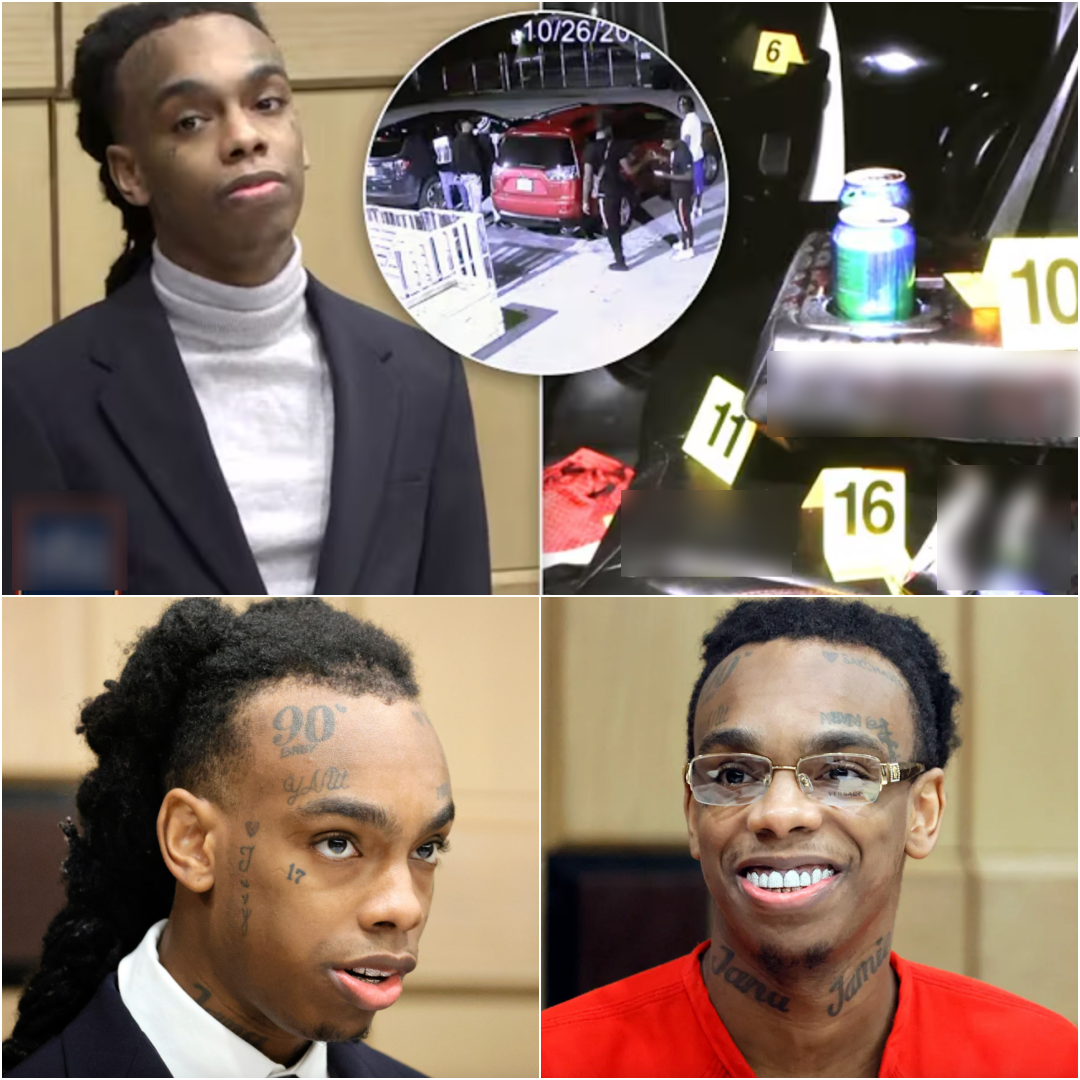
1. Surveillance Footage of the Group Together
One of the earliest building blocks of the prosecution’s timeline is surveillance video showing the victims and the surviving individuals—YNW Melly and Cortlen “Bortlen” Henry—together before the events unfolded. While the footage does not show the shooting, it establishes that all four men were inside the same vehicle around the time the murders reportedly occurred.
This matters because it provides a foundation for the prosecution’s reconstruction of the timeline. It also directly contradicts the idea that a random outside shooter suddenly targeted the car. By showing the group intact and unharmed shortly before the incident, prosecutors argue that any violent event had to originate from within the vehicle, not from an external threat.
2. Blood Evidence Inside the Vehicle
Perhaps the most powerful physical evidence cited in the case is the presence of blood inside the vehicle. According to investigators, blood was found in multiple areas: on the rear seats, on the center console, and in patterns consistent with close-range gunfire.
The significance of this is straightforward: in an authentic drive-by shooting, most blood spatter follows the direction of incoming fire—from outside to inside. But the patterns inside this vehicle, according to forensic experts, were more consistent with shots fired at close proximity within a confined space.
For the prosecution, this undermines the claim that bullets came from outside the car. For the defense, however, the argument has been that blood distribution can be influenced by movement, panic, or repositioning of the victims, making the interpretation less definitive than the prosecution asserts.
3. Bullet Holes and Interior Trajectory Analysis
Forensic ballistic analysis became one of the centerpieces of the state’s case. Investigators used “trajectory rods”—long metal rods inserted into bullet holes—to illustrate the angle and direction of the shots. These rods reportedly aligned in ways suggesting that the bullets were fired from the left rear passenger seat, which prosecutors claim was occupied by YNW Melly.
The defense has pushed back heavily on this point, arguing that trajectory rods provide only an approximation and can be misleading if the vehicle was moved, repaired, or altered. Still, the visual of the rods tracing lines through the interior became one of the most discussed images associated with the case.
4. Shell Casings and the Absence of Exterior Evidence
A critical detail in the prosecution’s narrative is the presence of used shell casings inside the car. Drive-by shootings typically leave casings outside the vehicle, near the spot where the shooter fired from. The prosecution argues that internal shell casings strongly suggest shots were fired from within.
Complicating matters is the fact that the murder weapon itself was never recovered. The absence of a firearm has been a major focal point for the defense, who argue that without the gun, precise ballistic conclusions are impossible. Nonetheless, prosecutors maintain that the shell casings point clearly toward an internal shooter.
5. Cell Phone Location Data
Modern criminal cases increasingly rely on digital forensics, and this one is no exception. Investigators analyzed the cell phone data of all four individuals, looking at timestamps, locations, and movements throughout the night. According to the prosecution, the digital trail contradicts the defendants’ later description of the route they took to the hospital and challenges the timing of when the alleged drive-by occurred.
If accurate, these discrepancies suggest manipulation of the timeline—something the prosecution believes indicates a cover-up attempt. The defense, however, argues that location pings can be imprecise and influenced by signal strength, making them unreliable for reconstructing exact travel paths.
6. Behavior and Actions After the Incident
Another subtle but significant piece of the prosecution’s case revolves around the behavior of the surviving individuals after the shooting. Instead of immediately calling emergency services, the defendants drove the victims to a hospital themselves, arriving only after a considerable amount of time had passed. The state argues that this delay is inconsistent with panic or self-defense and more consistent with staging a scenario.
The defense maintains that trauma, shock, or fear can cause people to make irrational decisions, especially during violent, chaotic incidents. They argue that unusual behavior does not automatically imply malice or guilt.
7. Phone Messages and Alleged Admissions
Finally, prosecutors referenced digital messages and social interactions that they believe point toward post-incident awareness or acknowledgment of wrongdoing. While the content of these messages has been contested, they form part of the broader circumstantial picture the state has attempted to paint.
The defense insists that these messages are being taken out of context and that ambiguous statements cannot be treated as confessions.
Why These Seven Pieces Matter
Individually, each element may have alternative explanations or points of reasonable doubt. But together, the prosecution argues they form a cohesive narrative: the shooting happened inside the car, the drive-by story was an attempt to hide that fact, and the digital and forensic evidence aligns more with an internal attack than an outside ambush.
The defense, meanwhile, has spent years challenging every detail, highlighting gaps in the investigation, the lack of a recovered weapon, and the possibility of forensic misinterpretation.
This tension—between physical evidence and reasonable doubt—has kept the case in public conversation and made it one of the most complex criminal trials involving a major music artist in decades.
As the legal journey continues, these seven pieces of evidence remain at the heart of the debate, shaping the narrative and influencing public perception of what truly happened that night inside that vehicle.