
Years after the death of King Von, conversations about his legacy continue to evolve — and a recent statement by Charleston White has brought renewed attention to how the rapper is remembered. By describing King Von as “the last of his kind,” White has sparked debate about what that label means and why it still resonates today.
King Von, whose real name was Dayvon Bennett, rose to prominence as a key figure in Chicago’s drill music scene. Known for his vivid storytelling and raw lyrical style, he built a reputation for turning real-life experiences into music that felt immediate and unfiltered. His rapid rise in the industry was cut short in November 2020, when he was fatally shot outside an Atlanta nightclub at the age of 26. Despite his relatively short career, his impact has remained significant in the years since.

Charleston White’s statement appears to tap into that lasting influence. While he did not fully define what he meant by “the last of his kind,” the phrase has been widely interpreted in different ways. Some see it as a reference to authenticity — the idea that King Von represented a version of street storytelling that is becoming increasingly rare. Others interpret it as a reflection on a particular era of hip-hop, one shaped by direct connections between artists’ lives and their music.
At the same time, the comment has also drawn criticism. Critics argue that framing any artist as “the last” of something can oversimplify a constantly evolving genre. Hip-hop, and drill music in particular, continues to change, with new artists bringing their own perspectives and styles. From this viewpoint, King Von’s legacy is better understood as part of a broader continuum rather than the end of a specific type of artist.
The discussion also highlights the role of public figures like Charleston White in shaping narratives. Known for his outspoken and often controversial opinions, White frequently makes statements that provoke strong reactions. In this case, his comment has reignited conversations not only about King Von’s music, but also about how authenticity, influence, and legacy are defined in modern hip-hop.
For many fans, however, the focus remains on the music itself. King Von’s catalog continues to attract listeners, with tracks that emphasize storytelling, detail, and emotional intensity. His ability to paint vivid scenes through his lyrics is often cited as one of his defining qualities — a trait that may be central to why some view him as unique.
Years after his passing, King Von’s name still carries weight, both within the drill scene and beyond. Whether or not he was truly “the last of his kind,” the fact that such a statement can spark widespread discussion speaks to the lasting impression he left behind. His story, like his music, continues to be revisited, reinterpreted, and debated.
Ultimately, Charleston White’s remark serves as a reminder that legacy is not fixed. It is shaped over time through conversations, differing perspectives, and the ways in which audiences connect with an artist’s work. In King Von’s case, those conversations show no sign of slowing down — suggesting that, years later, his influence remains very much alive.
News

VIRAL FOOTAGE FALLOUT — New York City Man Seeks $100M After Sh0cking Liquor Store Incident
A Brooklyn man beaten bloody by a pair of cops at a liquor store in a case mistaken identity is…

5 MINUTES AGO — Northern Territory Police SAY SOME IN THE COMMUNITY “KNOW SOMETHING” ABOUT THE SUSPECT IN CASE OF MISSING GIRL IN Alice Springs
Five-year-old Sharon missing from Alice Springs Old Timers town camp late on Saturday. (Supplied: NT Police Force) Northern Territory Police say…
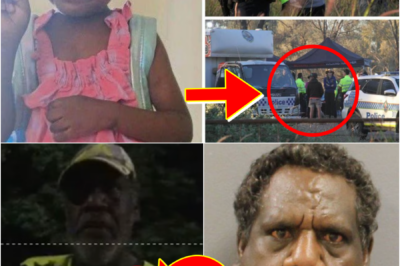
DEVELOPING — DETAILS ABOUT CLOTHING BELIEVED TO BELONG TO A FORMER INMATE BECOME THE FOCUS IN THE SEARCH FOR A MISSING 5-YEAR-OLD AS DAY THREE UNFOLDS IN THE Northern Territory
Police have made a new discovery in their ongoing search for a young girl believed to have been abducted from…
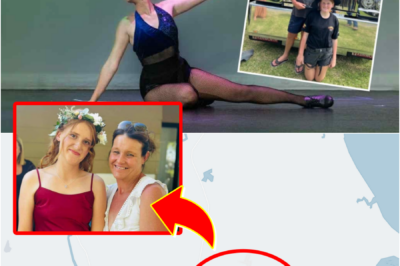
CHARGES LAID — TRUCK DRIVER CHARGED AFTER FA-TAL HIGHWAY CRASH IN Queensland
A man has been charged after a teenager died in a crash on a Queensland highway. Picture: NewsWire/Glenn Campbell A…

UPDATE — NEW DEVELOPMENTS IN THE CASE INVOLVING A 15-YEAR-OLD ALLEGEDLY LINKED TO A HIT-AND-RUN DRAW WIDESPREAD ATTENTION
Bystanders attempted to stop the man from leaving the scene. Picture: supplied A man was allegedly driving with a refused…
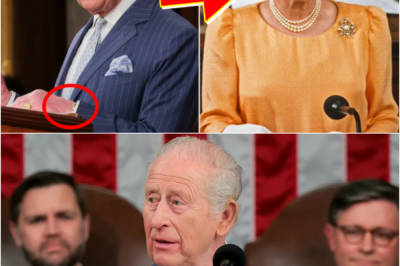
5-WORD MESSAGE — King Charles III Draws Attention During Address to U.S. Congress
The monarch’s mother similarly spoke about how diplomacy is the only way forward when tensions break on the world’s stage…
End of content
No more pages to load