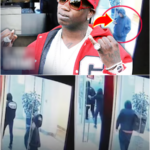
When news broke that Victor Majola — widely labelled online as the “killer” of beloved DJ Warras — had sent condolences to the DJ’s grieving family, South Africa did not respond with sympathy. Instead, it responded with suspicion, anger, and a single, relentless demand: Release the CCTV footage.
For many South Africans, condolences without transparency feel hollow. In a country where violent crime is a daily reality, public patience with closed-door investigations is wearing thin — especially when cameras are everywhere, yet key footage in high-profile cases remains unseen.
A condolence that raised more questions than comfort
DJ Warras’ murder shocked the nation. Known for his energy, talent, and deep connection to his fans, his death left a void far beyond the music industry. When Victor Majola’s message of sympathy surfaced, it was meant to appear humane. Instead, it poured fuel on an already raging fire.

Social media erupted almost instantly. “If there’s nothing to hide, show the footage,” became a common refrain. Others questioned how condolences could coexist with silence around evidence that could either confirm guilt or clear a name.
In the absence of official clarity, public opinion rushed in to fill the void — and in South Africa today, that opinion is often shaped by viral video.
The rise of CCTV justice in South Africa
Across the country, ordinary citizens are increasingly solving crimes through CCTV clips shared online. From WhatsApp groups to TikTok, Facebook, and X, footage spreads within minutes — sometimes leading to arrests before police statements are even released.
In Pretoria, a phone-snatching incident at the upscale Kream Restaurant went viral after CCTV footage clearly showed the suspect’s face and movements. Public pressure mounted, names were circulated, and authorities were forced to act quickly under intense scrutiny.
In East London, a brutal assault on a security guard sparked national outrage after bystanders shared nearby camera footage. The visual evidence left no room for denial — the crime was undeniable, the violence shocking, and the demand for justice immediate.
In Bloemfontein, daylight robbery of an elderly man was captured on camera, prompting citizens to identify suspects within hours. In each case, video evidence did what words and official reassurances could not: it showed the truth.
Why DJ Warras’ case feels different
That is precisely why the DJ Warras case has struck such a nerve. South Africans know cameras exist. They know footage is likely available. And they know from experience that when video is released, narratives collapse or are confirmed instantly.
So why, they ask, is the footage still unseen?
As trust in institutions continues to erode, secrecy is increasingly interpreted not as procedure — but as protection. Whether that perception is fair or not, it is shaping public reaction in real time.
“Without footage, all we have are statements,” one social media user wrote. “And statements don’t bring justice.”
Social media: mob justice or modern accountability?
Critics warn that online investigations can spiral into dangerous territory — misidentifications, harassment, and trial-by-social-media are real risks. But supporters argue that viral evidence has become the only reliable tool when official systems move too slowly or appear compromised.
This tension lies at the heart of modern South African true crime: the line between accountability and chaos.
In the DJ Warras case, that line feels especially thin. Victor Majola’s condolences, instead of calming the storm, became a symbol of everything the public distrusts — words without proof, empathy without evidence.
Cameras don’t forget — and neither does the public
True crime documentaries and online investigators are now reframing how justice is understood. The question is no longer “What do authorities say happened?” but “What does the footage show?”
And if footage exists but remains hidden, people assume the worst.
This shift represents a profound change in power. Cameras — once passive observers — have become central characters. Citizens are no longer waiting quietly for outcomes; they are demanding visibility, transparency, and participation.
A nation waiting for the truth
As DJ Warras’ family mourns, and as South Africans continue to debate Victor Majola’s role, one truth is undeniable: silence is no longer neutral. In the age of viral evidence, withholding footage is seen not as caution — but as a statement in itself.
Until the CCTV is released, the questions will not stop. The speculation will not fade. And the public will continue doing what it has learned to do best: investigate, share, and demand answers.
Because in South Africa today, justice doesn’t just happen in courtrooms.
It happens on camera.
News

RAPPER GUCCI MANE KIDNA-PPED & R0BBED? POOH SHIESTY NOW IMPLICATED — INSIDERS HINT AT SH0CKING CHALLENGE
Federal authorities have charged nine individuals in connection with a violent armed robbery and kidnapping at a Dallas music studio,…
ALL NINE SUSPECTS ARR-E-STED: F-e-ds swoop in on SH0CKING Gucci Mane “kidna-pping” plot — including Pooh Shiesty
Federal authorities have confirmed a major breakthrough in a case that has sent shockwaves through the hip-hop community: all nine…

WHAT REALLY HAPPENED? FEDS dig deeper as sh0cking twist links Pooh Shiesty to alleged plot involving Gucci Mane
The shocking rumor surrounding Gucci Mane allegedly being “kidnapped” with possible links to Pooh Shiesty has sent the hip-hop world…
A SH0CKING TWIST IN THE Dezi Freeman MANHUNT: Two suspects ARRESTED — but police say they’re “NOT WHO YOU THINK”
Two people were arrested as part of the investigation into fugitive police killer Dezi Freeman. A man and a woman…

Scandal Explodes on MAFS Australia: Chris’s Double Baby Bombshell Sparks Fury at Producers Who Let Him On the Show Anyway
MAFS Australia fans have erupted over Chris’ place on the show, with many calling the decision to cast him “irresponsible” as…

This Changes Everything — Married At First Sight Australia Rocked as Bec’s Sh0cking Messages About Alissa Go Public
MAFS Australia is set for another explosive moment as Bec’s texts to Gia about Alissa are exposed to the entire group…
End of content
No more pages to load