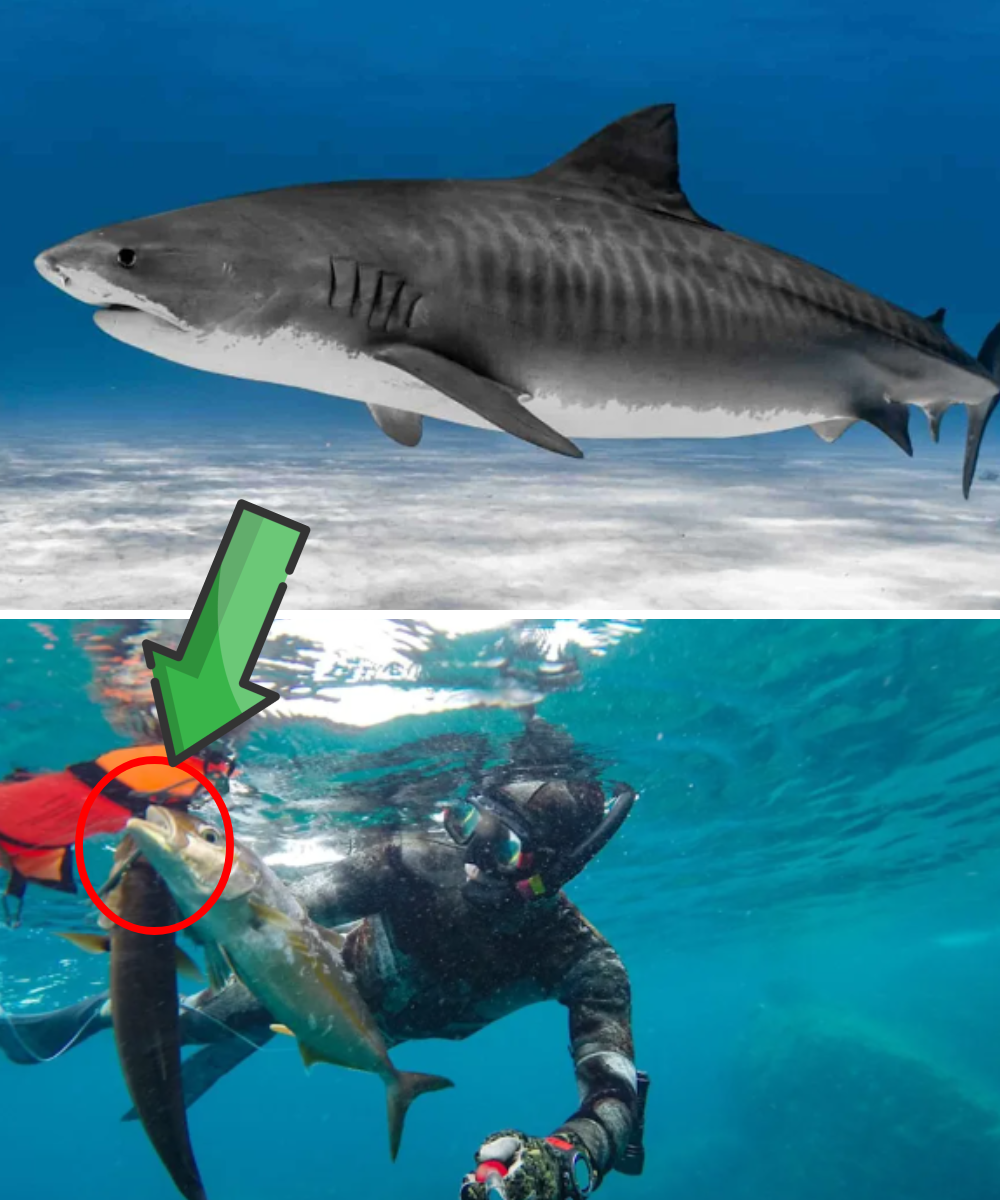
NO LEGS FOR SNAKES, NO BOTTOM FOR SEAS: The fatal mistake when spearfishing that turns humans into an “easy meal served right to the jaws” of sharks!

Tiger Shark Up Close Full Body Shot. Stripes showing in clear blue water with white sandy bottom. Photo taken in The Bahamas.© Jsegalexplore / Shutterstock.com
The post Second Fatal Shark Attack in Australia in One Week Stuns Divers appeared first on A-Z Animals.
Spearfishing is a pastime enjoyed by many in the waters off the Australian coast. But a deadly shark attack on the Great Barrier Reef is raising questions about spearfishing risks and whether the risks are worth the reward.
Australian Man Killed by a Shark While Spearfishing
A day of spearfishing took a tragic turn when a man was attacked by a shark. On May 24, 2026, the Great Barrier Reef became the second location in Australia to experience a fatal shark attack within the past week.
Reports state that a 39-year-old man and three friends were diving off the Queensland coast when the man was attacked. The man sustained a “critical head injury” from the attack.

Divers reported seeing bull sharks about six miles from the site of the attack, although authorities have not confirmed which species was responsible.
©Subphoto.com/Shutterstock.com
After being pulled from the water, the man, an unidentified Cairns resident, was rushed to an ambulance waiting to take him to the hospital. Unfortunately, according to a statement from the ambulance company, he “sustained injuries not compatible with life.”
Other divers reported seeing bull sharks approximately six miles from the spearfishing site. It is unclear at this time if a bull shark or another shark was responsible for the attack.
Why Does Spearfishing Attract Sharks?
People choose to spearfish to practice patience, engage in sustainable food practices, and feel at one with nature. There are inherent risks that come with spearfishing, the greatest of which is the risk of shark attacks. But why are sharks so drawn to spearfishing activity?

Spearfishing attracts sharks because they are opportunistic feeders relying on instincts.
©YanLev Alexey Sizov/Shutterstock.com
There are several reasons why sharks are drawn to locations where spearfishing is actively taking place. The most common reasons are as follows:
Sharks are drawn to blood and detect bleeding fish from long distances
Dying fish put out vibrations in the water, signaling they are struggling, making an easy meal for a shark
Sharks are opportunistic feeders who will attempt to steal speared fish
Spearfishing takes place in habitats where sharks live, making encounters more likely
Sharks are curious, and when they see human activity in the water, they want to investigate
Sharks are not intentionally trying to attack spearfishermen. Instead, they are acting on instinct. Their instincts tell them there is prey in the water, prompting them to investigate or attack. This is why shark activity increases during spearfishing.
How to Remain Safe When Spearfishing
Spearfishing in waters where sharks are known to lurk is risky. This is why it is important to follow safety guidelines at all times to avoid encounters with sharks, especially when handling their prey.

Safety protocols should always be followed when spearfishing in shark territory.
©Popartic/Shutterstock.com
The safety protocols to follow when spearfishing include:
Do not dive at high-risk times
Always dive with another person
Keep blood in the water to a minimum
Always be aware of your surroundings
Never feed wildlife
Do not spend unnecessary time around speared fish
Carry a first aid kit at all times
Spearfishing is an activity known to attract sharks, but by following proper guidelines, the chances of shark encounters can be minimized.
Shark Attacks Are at a Record Low, Despite Headlines to the Contrary
The headlines coming out of Australia as of late regarding shark attacks are terrifying. However, the headlines do not speak to the actual statistics of shark attacks globally. As of 2025, shark attacks worldwide are at a 10-year low.
That said, the number of unprovoked shark attacks in Australia did increase slightly in 2025. There were a total of 21 unprovoked shark bites, five of which were fatal—higher than the typical 13 unprovoked shark bites Australia usually experiences.

Shark attacks remain low, despite headlines to the contrary.
©Ramon Carretero/Shutterstock.com
Australia is home to three of the sharks that are most often associated with unprovoked shark bites. They include the white shark, the tiger shark, and the bull shark. This is why attacks tend to be more frequent in Australia than in most other parts of the world.
Shark attacks occur more frequently when there are more people in the water. Places like Australia, California, and Florida see increased numbers of people in the water when temperatures rise. This is why most reports of attacks or fatalities occur during the summertime. However, the chances of a shark attack remain low. Statistically, the odds are one in 11.5 million of getting attacked by a shark.
Therefore, you should not be dissuaded from enjoying time in the ocean. Follow safety protocols and pay attention to signs on the beach. By doing so, it is possible to safely share the ocean with sharks—a habitat that is their home, not ours.
The post Second Fatal Shark Attack in Australia in One Week Stuns Divers appeared first on A-Z Animals.