The desert wind cut across the forward operating base like a thin blade, slicing against the skin and carrying clouds of dust in its wake. On the makeshift runway, a helicopter had just landed, its rotors still spinning slowly, beating the air like the heavy pulse of some enormous beast. Captain Rachel Hayes stood there with her arms crossed, squinting toward the burning horizon.
In the U.S. military, the name Rachel Hayes carried weight. She had led multiple special operations across the Middle East, surviving situations few others ever made it out of. Her comrades called her “Iron Hawk”—not just for her sharp perception, but for her cold precision in combat. But here, now, at this small, tension-filled base in the middle of a hostile region, she was facing a challenge that had pushed even her to the edge.
The mission, codenamed “Black Ridge,” had dragged on for over three weeks. An insurgent group had seized control of a rugged mountainous area riddled with a labyrinth of underground tunnels. Intelligence reports confirmed they were holding several high-value hostages, including two American military engineers. Multiple teams had been sent in—and multiple teams had never come back.
Rachel had tried everything: direct assault, containment, even negotiation. Nothing worked. The enemy didn’t behave logically. They moved like ghosts, set traps in places no one expected, and always seemed to be one step ahead.
Inside the command tent, a large map sprawled across the table, marked with red ink. Rachel leaned forward, both hands pressed against the edge, staring at a circled area.
“We’ve lost three teams here,” Lieutenant Carter said quietly. “If we keep pushing troops in, we’re just repeating the same mistake.”
Rachel didn’t respond. She already knew that. But doing nothing meant abandoning the hostages.
Silence stretched.
“Maybe we’re looking at the problem the wrong way,” a new voice said from the entrance.
Heads turned. A young soldier stood there, his uniform still crisp, insignia freshly attached. He looked ordinary—no towering build, no exaggerated strength—but his eyes were different: focused, calm… and unsettlingly sharp.
“Who are you?” Carter asked, frowning.
“Private Daniel Brooks, sir. I was assigned this morning.”
Rachel studied him for a moment. “This briefing isn’t for rookies.”
Daniel didn’t step back. “I understand, ma’am. But I think I can help.”
A few quiet chuckles spread through the room. Rachel didn’t laugh.
“You have thirty seconds,” she said.
Daniel stepped closer to the table, eyes scanning the map. “All previous teams approached from the east and south—the most obvious entry points. If I were the enemy, I’d turn those into traps.”
“Get to the point,” Rachel cut in.
He nodded. “There’s a narrow ravine to the northwest. It hasn’t been considered an entry route because the terrain is nearly impassable. But ‘nearly’ doesn’t mean ‘impossible.’”
Carter shook his head. “We looked at it. Too dangerous—loose rock, steep inclines, no extraction path.”
“Exactly,” Daniel replied. “Which is why they won’t guard it heavily.”
Rachel said nothing. She looked back at the map—really looked this time. The ravine was there. But no one had seriously considered it viable.
“You think taking a different path solves everything?” she asked coldly.
Daniel shook his head. “No, ma’am. I think we need to change the entire approach.”
“Explain.”
“Instead of sending in a full team, we deploy a very small unit—extremely small—to infiltrate through that ravine. Not to attack, but to create a diversion. Meanwhile, a second team generates false signals to make the enemy believe a large-scale assault is coming from the east.”
Carter crossed his arms. “You’re suggesting splitting forces when we’re already stretched thin?”
Daniel met his gaze. “No, sir. I’m suggesting we use their attention against them.”
Rachel remained silent, but the pieces in her mind were shifting.
“Go on,” she said.
“The infiltration team plants signal jammers inside the tunnel network. Once the enemy loses communication, they’ll panic and reposition. That’s when the main force strikes—not from the outside, but from within.”
A heavy silence filled the tent.
“Have you ever been on a mission before?” Carter asked.
“No, sir.”
A few men laughed again. But this time, Rachel raised her hand for silence.
“You’re proposing a plan seasoned operators wouldn’t dare try,” she said. “And you’ve never seen combat.”
Daniel nodded. “That’s correct, ma’am.”
“Then why should I trust you?”
He didn’t answer immediately. Instead, he glanced back down at the map, then spoke quietly:
“Because every plan so far has failed.”
The words landed like a stone.
Rachel studied him for a long moment. The irritation in her eyes was gone—replaced by calculation.
Finally, she straightened.
“Prepare the team,” she said. “We’re trying it your way.”
Carter blinked. “Rachel, you’re serious?”
“We don’t have a better option.”
—
Night fell quickly over the desert. The temperature dropped sharply, and cold wind swept through jagged rock formations. The infiltration team consisted of just four: Rachel, Daniel, and two seasoned special operators.
They moved in absolute silence, step by careful step along a path that barely existed. Loose stones shifted underfoot; in some places they had to cling to rock faces to climb through.
Rachel led, but she kept glancing back at Daniel. He showed no hesitation, no fear. In fact, his movements were precise—like he had memorized the terrain.
“When we reach the marker,” he whispered, “we’ll be about thirty meters from the tunnel system.”
“You sure?” one operator murmured.
“Ninety percent.”
“And the other ten?”
Daniel didn’t answer.
Rachel smirked faintly. “Good enough.”
—
They reached the position undetected. The jamming device was placed swiftly. Daniel handled it with surprising proficiency.
“Activating in 3… 2… 1.”
A low hum pulsed through the ground, almost imperceptible. Within seconds, enemy communications began to falter.
“Main team, go,” Rachel whispered into her comms.
In the distance, staged explosions flashed from the eastern side. As predicted, enemy forces shifted, abandoning their original positions.
“Move,” Rachel ordered.
They entered the tunnel system through an unguarded access point.
What followed unfolded with the precision of a machine. The main force struck at exactly the right moment—from inside. The enemy was completely caught off guard.
Within an hour, the area was secured.
Hostages recovered.
Zero American casualties.
—
At sunrise, Rachel stood atop a ridge, overlooking the reclaimed compound. Daniel stood a few steps away, silent.
“You lied,” she said.
Daniel turned. “Ma’am?”
“You’re not just a rookie.”
A pause.
He exhaled quietly. “I used to do strategic analysis… at a higher level.”
Rachel let out a soft laugh. “Figured.”
She looked toward the horizon, where the first light of day spread across the sky.
“You saved this mission,” she said. “Maybe even me.”
Daniel didn’t respond. But for the first time, he smiled.
Rachel turned back, her gaze sharp as ever—but now carrying something more: respect.
“Welcome to the battlefield, Private,” she said.
And this time, no one doubted him.
News

D4vd’s camp breaks silence with a defiant response to the shocking murd3:r allegations!
SINGER D4vd has pleaded not guilty to murdering and dismembering the body of a 14-year-old girl he was abusing because…

HORRIFIC: Tanner Horner sang this chilling tune while committing the brutal act—audio that left the entire courtroom haunted!
JURORS heard horrifying new details in court as the former FedEx driver who killed seven-year-old Athena Strand faces a decision…

A RUTHLESS BLOW: Kendrick Lamar plots to annihilate Drake’s hype right before the big reveal!
Kendrick Lamar had a busy 2025 and for most of 2026, he’s laid low. But lately, there’s been chatter around…

The final night of Cardi B’s tour gathered a stellar lineup of stars, making the stands explode and letting everyone forget the backstage dramas
Cardi B is taking the high road after an alleged backstage dispute nearly derailed her Atlanta tour stop. The rapper, 33, appeared…
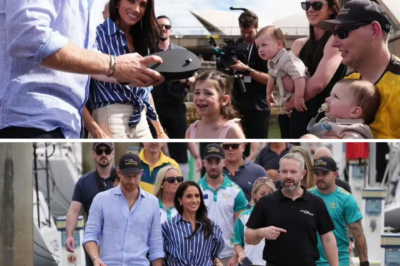
Buckingham Palace officials have reportedly grown ‘deeply uncomfortable’ with the Sussexes’ recent maneuvers in Australia
Prince Harry and Meghan Markle spent four days in Australia last week (Image: Getty) Prince Harry and Meghan Markle returned to the States this…
Meghan faces a massive backlash for this ‘disgusting’ move on the 100th anniversary of ’s birth!
Meghan Markle is releasing two new candles (Image: Getty) Meghan Markle was criticised for releasing two new candles linked to her children, Prince Archie and Princess Lilibet,…
End of content
No more pages to load