The harrowing timeline of the Australian man’s murd3:r of a 17-year-old Thai girl has just been released
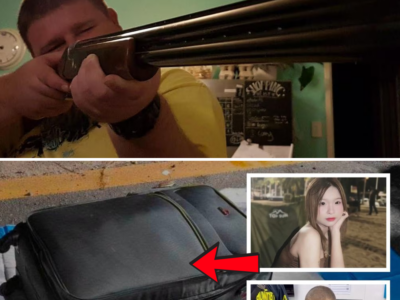
The brutal murder of 17-year-old Thanchanok Donhomla in Jomtien, Thailand, and the subsequent arrest of 45-year-old suspect Simon Peter Carman at Suvarnabhumi International Airport, has sent shockwaves far beyond the local community, leaving the international public in a state of horror. Security camera footage has reconstructed a path of cold, calculated evil—from the moment the pair entered the condominium complex to the chilling sight of the black suitcase, which contained the victim’s body, being transported away. This was not merely a criminal act; it was a profound failure of safety and a breach of trust within an international living environment.
The Contrast Between a Normal Life and Bizarre Malice
CCTV footage from 3.34am on June 25 showed a man and a female walking hand-in-hand in the lobby of a condo at Jomtien, which police allege was Carman and Thanchanok.
At about 9.25pm on the same day – some 18 hours later – police say CCTV showed Carman taking a black suitcase from his room and leaving the condo on a motorcyle with the suitcase on the back.
He returned to the condo at about 10pm, police say.
Thanchanok was reported missing by a friend, who said they had last seen her with a foreign man, at 11.36am on June 26.
Police say that at 2.26pm, Carman left the condo again.
On the same day, police were granted an arrest warrant by the courts and discovered Carman’s passport in his room.
At 1.15am on June 27, Carman was arrested at Bangkok’s Suvarnabhumi Airport.
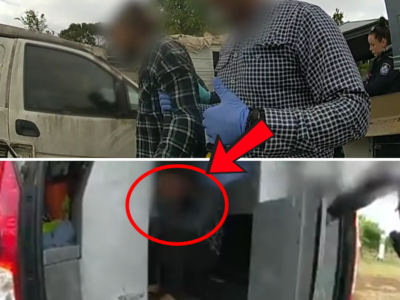
At 1.30am the same morning, police found a suitcase near railway tracks about a 10-minute drive from Carman’s condominium.

From a sociological perspective, the most haunting aspect of this case is not the method of the crime, but the suspect’s seamless integration into the local community prior to the event. Eyewitness accounts described the suspect as a “normal” expat, with a routine consisting of swimming and beach walks. This stark contrast between the image of a quiet, middle-aged man and the act of disposing of a human body in a suitcase highlights an alarming reality: dangerous individuals often hide behind a veneer of normalcy, remaining undetected until the tragedy is irreversible.
While the suspect claimed the victim attempted to rob him at knifepoint—a common defensive narrative for those attempting to shift blame—the severity of the act remains indefensible. Regardless of any alleged motive, the extinguishing of a young, promising life is a transgression that society cannot condone.
Justice and the Rigor of International Law
The victim’s family’s call for the death penalty raises complex legal and humanitarian questions. Thailand’s legal system, which allows for the ultimate penalty in murder cases, now faces a test of its severity and consistency. For a foreign national, facing a capital sentence in a host country serves not only as a reckoning for the crime but also as a reminder of the state’s duty to protect its citizens from individuals who abuse the hospitality of their host nation.
This tragedy also invites scrutiny regarding the management and oversight of long-term expatriates in tourist hubs. How can communities effectively identify and mitigate risks posed by individuals who display “abnormal” behavioral traits, yet remain untracked by psychological or social services?
A Costly Lesson in Vigilance
The death of Thanchanok—a girl described as a devoted daughter who worked tirelessly to support her family—is an irreparable loss. The suspect’s parting message to the victim’s family, advising other girls to “be careful,” feels profoundly cynical and cruel. Vigilance is no longer merely a suggestion; it has become a necessary survival requirement in a society where the boundary between safety and danger is increasingly fragile.
The Pattaya case is more than a news headline; it is a sobering reminder of individual responsibility within a shared community. While surveillance technology may record crimes after they occur, community awareness and individual self-protection remain the only true safeguards. Justice will ultimately be served in court, but the scars from this case will remain etched in the consciousness of Thai society, serving as a reminder that even in “paradise,” darkness is ever-present and demands the utmost alertness from everyone.
SOURCE: 9 NEWS
https://www.nine.com.au/world-news/asia/thai-police-release-timeline-of-alleged-murder-of-teen-by-australian-man-20260629-p60atn.html