The Waste Kingpin ‘MASQUERADING’ as a Million-Dollar Entrepreneur — Marcus Hughes, Elegant and Wealthy, Exposed After Dumping Over 26,000 TONNES of Waste Across 17 Sites in the UK
From the polished image of a wealthy entrepreneur, Marcus Hughes was seen as a symbol of success in the community. On the surface, he appeared as the co-founder of a large haulage company, reportedly signing million-dollar contracts with major corporations. Yet behind that elegant exterior lay a shocking reality: Hughes was the mastermind behind a massive illegal waste empire.
During the investigation dubbed Operation Cesium, authorities uncovered that Hughes, along with two accomplices, Richard Hopkinson and Robert McDonagh, carried out a sophisticated scheme. They approached legitimate waste disposal companies, offering to handle waste at unusually low prices, only to transport the waste to rented lands, warehouses, farms, and even an airport — then abandon it entirely, creating multiple illegal dumping sites.
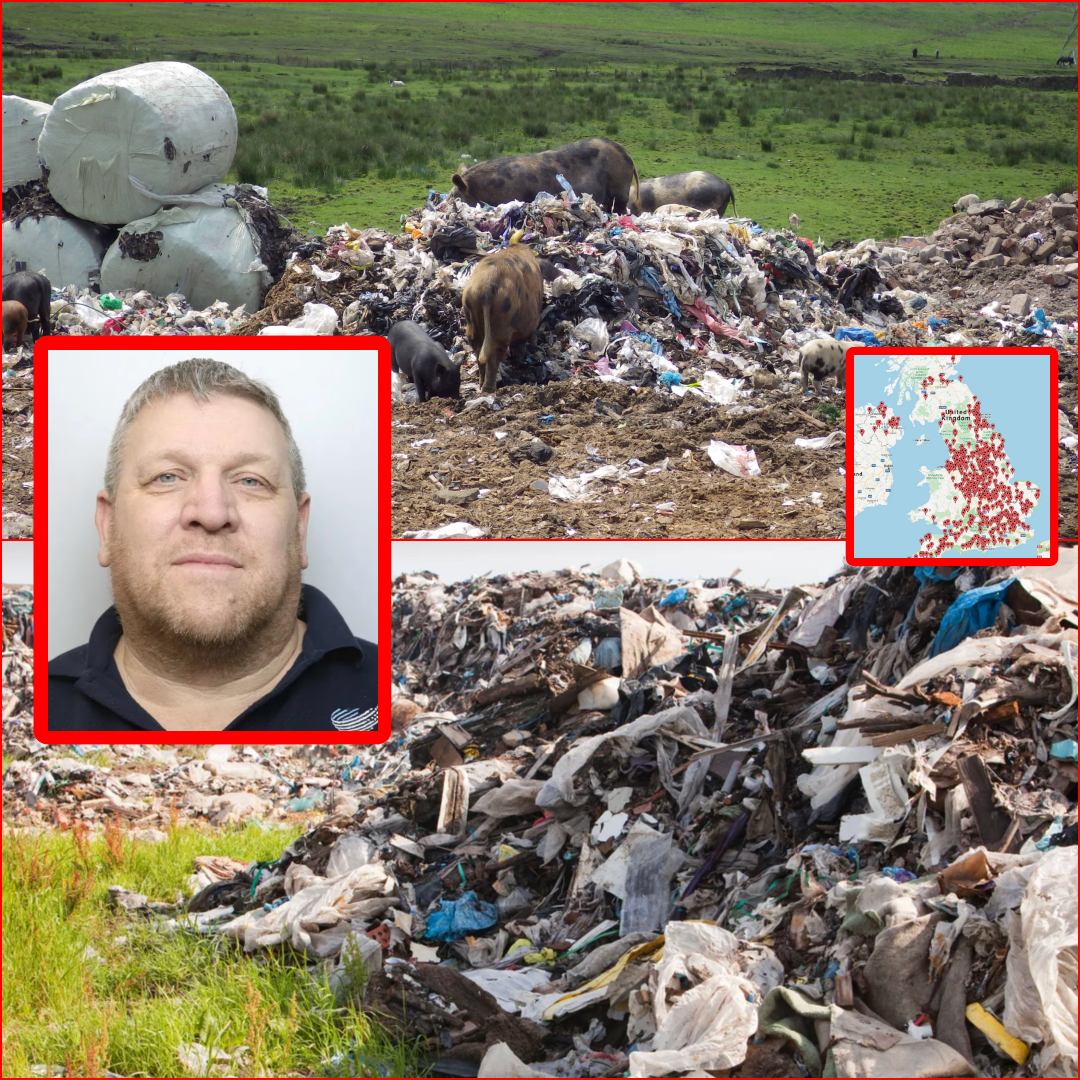
To deceive landowners and inspectors, the group even stationed “security guards” wearing hi-vis jackets at the entrances, making the operations appear legitimate. The dumped waste included household waste, business waste, and baled plastics, totaling over 26,000 tonnes across 17 sites throughout the UK.
The financial and environmental impact was severe. The criminals evaded more than £2.7 million in landfill taxes, while landowners and businesses were left with over £3.2 million in cleanup costs. The illegal sites caused environmental damage, attracted vermin, produced foul odors, and created risks to soil and water. Several sites had to be closed or demolished due to the environmental and health hazards.
At Birmingham Crown Court, Marcus Hughes, 53 at the time of sentencing, admitted guilt for environmental violations, corporate fraud, and deception. His accomplices also pleaded guilty. Hughes was sentenced to 30 months in prison and banned from serving as a company director for 10 years.
This case highlights that environmental crime is no longer limited to small-scale fly-tipping. Sophisticated operators can create large-scale “waste empires,” masquerading as legitimate businesses, exploiting regulatory loopholes, and profiting from high disposal costs.
Recent reports suggest that thousands of illegal waste sites still exist across the UK, containing millions of tonnes of improperly managed waste — showing that the Hughes case, while extreme, is not an isolated incident. Authorities warn that without strict oversight, environmental crime could become a lucrative sector, with devastating consequences for communities, public health, and public funds.
Marcus Hughes — once viewed as a million-dollar entrepreneur — has been unmasked as a kingpin of illegal waste. The “26,000 tonnes across 17 sites” case is not just a legal victory but a stark warning: behind polished appearances and “legitimate” contracts, environmental disaster may be lurking.